|
|
|

|
|||||
|
|
|

Satellite communications company EchoStar (NASDAQGS:SATS) reported Q4 CY2025 results exceeding the market’s revenue expectations, but sales fell by 4.3% year on year to $3.8 billion. Its GAAP loss of $4.19 per share was significantly below analysts’ consensus estimates.
Is now the time to buy EchoStar? Find out by accessing our full research report, it’s free.
Following its 2023 acquisition of DISH Network, EchoStar (NASDAQ:SATS) provides satellite communications, pay-TV services, wireless networks, and broadband solutions across consumer and enterprise markets.
A company’s long-term sales performance can indicate its overall quality. Any business can put up a good quarter or two, but many enduring ones grow for years.
With $15 billion in revenue over the past 12 months, EchoStar is a behemoth in the business services sector and benefits from economies of scale, giving it an edge in distribution. This also enables it to gain more leverage on its fixed costs than smaller competitors and the flexibility to offer lower prices.
As you can see below, EchoStar’s 51.4% annualized revenue growth over the last five years was incredible. This shows it had high demand, a useful starting point for our analysis.
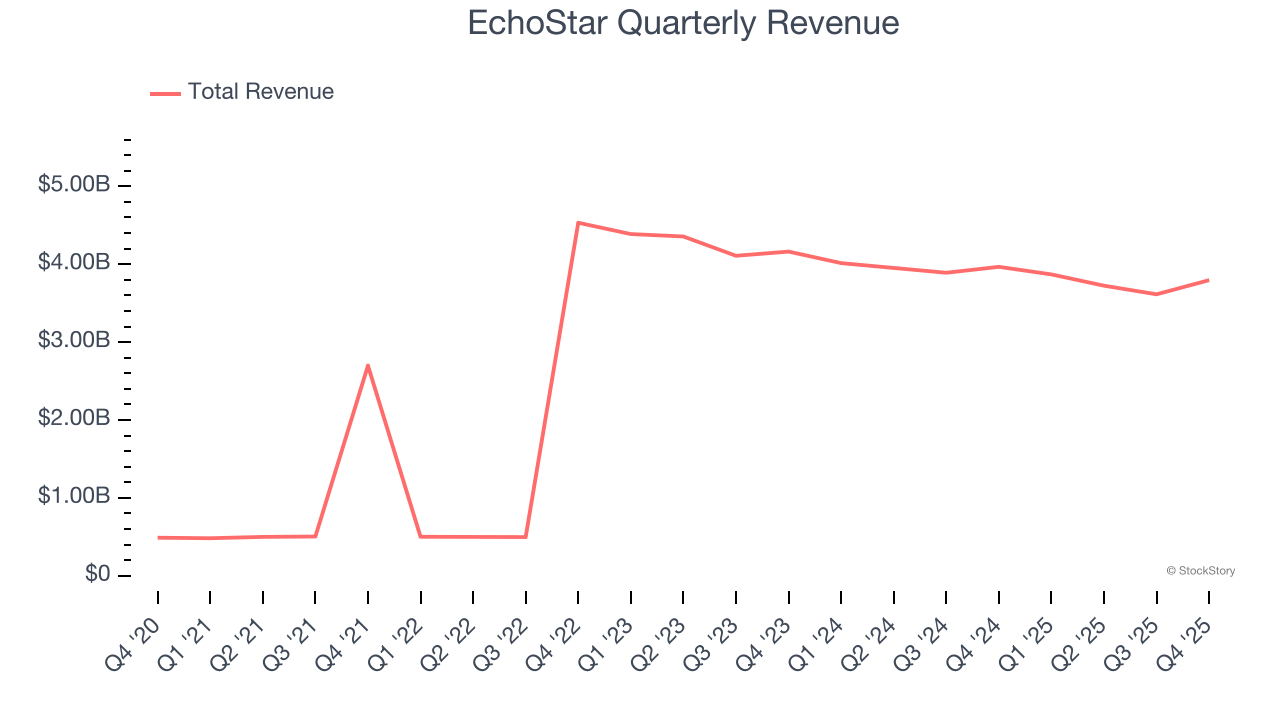
We at StockStory place the most emphasis on long-term growth, but within business services, a half-decade historical view may miss recent innovations or disruptive industry trends. EchoStar’s recent performance marks a sharp pivot from its five-year trend as its revenue has shown annualized declines of 6.1% over the last two years.
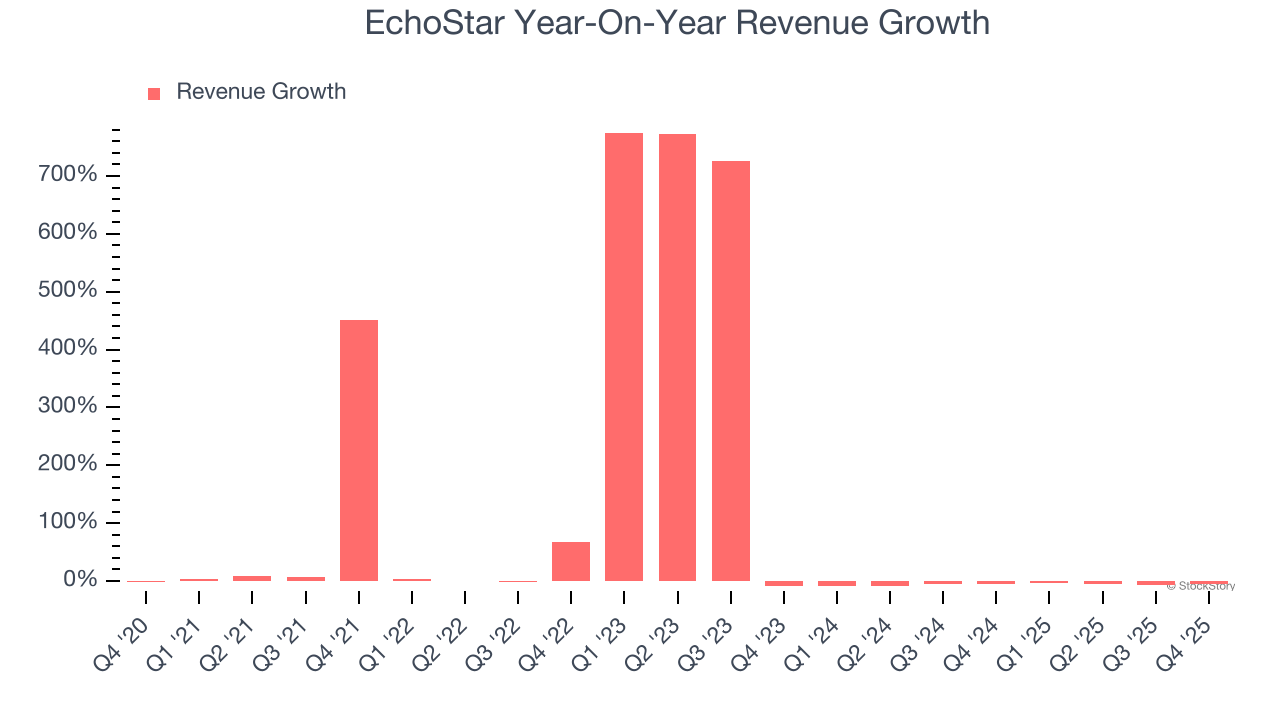
We can dig further into the company’s revenue dynamics by analyzing its most important segment, DISH PayTV. Over the last two years, EchoStar’s DISH PayTV revenue averaged 8.5% year-on-year declines. This segment has lagged the company’s overall sales.
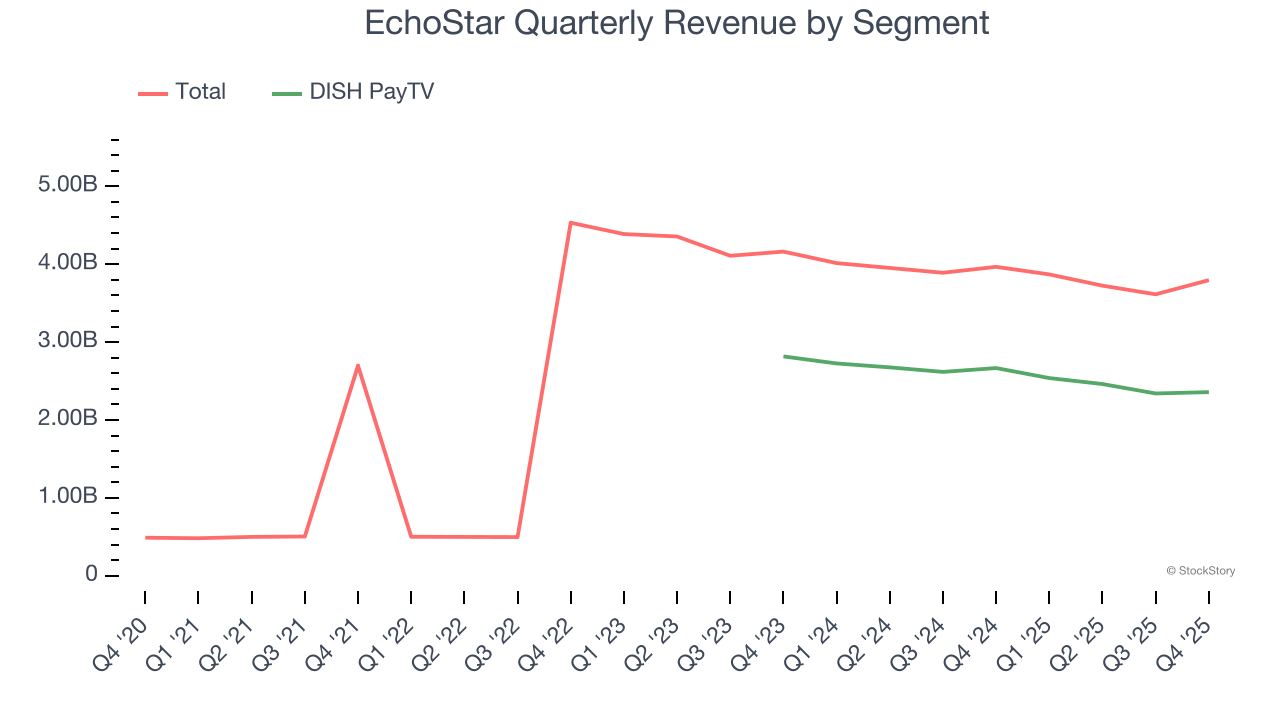
This quarter, EchoStar’s revenue fell by 4.3% year on year to $3.8 billion but beat Wall Street’s estimates by 1.3%.
Looking ahead, sell-side analysts expect revenue to decline by 4.2% over the next 12 months. While this projection is better than its two-year trend, it’s tough to feel optimistic about a company facing demand difficulties.
Software is eating the world and there is virtually no industry left that has been untouched by it. That drives increasing demand for tools helping software developers do their jobs, whether it be monitoring critical cloud infrastructure, integrating audio and video functionality, or ensuring smooth content streaming. Click here to access a free report on our 3 favorite stocks to play this generational megatrend.
Operating margin is a key measure of profitability. Think of it as net income - the bottom line - excluding the impact of taxes and interest on debt, which are less connected to business fundamentals.
EchoStar’s high expenses have contributed to an average operating margin of negative 29.6% over the last five years. Unprofitable business services companies require extra attention because they could get caught swimming naked when the tide goes out. It’s hard to trust that the business can endure a full cycle.
Analyzing the trend in its profitability, EchoStar’s operating margin decreased significantly over the last five years. This raises questions about the company’s expense base because its revenue growth should have given it leverage on its fixed costs, resulting in better economies of scale and profitability. EchoStar’s performance was poor no matter how you look at it - it shows that costs were rising and it couldn’t pass them onto its customers.
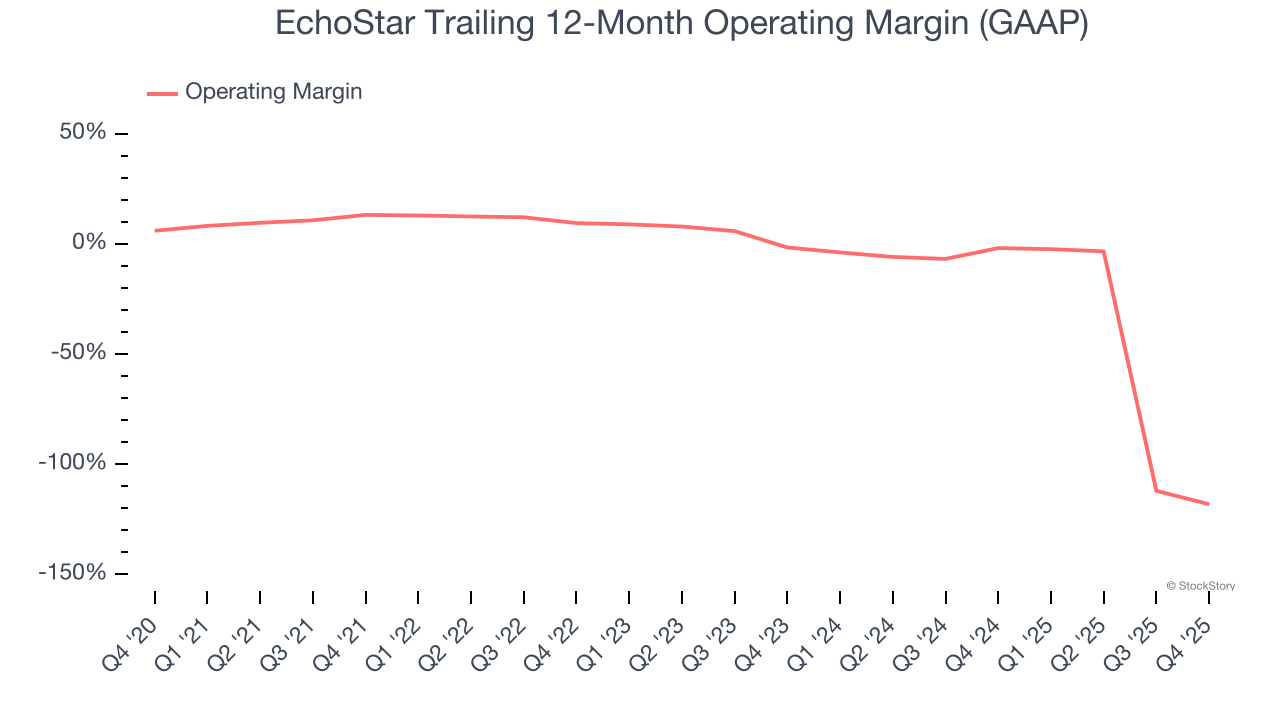
In Q4, EchoStar generated a negative 20.5% operating margin.
Revenue trends explain a company’s historical growth, but the long-term change in earnings per share (EPS) points to the profitability of that growth – for example, a company could inflate its sales through excessive spending on advertising and promotions.
EchoStar’s earnings losses deepened over the last five years as its EPS dropped 162% annually. We tend to steer our readers away from companies with falling EPS, where diminishing earnings could imply changing secular trends and preferences. If the tide turns unexpectedly, EchoStar’s low margin of safety could leave its stock price susceptible to large downswings.
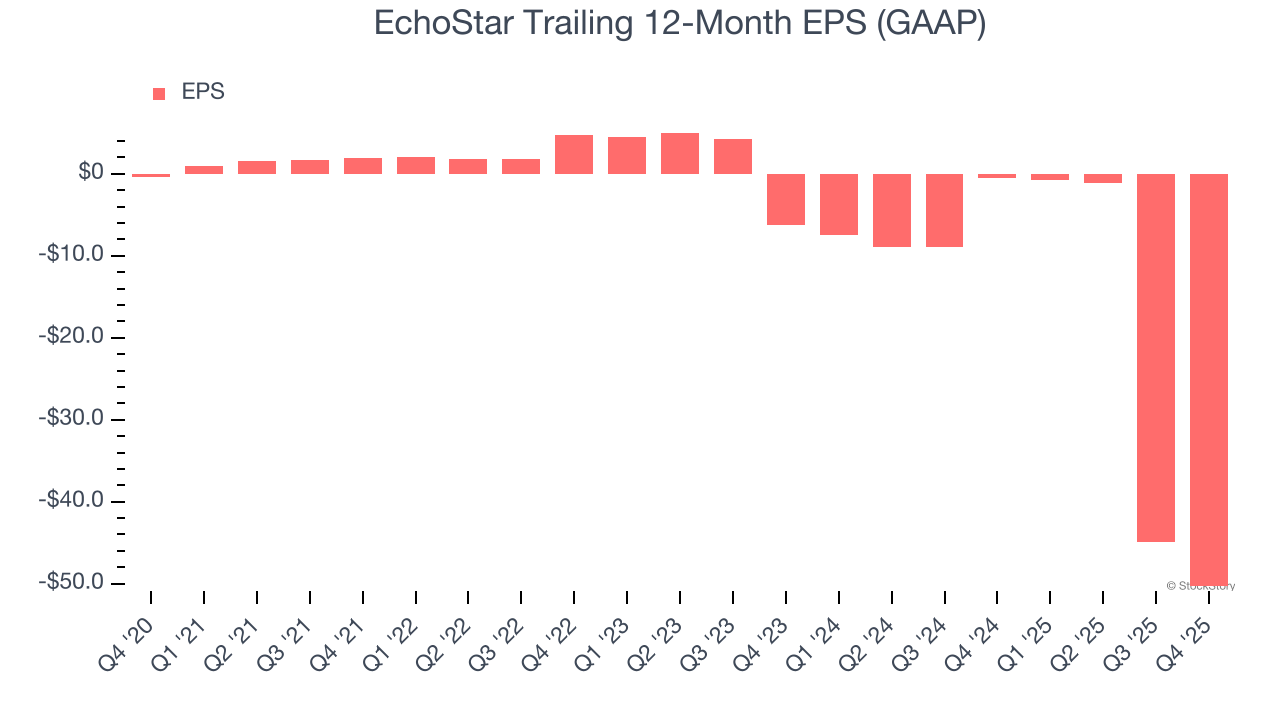
Like with revenue, we analyze EPS over a shorter period to see if we are missing a change in the business.
For EchoStar, its two-year annual EPS declines of 183% show it’s continued to underperform. These results were bad no matter how you slice the data.
In Q4, EchoStar reported EPS of negative $4.19, down from $1.19 in the same quarter last year. This print missed analysts’ estimates. Over the next 12 months, Wall Street is optimistic. Analysts forecast EchoStar’s full-year EPS of negative $50.33 will flip to positive $7.20.
It was good to see EchoStar narrowly top analysts’ revenue expectations this quarter. Other than that, results lacked comparability to Consensus due to non-recurring items. The stock traded down 1.2% to $112.84 immediately after reporting.
EchoStar’s earnings report left more to be desired. Let’s look forward to see if this quarter has created an opportunity to buy the stock. If you’re making that decision, you should consider the bigger picture of valuation, business qualities, as well as the latest earnings. We cover that in our actionable full research report which you can read here (it’s free).
| Jun-22 | |
| Jun-17 |
SpaceX is sucking the oxygen out of the new space trade
Yahoo Finance
|
| Jun-15 | |
| Jun-15 | |
| Jun-15 | |
| Jun-12 |
SpaceX stock gains, space companies fall, chips mixed on IPO news
Yahoo Finance Video
|
| Jun-12 | |
| Jun-12 | |
| Jun-12 | |
| Jun-12 |
EchoStar Stock Grounded After SpaceX IPO
Schaeffer's Research
|
| Jun-12 | |
| Jun-12 |
Space stocks jump on SpaceX's massive $75 billion IPO
Yahoo Finance
|
| Jun-12 |
Space stocks drop as SpaceX soars in debut
Yahoo Finance
|
| Jun-12 |
Space stocks drop on SpaceX's massive $75 billion IPO
Yahoo Finance
|
| Jun-12 |

Join thousands of traders who make more informed decisions with our premium features. Real-time quotes, advanced visualizations, alerts, and much more.
Learn more about Finviz Elite