|
|
|

|
|||||
|
|
|
TI's real-time control, sensing, and power portfolios combined with NVIDIA technology advance development of safer humanoid robots
News highlights:
DALLAS, March 5, 2026 /PRNewswire/ -- Texas Instruments (NASDAQ: TXN) today announced it is accelerating the safe deployment of humanoid robots into the real world with NVIDIA. By combining TI's real-time motor control, sensing, radar and power technologies with NVIDIA's advanced robotics compute, ethernet based sensing and simulation technologies, robotics developers can validate perception, actuation and safety earlier and more accurately. TI connects NVIDIA physical AI compute to real-world applications with deterministic control, sensing, power and safety at every joint and subsystem. This partnership will help developers move faster from virtual development to production-ready, scalable and safety-compliant systems.
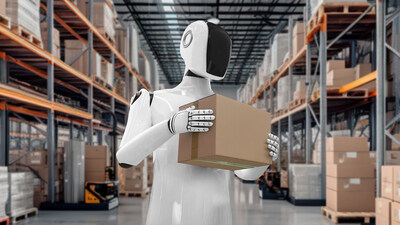
As part of this collaboration, TI designed a sensor fusion solution by integrating its mmWave radar technology with NVIDIA Jetson Thor using NVIDIA Holoscan Sensor Bridge to enable low-latency, 3D perception and safety awareness for humanoid robots. TI will showcase the solution at NVIDIA GTC, March 16–19, 2026, in San Jose, California.
"The next generation of physical AI requires more than just advanced compute – it demands seamless integration between sensing, control, power and safety systems," said Giovanni Campanella, general manager of industrial automation and robotics at TI. "TI's comprehensive portfolio bridges the gap between NVIDIA's powerful AI compute and real-world applications, enabling developers to validate complete humanoid systems earlier in development. This integrated approach will help accelerate the evolution from prototypes to commercially viable humanoid robots operating safely alongside humans."
"The safe operation of humanoid robots in unpredictable environments requires a massive leap in processing power to synchronize complex AI models with real-time sensor data and motor controls," said Deepu Talla, vice president of robotics and edge AI at NVIDIA. "The integration of Texas Instruments' sensing and power management technologies with the NVIDIA Jetson Thor platform provides developers with a functional safety-capable foundation to accelerate the deployment of next-generation physical AI."
Enabling safer humanoid robots with real-time sensor fusion technology
TI's mmWave radar sensor, IWR6243, connected via ethernet to NVIDIA Jetson Thor enables scalable low-latency, 3D perception and safety awareness for physical AI applications. By fusing camera and radar data, the solution improves object detection, localization, and tracking while reducing false positives for confident, real-time decision-making in humanoid robots.
This solution enables human-like perception that works reliably in challenging conditions – from low light and bright glare to fog and dust indoors and outdoors – and addresses a critical safety gap that has limited real-world deployment of humanoid robots. For example, while cameras may not reliably detect glass doors or reflective surfaces, radar provides consistent detection of these transparent obstacles, enabling smooth navigation in places like office buildings, hospitals and retail environments.
TI at NVIDIA GTC
TI will present its technologies at NVIDIA GTC in booth 169 at the San Jose McEnery Convention Center. TI and D3 Embedded's live demonstration, "Real-time sensor fusion for reliable robotic perception with Holoscan," showcases how TI's mmWave radar technology integrates with NVIDIA's Jetson Thor and Holoscan ecosystem using an end-to-end software processing chain and visualization from D3 Embedded.
On Wednesday, March 18 from 3:00-3:40 p.m. PT, TI's Giovanni Campanella, will participate in a lightning talk, "The Edge of the Edge: Redefining GPU-Enabled AI Sensor Processing." Campanella will discuss how tight integration of sensing, networking and GPUs is enabling real-time physical AI at the edge of industrial systems.
About Texas Instruments
Texas Instruments Incorporated (Nasdaq: TXN) is a global semiconductor company that designs, manufactures and sells analog and embedded processing chips for markets such as industrial, automotive, data center, personal electronics and communications equipment. At our core, we have a passion to create a better world by making electronics more affordable through semiconductors. This passion is alive today as each generation of innovation builds upon the last to make our technology more reliable, more affordable and lower power, making it possible for semiconductors to go into electronics everywhere. Learn more at TI.com.


SOURCE Texas Instruments
| May-22 | |
| May-22 | |
| May-22 | |
| May-21 | |
| May-20 | |
| May-20 | |
| May-19 | |
| May-15 | |
| May-15 | |
| May-14 | |
| May-13 | |
| May-13 | |
| May-13 | |
| May-11 | |
| May-03 |

Join thousands of traders who make more informed decisions with our premium features. Real-time quotes, advanced visualizations, alerts, and much more.
Learn more about Finviz Elite