Robo.ai Chief: Why the UAE Still is the Ideal Launchpad for the Machine Economy
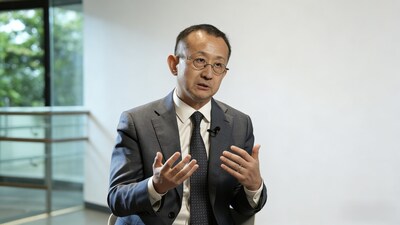
DUBAI, UAE, March 9, 2026 /PRNewswire/ -- In response to recent geopolitical developments in the Middle East and fluctuations in global energy markets, Benjamin Zhai, Chief Executive Officer of Nasdaq-listed Robo.ai Inc. (NASDAQ: AIIO), a technology company developing a global artificial intelligence machine economy platform, recently sat for an in-depth interview with a financial media outlet. During the discussion, Mr. Zhai addressed the current macro environment, including geopolitical dynamics and global energy price fluctuations. He stated that the UAE's position as a global technology and innovation hub demonstrates counter-cyclical resilience. He noted that Robo.ai is aligning with the UAE's national strategic initiatives, maintaining its local technology investments, and focusing on commercial fundamentals to deliver operational results to the capital markets.
Historical precedent supports this view. During the 2008 global financial crisis, the UAE pursued economic diversification. He cited the 2008 global financial crisis, during which the UAE advanced its economic diversification. During this period, Dubai utilized sovereign capital to complete debt restructuring and shifted its strategic focus to physical infrastructure, including the expansion of the Jebel Ali Free Zone (Jafza) deep-water berths and automated port facilities. Concurrently, Emirates Airline expanded its fleet and route network, establishing Dubai as a major aviation transit hub. These measures promoted the growth of non-oil trade, which currently accounts for over 73% of the UAE's Gross Domestic Product, establishing the region as a financial and logistics center. Furthermore, during recent global supply chain realignments, the UAE facilitated the influx of technology professionals and multinational corporate headquarters through its governance and open economic policies. Mr. Zhai stated that corporate development must align with economic cycles, and Robo.ai relies on the UAE's strategic stability to pace its commercial execution and internal growth.
Describing the UAE's technology landscape, Zhai outlined a coordinated national ecosystem with clear divisions of labor. "The UAE has far-sighted policy direction at the top, with sovereign funds responsible for integrating foundational computing power, technology, and capital. Robo.ai's role within this framework is to deliver the application layer that brings this ecosystem to market."
He identified three core components of this ecosystem:
Policy Framework: Under the National AI Strategy 2031, the UAE aims for artificial intelligence to contribute approximately 14 percent of GDP (USD 96 billion) by 2031. The country is advancing large-scale AI computing infrastructure projects to support foundational models for general artificial intelligence. The Dubai Autonomous Transportation Strategy, which targets 25 percent of all journeys to be autonomous by 2030, provides a regulatory environment for commercial deployment of smart mobility technologies.
Capital Infrastructure: Strategic capital has built the foundational infrastructure. Three sovereign wealth funds, ADIA, Mubadala and L'IMAD Holding, together with the AI group G42, form a capital-technology partnership deploying significant resources into global technology sectors. He noted Mubadala and G42 recently formed MGX, a technology fund targeting over $100 billion in assets under management across semiconductors, core models, and AI infrastructure. L'IMAD Holding, having integrated ADQ's asset portfolio, is restructuring sectors such as intelligent transportation, smart cities, and modern logistics, providing physical application scenarios for next-generation autonomous driving and eVTOL technologies. G42 has secured a $1.5 billion strategic investment from Microsoft, strengthening the UAE's foundational model environment and supporting algorithmic development for upper-layer applications.
Application Layer: Mr. Zhai stated that while national policies and sovereign capital build the AI computing foundation, Robo.ai commercializes this infrastructure through an intelligent physical transportation network. He noted that computing power and large model parameters require physical carriers to complete the commercial loop and generate investment returns. Robo.ai integrates AI software, intelligent hardware, and smart assets to connect with these policy and capital initiatives. Policy initiatives like the Dubai Autonomous Transportation Strategy provide the operational rights for Robo.ai to deploy algorithms into physical entities such as its RoBUS commercial vehicles and Robotaxis, generating commercial mileage and transport orders. Furthermore, Robo.ai's physical operations produce high-quality physical interaction data that feeds back into the foundational models. Using the recently delivered embodied AI data order from its joint venture with DaBoss.AI as an example, Mr. Zhai explained that Robo.ai generates multimodal, high-precision data through the operation of physical robots, driving the iteration of foundational models and creating an economic cycle of computing monetization, data production, and model refinement.
Robo.ai is advancing its operations through its joint venture with Silicon Valley-based DaBoss.AI, focusing on embodied AI data services. Mr. Zhai explained that the transition from large language models to embodied AI faces a "Sim-to-Real" gap, requiring multimodal interaction data containing real-world physical properties, such as high-precision spatial vision, six-degrees-of-freedom motion trajectories, and force-control tactile feedback. Market research indicates the global AI training data collection and annotation market may exceed $10 billion by 2030, with high-quality physical interaction data representing a rapidly growing segment. The joint venture utilizes tele-operation equipment and multimodal data screening technology to convert human behaviors into digital intelligence. Benefiting from the UAE's data compliance environment and international workforce, Robo.ai provides the operational capacity for this standardized data collection. Following the execution of a data collection services agreement, the joint venture completed its initial commercial delivery of embodied AI data within weeks. Mr. Zhai emphasized that this delivery advances Robo.ai's previously disclosed 30,000-hour embodied AI data backlog, demonstrating the Company's ability to commercialize frontier technologies and market demand.
Mr. Zhai concluded that the UAE provides the policy environment and sovereign capital foundation for technology companies. He stated that Robo.ai has identified its strategic position within this national technology framework and will focus on commercializing frontier technologies through continued high-quality deliveries, acting as the application execution component of the global intelligent machine economy ecosystem.
About Robo.ai Inc.
Robo.ai Inc. (NASDAQ: AIIO) is a technology company dedicated to building a leading global artificial intelligence machine economy platform. Its mission is to integrate "AI Software, Intelligent Hardware, and Smart Assets" to construct a unified AI operating system and an ecosystem empowered by blockchain, pioneering an intelligent future.
Safe Harbor Statement
This press release contains forward-looking statements within the meaning of the Private Securities Litigation Reform Act of 1995. Actual results may differ materially from those anticipated; for further details, please refer to the Company's filings with the U.S. Securities and Exchange Commission.


SOURCE Robo.ai Inc.

Mentioned In This Article
Latest News
| Oct-06 | |
| Oct-06 | |
| Sep-25 | |
| Sep-22 | |
| Sep-09 | |
| Sep-08 | |
| Sep-02 | |
| Aug-24 | |
| Aug-21 | |
| Aug-20 | |
| Jul-31 | |
| Jul-30 | |
| Jul-29 | |
| Jul-14 | |
| Jul-13 |
