|
|
|

|
|||||
|
|
|
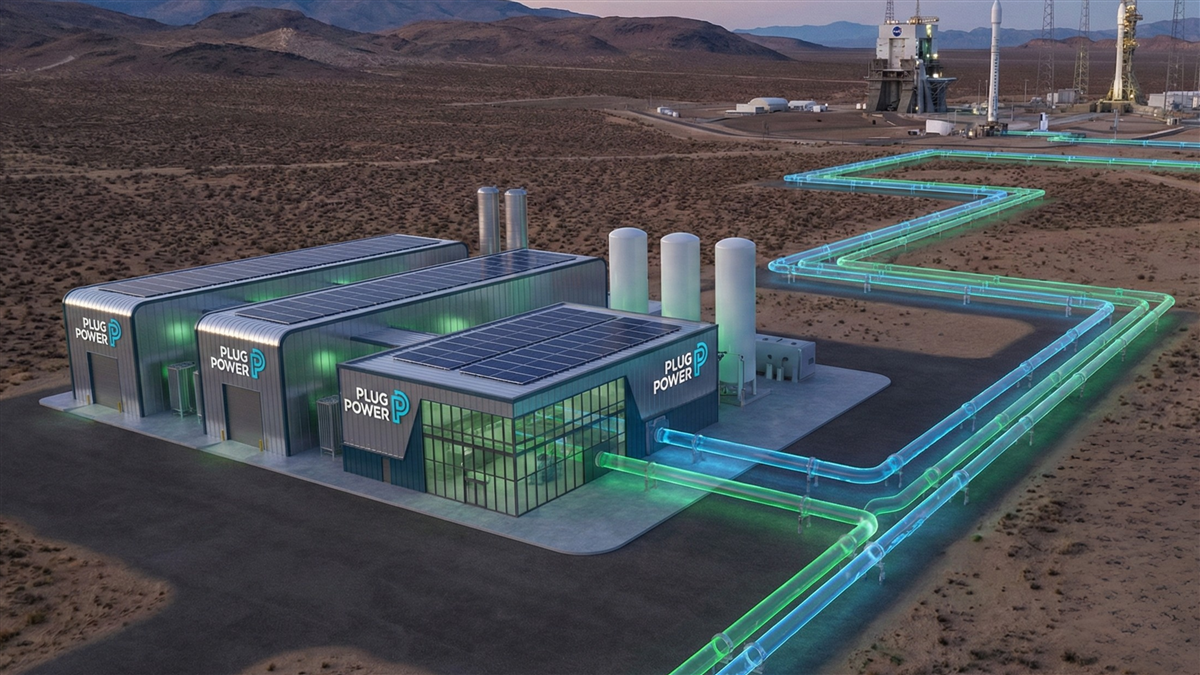
"Is hydrogen dead?" That has been the prevailing question for investors watching the renewable energy sector throughout 2025. After a year of brutal stock performance and retreating sentiment, the industry desperately needed a sign of life. It just got one from the most demanding customer in the solar system. NASA does not think hydrogen is dead. In fact, the agency is betting its mission-critical operations on it.
Plug Power (NASDAQ: PLUG) has officially commenced a contract to supply NASA with liquid hydrogen. This development comes at a critical juncture for the company. While Plug Power’s stock price has struggled significantly over the past year due to cash burn concerns and delayed profitability, this partnership offers something money cannot always buy: absolute validation.
Winning a contract with an aerospace agency known for zero-tolerance policies regarding reliability and purity challenges the bearish narrative that hydrogen technology is too difficult or unreliable for scale. This contract acts as a seal of quality for Plug Power’s production network. When paired with the company's recent financial restructuring, it suggests that Plug Power is turning a corner. The narrative is shifting from speculative cash burn to validated execution, potentially signaling that the bottom for investor sentiment may finally be in sight.
To understand the significance of this deal, investors must look past the headline dollar amount. Under the agreement, Plug Power will supply up to 218,000 kilograms (approximately 480,000 pounds or 240 tons) of liquid hydrogen to NASA’s Glenn Research Center in Cleveland, Ohio, and the Neil A. Armstrong Test Facility in Sandusky, Ohio. The total value of the contract is up to $2.8 million.
From a purely financial perspective, $2.8 million will not single-handedly repair the company's earnings misses or reverse recent revenue declines. However, viewing this solely as a revenue event misses the forest for the trees. The true value lies in the NASA Standard.
Liquid hydrogen is notoriously difficult to handle. It must be kept at extremely low temperatures (cryogenic) and requires sophisticated infrastructure to transport and store without significant loss. Furthermore, NASA requires extreme purity. Contaminants in hydrogen fuel can be catastrophic for aerospace testing and operations.
By selecting Plug Power, NASA is effectively certifying that the company’s green hydrogen network, spanning plants in Georgia, Tennessee, and Louisiana, is robust enough to meet these stringent requirements. This has a ripple effect across the industrial sector. If Plug Power’s infrastructure is reliable enough for NASA, it validates the technology for every other industrial use case, from data centers to logistics and heavy manufacturing. It proves that the company’s production capabilities have moved beyond the science-project phase and are now operational, reliable, and ready for the most demanding tasks.
The NASA contract serves as the latest link in a growing chain of commercial victories that demonstrate real-world demand is materializing. Just recently, Plug Power secured a significant expansion of its partnership with Uline, a major North American logistics leader. That agreement extends their relationship through 2030, locking in long-term demand for hydrogen fuel cells.
These deals share a common theme: reliability. Uline extended its contract because the fuel cells effectively power its daily logistics operations without interruption. NASA signed on because the fuel meets their exacting purity standards. Additionally, the company has moved forward with a massive framework agreement for 3 gigawatts (GW) of electrolyzers with Allied Green Ammonia.
These developments highlight a critical trend for investors. Plug Power is transitioning its business model. For years, the company was in construction mode, burning cash to build plants and develop technology. Now, it is entering delivery mode, where the focus shifts to selling molecules and equipment to established customers. This transition significantly lowers execution risk. The question is no longer "can they build it?" but rather "how fast can they sell it?"
Technological validation is meaningless if a company runs out of cash to keep the lights on. Liquidity has been the primary risk hanging over Plug Power, driving much of the stock's decline in 2025. However, the company has recently taken aggressive steps to solve this problem and stabilize the ship.
Plug Power recently closed a successful $431.25 million convertible note offering. This move netted the company approximately $399 million in cash. Management used this capital strategically to retire high-cost debt and eliminate a restrictive first-lien debt structure.
Eliminating the first-lien debt is a crucial detail for investors. It removes restrictive covenants that can limit a company's ability to maneuver, and it reduces the immediate pressure on the balance sheet. This effective clearing of the financial runway gives the company the breathing room it needs to execute its 2026 goals without the immediate threat of a liquidity crunch.
Looking ahead, the company is also seeking strategic flexibility. A shareholder meeting scheduled for Jan. 15, 2026, will include a vote to increase the number of authorized shares. While some investors view this with caution regarding potential dilution, it is a standard move for growth companies. It ensures management has the tools in the toolbox to fund future expansion opportunities or manage the balance sheet if necessary, rather than being forced into unfavorable financing terms.
The investment case for Plug Power has evolved significantly over the last quarter. The stock is trading at a fraction of its former highs, yet the company’s operational reality is arguably stronger than ever. It has operational plants, blue-chip customers like Uline, and now, government customers like NASA.
The NASA contract marks a potential bottom in sentiment. It provides the technical validation needed to counter the bearish narrative questioning the technology's viability. For investors looking for high-growth potential in the global energy transition, Plug Power offers a compelling risk/reward profile at these levels. The company has survived the market shakeout, stabilized its finances with fresh capital, and is now supplying the most demanding customer in the solar system.
Before you make your next trade, you'll want to hear this.
MarketBeat keeps track of Wall Street's top-rated and best performing research analysts and the stocks they recommend to their clients on a daily basis.
Our team has identified the five stocks that top analysts are quietly whispering to their clients to buy now before the broader market catches on... and none of the big name stocks were on the list.
They believe these five stocks are the five best companies for investors to buy now...
The article "NASA Calls, Plug Answers: A Turning Point for Hydrogen?" first appeared on MarketBeat.
| 2 hours | |
| Mar-30 | |
| Mar-27 | |
| Mar-23 | |
| Mar-20 | |
| Mar-16 | |
| Mar-12 | |
| Mar-10 | |
| Mar-09 | |
| Mar-09 | |
| Mar-09 | |
| Mar-09 | |
| Mar-08 | |
| Mar-08 | |
| Mar-05 |

Join thousands of traders who make more informed decisions with our premium features. Real-time quotes, advanced visualizations, alerts, and much more.
Learn more about Finviz Elite