JPMorgan Chase Just Recommended Buying PepsiCo in 2026. Here Are the Tailwinds Buoying the Stock.
Key Points
The company’s plan to pare its brand catalog should be a catalyst for the stock.
The decision to ditch some lagging labels shows PepsiCo is listening to an activist investor.
A renewed emphasis on customer and shareholder value could also result in share price gains.
Sometimes, less is more, and addition is realized by subtraction. PepsiCo (NASDAQ: PEP) is coming to terms with those facts.
Among other initiatives aimed at creating shareholder value, the beverage giant announced Tuesday that it will eliminate nearly 20% of the products in its portfolio by early 2026. That's not necessarily a bad thing because it's not a stretch to say that the portfolio has gotten a bit too sprawling.
Where to invest $1,000 right now? Our analyst team just revealed what they believe are the 10 best stocks to buy right now, when you join Stock Advisor. See the stocks »
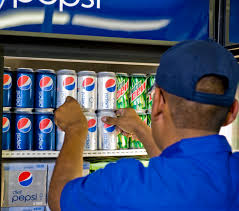
Image source: Getty Images
That news has resulted in an endorsement from a sell-side analyst: J.P. Morgan's Andrea Teixeira upgraded her take on the consumer staples stock to overweight from neutral, and boosted her price target on it from $151 to $164, implying upside of 10.2% from its closing price last Wednesday. Analyst upgrades can act as nice short-term sparks, but the good news for PepsiCo shareholders is that the stock could be a catalyst-rich idea for 2026.
PepsiCo is listening to an activist investor
While PepsiCo didn't explicitly say that it's reducing its brand lineup at the behest of activist investor Elliott Investment Management, the move shows the company is willing to listen and engage in constructive dialogue. Elliott applauded the effort and Pepsi's broader plans, noting that improved innovation and a greater focus on costs could be a catalyst for profit and sales growth.
The point is that some companies clash with activist firms, engaging in lengthy, unproductive battles with them that result in little share price appreciation. At the moment, the relationship between Elliott and Pepsi appears more congenial, and that's worth acknowledging heading into 2026 because it shows the soft drink maker is open to the firm's ideas. It previously pitched the idea of Pepsi jettisoning its North American bottling operations. Maybe that will happen. If it does, it would provide a clear tailwind for the stock. Perhaps it won't happen, but the point is that Pepsi is listening.
As for the brands the Ruffles maker is considering eliminating, it didn't elaborate, but it has 60 main brands to choose from, and a target of 20% suggests that 12 are headed out the door. That reshuffling could be valuable in terms of trimming operating expenses while boosting operating margins. Other benefits of clearing out lagging brands include paving the way for Pepsi to launch compelling new products while innovating more with the labels that consumers are responding to.
For investors trying to determine which brands Pepsi might divest, there are old rumors about a potential plan to sell off the Quaker Oats division, which Pepsi had to acquire to complete its Gatorade deal in 2000. If Pepsi goes down that road, it would wave goodbye to Cap'n Crunch, Pasta Roni, and Pearl Milling, among others.
More 2026 tailwinds for PepsiCo
PepsiCo's decision to play nice with Elliott is commendable, and getting away from its low-growth brands is a wise move. However, there are other reasons the stock enters 2026 with some momentum. The company is refreshing its value proposition, a significant move for a consumer-facing company.
In simple terms, Pepsi is making some of its products more cost-effective, and consumers are responding. JPMorgan points out snack sales are perking up, and when shoppers see products as offering value, they tend to buy more of them.
Those trends bode well for the company meeting its 2026 goal of organic sales growth of 2% to 4%. If it gets to the high end of that range -- or better yet, tops it -- the stock could be worth snacking on next year.
Should you invest $1,000 in PepsiCo right now?
Before you buy stock in PepsiCo, consider this:
The Motley Fool Stock Advisor analyst team just identified what they believe are the 10 best stocks for investors to buy now… and PepsiCo wasn’t one of them. The 10 stocks that made the cut could produce monster returns in the coming years.
Consider when Netflix made this list on December 17, 2004... if you invested $1,000 at the time of our recommendation, you’d have $513,353!* Or when Nvidia made this list on April 15, 2005... if you invested $1,000 at the time of our recommendation, you’d have $1,072,908!*
Now, it’s worth noting Stock Advisor’s total average return is 965% — a market-crushing outperformance compared to 193% for the S&P 500. Don’t miss out on the latest top 10 list, available when you join Stock Advisor.
*Stock Advisor returns as of December 8, 2025
Todd Shriber has no position in any of the stocks mentioned. The Motley Fool has no position in any of the stocks mentioned. The Motley Fool has a disclosure policy.
Mentioned In This Article
Latest News
| 2 hours | |
| 3 hours | |
| 3 hours | |
| 6 hours | |
| Oct-08 | |
| Oct-08 | |
| Oct-08 | |
| Oct-08 | |
| Oct-08 | |
| Oct-08 | |
| Oct-08 | |
| Oct-08 | |
| Oct-08 | |
| Oct-08 | |
| Oct-08 |
