Vertical Aerospace Traded a Delay for a Major Advantage
Following the global launch event earlier this month, investors in Vertical Aerospace (NYSE: EVTL) were left with one lingering question: When would the critical piloted transition flight occur? In late December, Vertical delivered investors an early Christmas present by providing a transparent answer.
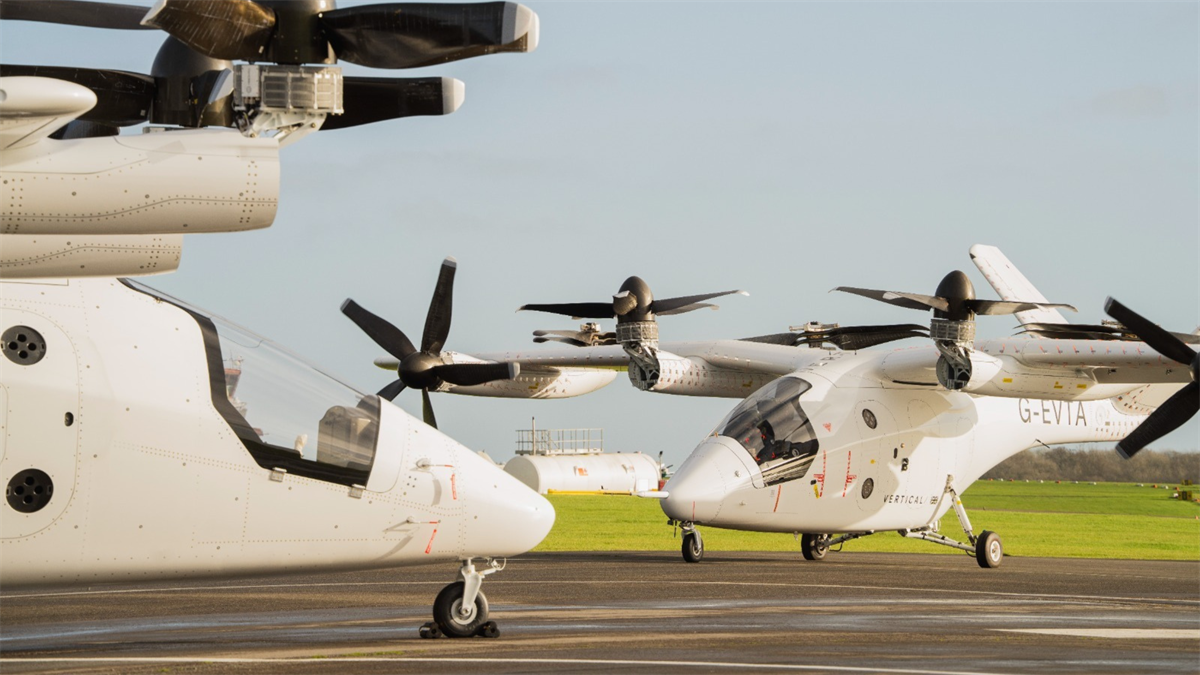
While the full transition flight has been rescheduled for early 2026 due to limited weather windows and testing availability, this update was accompanied by a far more significant development. Vertical Aerospace announced the completion of its third full-scale prototype aircraft.
The market’s reaction to this news was telling. Rather than punishing the stock for a minor timeline slip, shares rebounded to trade around $5.69. This resilience suggests that investors who are in the know are looking past the tactical delay and focusing on the strategic game-changer: Vertical has transformed from a single-prototype tester into a fleet operator. By trading a few weeks of delay for a doubling of testing capacity, the company has positioned itself for a year of rapid execution, potentially widening the disconnect between its operational reality and its current market valuation.
Strategic Acceleration: The Power of a Multi-Aircraft Fleet
In the world of aerospace certification, data is the most valuable currency. The speed at which a company can gather, analyze, and validate flight data directly correlates to how quickly it can achieve certification and begin generating revenue. This is why the completion of Aircraft 3 is a material event that outweighs the short postponement of a single test maneuver.
The new aircraft is identical to the current full-scale prototype. Its introduction into the program creates a force multiplier effect for the engineering team. Starting in January 2026, Vertical Aerospace will be able to conduct flight tests on two fronts simultaneously. This effectively doubles the rate at which the company can accumulate flight hours and validate critical systems.
However, the benefits extend beyond simple speed. Operating a multi-aircraft fleet introduces vital operational redundancy. In a single-aircraft program, any requirement for maintenance, software updates, or minor repairs brings the entire testing campaign to a halt. With two aircraft, the program can continue moving forward even if one unit is in the hangar for scheduled work. This continuity is essential for maintaining momentum during the rigorous certification phase.
Furthermore, this fleet expansion allows for parallel workstreams. The company plans to utilize the new capacity to manage different testing objectives simultaneously. While one aircraft focuses on the immediate all-electric certification requirements, the other can be prepared for the upcoming integration of the hybrid-electric powertrain later in 2026. This ability to parallel-process complex engineering tasks is one that many competitors, who are often reliant on a single conforming prototype, simply do not possess. It allows Vertical to catch up to, and potentially surpass, peers by running multiple development timelines in parallel.
The Regulatory Unlock: Speeding Up by Cutting Red Tape
Buried within the recent updates was a detail that may be the most significant indicator of Vertical’s maturity: the expansion of its regulatory privileges. The UK Civil Aviation Authority (CAA) has granted the company the authority to approve its own Flight Conditions and issue its own Permits to Fly under defined circumstances.
For investors, it is crucial to understand the economic implications of this privilege. In a typical development program, every change to the flight envelope, flying slightly faster, banking slightly steeper, or operating in different wind conditions, often requires a new sign-off from the regulator. This bureaucratic process can add days or weeks of downtime between flights, burning cash without generating data.
By granting these privileges, the CAA has effectively removed these bottlenecks. Vertical Aerospace can now move at the speed of business by authorizing its own tests within an agreed-upon framework. This trust from a top-tier global regulator is an efficiency boost, allowing the company to maximize flight days and reduce cash burn per test hour. It validates the company's certification moat, demonstrating that its internal engineering processes meet the UK government's highest standards of safety and reliability.
The Valuation Disconnect: Why Wall Street Is Watching
Despite operational strides and a regulatory vote of confidence, Vertical Aerospace’s market capitalization stands at approximately $560 million. This valuation stands in stark contrast to key competitors in the sector, many of whom command multi-billion-dollar valuations despite facing similar certification challenges in addition to capital-intensive operational challenges that Vertical has chosen to avoid. This discrepancy suggests that the market is currently pricing in a high degree of execution risk for Vertical, a risk that the company is actively mitigating through its hardware expansion and regulatory achievements.
Wall Street analysts are beginning to recognize this disconnect. On Dec. 16, Needham & Company raised its price target for Vertical Aerospace to $11.00, up from $9.00. In their note, analysts specifically cited improved execution following a visit to the company's facilities. With the stock trading around $5.70, this revised target implies nearly 100% upside potential.
The thesis from the analyst community is clear: Vertical is checking the right boxes. The Unwarranted Valuation Gap that the company highlighted in its third-quarter presentation is becoming harder to ignore as tangible assets, like the new Aircraft 3, roll off the assembly line.
Furthermore, the company’s specific design advantages, such as the six-passenger configuration, which offers superior operator economics compared to four-passenger competitors, provide fundamental reasons for a higher valuation. While the broader market may be hesitating due to the transition timeline slip, institutional observers appear to be focusing on the company’s strengthened fundamentals and the massive potential for a re-rating as milestones are met in 2026.
Window of Opportunity: The 2026 Catalyst Calendar
As the calendar turns to 2026, the narrative for Vertical Aerospace shifts from anticipating a single event to managing a continuous campaign of high-velocity milestones. The quiet period of late 2025 is expected to give way to a steady stream of data and achievements.
Investors have a clear catalyst calendar to watch. The first flight of the new Aircraft 3 is scheduled for January 2026, which will serve as immediate visual proof of the fleet expansion. Following closely will be the full piloted transition flight in early 2026, the milestone the market has been waiting for. Beyond that, the middle of the year brings the retrofit of the hybrid powertrain, unlocking the lucrative defense and logistics markets.
Vertical Aerospace enters the new year with more hardware, more regulatory privileges, and a clearer financial picture than ever before. The current share price, depressed by a minor timeline shift, may represent a window of opportunity for investors before the full impact of the doubled testing capacity becomes apparent to the broader market.
Where Should You Invest $1,000 Right Now?
Before you make your next trade, you'll want to hear this.
MarketBeat keeps track of Wall Street's top-rated and best performing research analysts and the stocks they recommend to their clients on a daily basis.
Our team has identified the five stocks that top analysts are quietly whispering to their clients to buy now before the broader market catches on... and none of the big name stocks were on the list.
They believe these five stocks are the five best companies for investors to buy now...
The article "Vertical Aerospace Traded a Delay for a Major Advantage" first appeared on MarketBeat.
Mentioned In This Article
Latest News
| Oct-05 | |
| Oct-05 | |
| Oct-02 | |
| Sep-25 | |
| Sep-24 | |
| Sep-21 | |
| Sep-09 | |
| Aug-18 | |
| Aug-14 | |
| Aug-13 | |
| Aug-10 | |
| Aug-10 | |
| Aug-04 | |
| Jul-27 | |
| Jul-24 |
