|
|
|

|
|||||
|
|
|
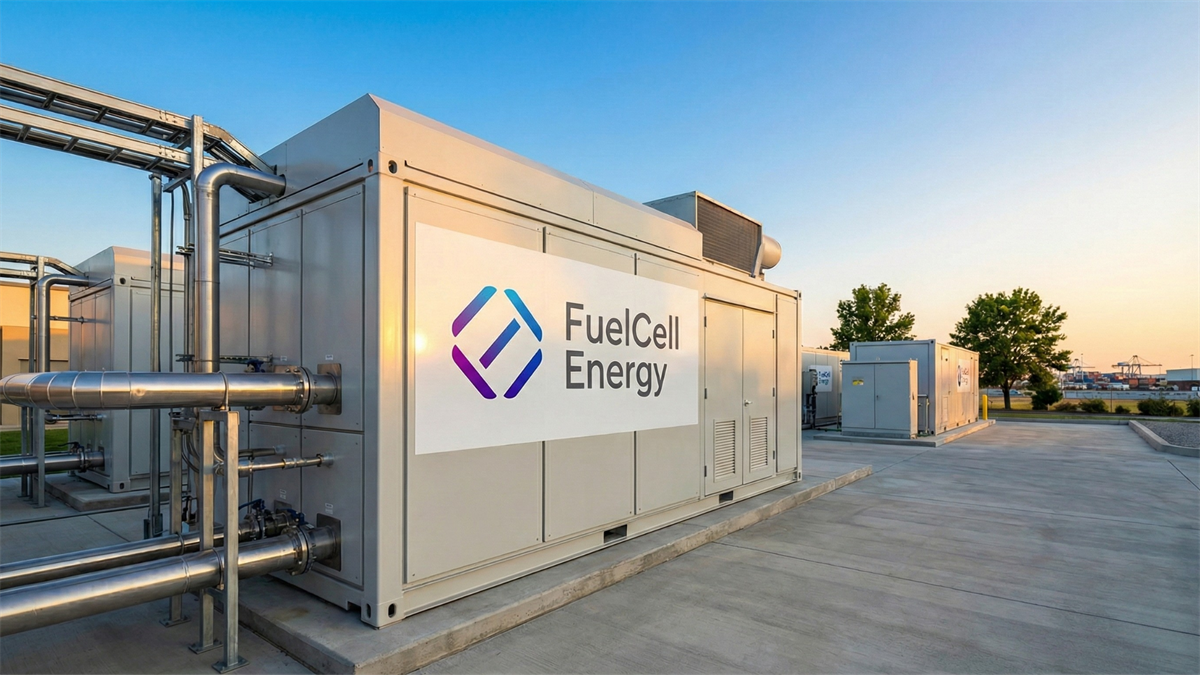
Wall Street loves a comeback story, and in late December 2025, FuelCell Energy (NASDAQ: FCEL) delivered one of the most dramatic reversals in the energy sector. After months of downward pressure that tested the patience of long-term shareholders, the stock has roared back to life. Following its earnings report released in mid-December, shares are up approximately 34% over just a few trading sessions.
This move was not a quiet uptick. It was a decisive technical breakout that saw FuelCell’s stock price reclaim the $8.60 to $8.75 trading range. Perhaps most importantly for technical traders, the price crossed above its 200-day moving average, a technical indicator that often accompanies a breakout.
This rally appears to have deep fundamental roots. The market is reacting to concrete financial improvements, a fortified balance sheet, and a strategic pivot toward one of the most lucrative sectors in the global economy: Artificial Intelligence (AI) data centers.
The foundation of this recent rally was built on the tangible results delivered in the fourth quarter of FuelCell's fiscal year 2025.
Before the Dec. 18 report, investors had muted expectations, but the company delivered a performance that surprised the market to the upside.
FuelCell Energy reported Q4 revenue of $55 million, a 12% increase compared to the same period last year.
This figure significantly outperformed analyst consensus estimates, demonstrating that the company can generate sales growth even during a significant corporate restructuring.
Looking at the full fiscal year, the growth trajectory is even clearer. Revenue for 2025 hit $158.2 million, representing a 41% jump from the prior year.
Beyond top-line growth, the company showed discipline on the bottom line. The financial improvements include:
These numbers signal to investors that management’s cost-cutting initiatives are taking hold, potentially shortening the timeline to profitability.
While earnings sparked the rally, the AI Power Crunch is the fuel. The rapid expansion of artificial intelligence has created an insatiable demand for electricity. Hyperscale data centers require massive amounts of power to run servers 24 hours a day, seven days a week.
This creates a severe problem for the traditional power grid. In many parts of the United States, particularly data center hubs like Northern Virginia, the grid is congested. New transmission lines can take years to permit and build. Furthermore, while tech companies prioritize green energy, renewable sources like solar and wind are intermittent; they do not generate power when the sun isn't shining or the wind isn't blowing. AI models cannot afford downtime.
This is where FuelCell Energy’s carbonate platform creates a unique value proposition. The technology generates electricity on-site using natural gas or biogas, bypassing the stressed grid entirely. It provides baseload power, meaning it runs continuously, offering the reliability that data centers demand.
During the recent earnings call, management disclosed a crucial detail that excited investors: they currently have hundreds of megawatts in pricing proposals out to potential customers. This includes hyperscalers, utilities, and developers. While a proposal is not a signed contract, this level of activity suggests the data center narrative has moved from a theoretical concept to a tangible pipeline of opportunities.
For growth companies in the clean energy sector, liquidity is often the primary risk factor. Investors frequently worry that a company will need to conduct a secondary stock offering to fund operations, thereby diluting the value of existing shares. FuelCell Energy effectively addressed this concern with its year-end financial update.
The company ended the fiscal year with a solid liquidity position:
This creates a substantial runway for operations. Furthermore, management provided clear guidance on spending for fiscal year 2026. Capital expenditures (CapEx) are expected to range between $20 million and $30 million. Notably, this capital is targeted specifically at expanding manufacturing capacity rather than just maintenance.
This spending plan signals confidence; companies generally do not expand factories unless they anticipate orders to fill them. For investors, this strong cash position mitigates the immediate risk of dilution and provides the stability needed to negotiate large, complex contracts with risk-averse data center operators who need to know their power provider will be around for the long haul.
To win contracts with major U.S. technology firms, a company must prove its technology works at scale. FuelCell Energy is using its operations in South Korea as its primary resume builder.
The revenue growth seen in 2025 was primarily driven by the successful delivery of 22 fuel cell modules to Gyeonggi Green Energy (GGE).
GGE is the world’s largest fuel cell park. Successfully manufacturing, shipping, and installing modules for a facility of this magnitude serves as a powerful proof of concept. It demonstrates that FuelCell Energy can manage complex global supply chains and deliver utility-scale power.
Validation also came from the financial sector. Earlier in December, the company secured approximately $25 million in debt financing from the Export-Import Bank of the United States (EXIM).
This funding is allocated to support the GGE project. Support from a federal agency like EXIM serves as a third-party endorsement of the asset quality and the company's ability to execute on international contracts. The logic for investors is straightforward: if the technology can power a massive facility in Korea, it is capable of powering server farms in the United States.
The recent stock performance indicates that the market views FuelCell Energy differently than it did just a few months ago. It has transitioned from a distressed asset into a momentum play backed by improving fundamentals and a clear strategic direction. However, the work is not finished.
Management has outlined a clear metric for success. The company aims to achieve positive adjusted EBITDA once its manufacturing facility in Torrington, Connecticut, reaches an annualized production rate of 100 megawatts. Currently, utilization is roughly 40%. Closing the gap between current production and that 100 MW target is the primary objective for the coming year.
The 34% rally reflects a renewed belief that this goal is attainable. With a stable backlog of $1.19 billion and a pipeline full of data center proposals, the pieces are in place. The task now is to convert those proposals into signed contracts. If FuelCell Energy can lock in U.S. data center customers in 2026, the recent surge may be just the beginning of a longer-term recovery.
Before you make your next trade, you'll want to hear this.
MarketBeat keeps track of Wall Street's top-rated and best performing research analysts and the stocks they recommend to their clients on a daily basis.
Our team has identified the five stocks that top analysts are quietly whispering to their clients to buy now before the broader market catches on... and none of the big name stocks were on the list.
They believe these five stocks are the five best companies for investors to buy now...
The article "From Lagging to Leading: FuelCell Energy’s Strategic Pivot" first appeared on MarketBeat.
| Jun-26 | |
| Jun-26 | |
| Jun-24 | |
| Jun-24 | |
| Jun-24 | |
| Jun-24 | |
| Jun-16 | |
| Jun-12 | |
| Jun-11 | |
| Jun-09 | |
| Jun-09 | |
| Jun-09 | |
| Jun-08 | |
| Jun-08 | |
| Jun-08 |
FuelCell Energy Stock Sinks On Weak Earnings But Holds Key Support
FCEL +12.84% FCEL -10.56%
Investor's Business Daily
|

Join thousands of traders who make more informed decisions with our premium features. Real-time quotes, advanced visualizations, alerts, and much more.
Learn more about Finviz Elite