|
|
|

|
|||||
|
|
|
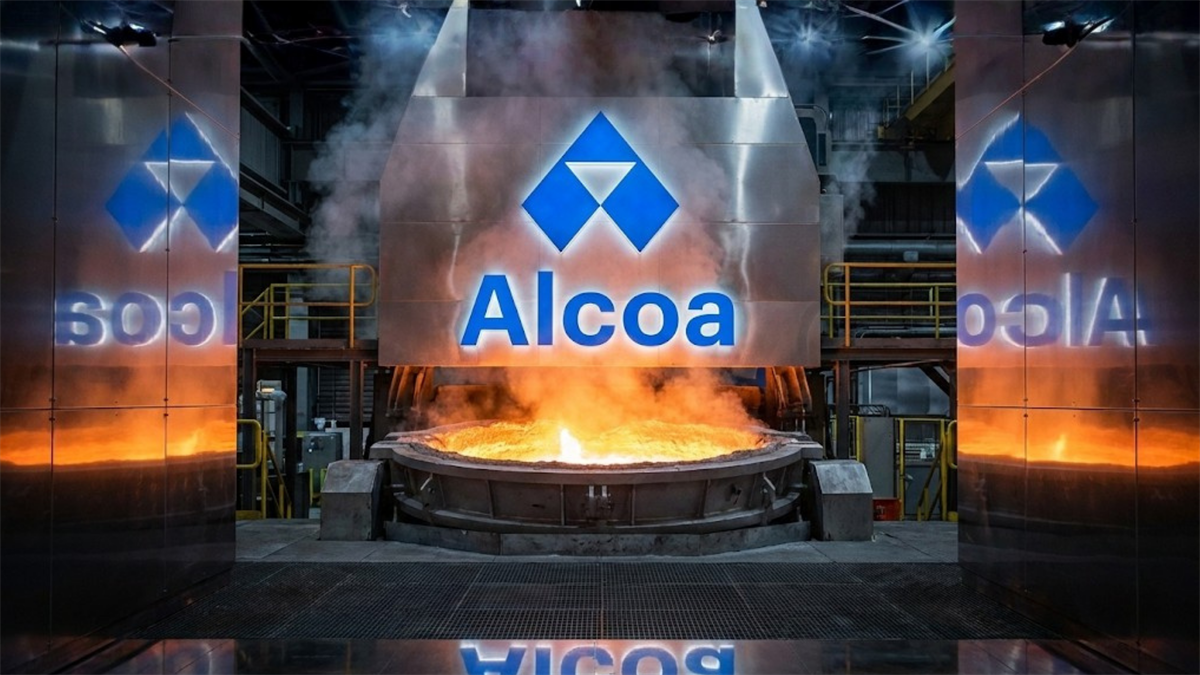
The stock market of 2026 has opened with a distinct change in character. For the better part of the last decade, technology companies and software giants dominated investor portfolios. However, the first week of January has signaled a violent rotation of capital away from intangible tech and into hard assets. Investors are waking up to a reality where the physical materials required to build the world, steel, copper, and aluminum, are in short supply.
Alcoa Corporation (NYSE: AA) sits at the epicenter of this shift. The Pittsburgh-based aluminum producer has seen its stock price surge approximately 20% since New Year's Day, significantly outperforming the S&P 500. While rapid price spikes often invite skepticism, the data suggests this movement is driven by fundamental structural changes in the global economy rather than fleeting speculation.
Alcoa is currently benefiting from a perfect storm of catalysts: a massive new source of demand from South America, a supply chain constrained by Asian production caps, and a corporate structure that has been streamlined for maximum profitability. For investors, the question is no longer whether to own industrial stocks, but which ones offer the best exposure to this unfolding super-cycle.
On the morning of Jan. 6, 2025, Alcoa stock broke through a critical ceiling. Trading over $64.00, the stock broke through its previous 52-week high of $61.76. In technical analysis, this is known as entering blue sky territory, where there is no historical resistance left to hold the price back. This breakout is supported by heavy trading volume, indicating that major institutional players are accumulating the stock.
The primary engine behind this move is the Venezuela Reconstruction narrative. Following the recent regime change, global markets are pricing in a massive, U.S.-backed infrastructure rebuild. This is widely considered a second derivative trade. The first derivative was buying oil stocks; the second is purchasing the materials needed to rebuild the country’s shattered power grids, ports, and refineries.
This is where aluminum becomes essential. Modern high-voltage electrical grids rely heavily on aluminum because it is lighter and more cost-effective than copper. Consequently, aluminum futures on the London Metal Exchange (LME) have crossed the psychological threshold of $3,000 per metric ton.
However, demand is only half the story. Prices are also rising because supply is incredibly tight. China, which produces more than half the world's aluminum, has strictly capped its annual capacity at 45 million metric tons to meet environmental targets and manage energy consumption. With China unable to flood the market to cool prices, and demand ramping up from the green energy transition and the Venezuela rebuild, the world faces a structural deficit. This imbalance creates a price floor under the commodity, directly benefiting producers like Alcoa.
Not all aluminum companies benefit equally when commodity prices rise. Many competitors are merely manufacturers; they have to buy raw aluminum at market prices to make car parts or soda cans. When aluminum hits $3,000 per ton, their costs skyrocket, and their profit margins shrink.
Alcoa is different because it is vertically integrated. This means the company owns the entire supply chain. It mines its own bauxite (the raw ore), refines it into alumina, and smelts it into aluminum. By owning the raw materials, Alcoa shields itself from rising input costs. When the price of aluminum increases, Alcoa captures that value at every stage of the production process, significantly expanding its margins.
The company has also spent the last two years simplifying its business. Following the 2024 acquisition of Alumina Limited, Alcoa has transformed into a pure-play operator. It has shed complex joint ventures and non-core assets to focus entirely on upstream production. This clarity makes the stock an attractive vehicle for investors who want direct exposure to aluminum prices without the baggage of a diversified conglomerate.
Financially, the company is positioned to handle this growth aggressively. Alcoa holds a Green Zone health rating through TradesSmith, a metric used to evaluate financial stability. Its debt-to-equity ratio (D/E) stands at a conservative 0.40, indicating the company is not over-leveraged. Furthermore, recent asset sales, specifically the divestment of its stake in the Ma’aden joint venture, have injected significant cash into the balance sheet. This liquidity ensures Alcoa can ramp up production to meet South American demand without taking on dangerous levels of new debt.
A confusing signal for many investors is the current disconnect between Alcoa’s stock price and Wall Street’s expectations. As of Tuesday, Alcoa trades around $64, yet the average analyst price target remains stuck near $47. Typically, when a stock trades 23% above its price target, it is viewed as overvalued. However, in this scenario, the data suggests the analysts are simply behind the curve.
Wall Street models are complex and often slow to update. When a geopolitical event, such as the Venezuela reconstruction narrative, suddenly alters the global supply-demand balance, the stock market reacts instantly. Analyst reports, however, can take weeks to adjust. The current gap implies that the market has repriced Alcoa for a $3,000 aluminum world, while analyst models are likely still using older, lower commodity price assumptions.
Investors should expect a wave of forced upgrades in the coming weeks. As major banks adjust their inputs, they will likely raise their price targets to align with the current reality, potentially creating a feedback loop that drives the stock higher.
Despite the rally, the stock’s valuation remains grounded. Alcoa trades at a price-to-earnings ratio (P/E) of approximately 14.5x. For a market leader in a booming sector, this is far from expensive.
The next major checkpoint arrives on Jan. 22, 2026, when Alcoa releases its fourth-quarter earnings. The market is effectively pricing in a beat, but the real focus will be on the company's outlook. Investors will be listening closely for confirmation that realized prices are tracking with the LME spot market and for any guidance regarding shipment volumes to the Venezuelan reconstruction projects.
The surge in Alcoa’s stock price is not a temporary fluctuation; it is the market acknowledging a new economic reality. The era of cheap, abundant raw materials appears to be over, replaced by a period of scarcity and high demand.
Alcoa stands as the premier vehicle to navigate this environment. It combines the aggressive upside of a commodity breakout with the defensive safety of a clean balance sheet and a vertically integrated business model. While short-term volatility is always a risk after such a sharp rally, the long-term trend is clear. As the world pivots to rebuilding infrastructure, from the grids of South America to the global green energy transition, Alcoa has established itself as a foundational holding for the year ahead.
Before you make your next trade, you'll want to hear this.
MarketBeat keeps track of Wall Street's top-rated and best performing research analysts and the stocks they recommend to their clients on a daily basis.
Our team has identified the five stocks that top analysts are quietly whispering to their clients to buy now before the broader market catches on... and none of the big name stocks were on the list.
They believe these five stocks are the five best companies for investors to buy now...
The article "Alcoa at $64: The Reconstruction Trade Ignites a New Breakout" first appeared on MarketBeat.
| Apr-01 | |
| Mar-31 | |
| Mar-31 | |
| Mar-30 | |
| Mar-30 | |
| Mar-30 | |
| Mar-30 | |
| Mar-30 | |
| Mar-30 | |
| Mar-30 | |
| Mar-30 | |
| Mar-30 | |
| Mar-30 | |
| Mar-30 | |
| Mar-30 |

Join thousands of traders who make more informed decisions with our premium features. Real-time quotes, advanced visualizations, alerts, and much more.
Learn more about Finviz Elite