The Super Bowl Catalyst: Why DraftKings Could Snap Back Fast
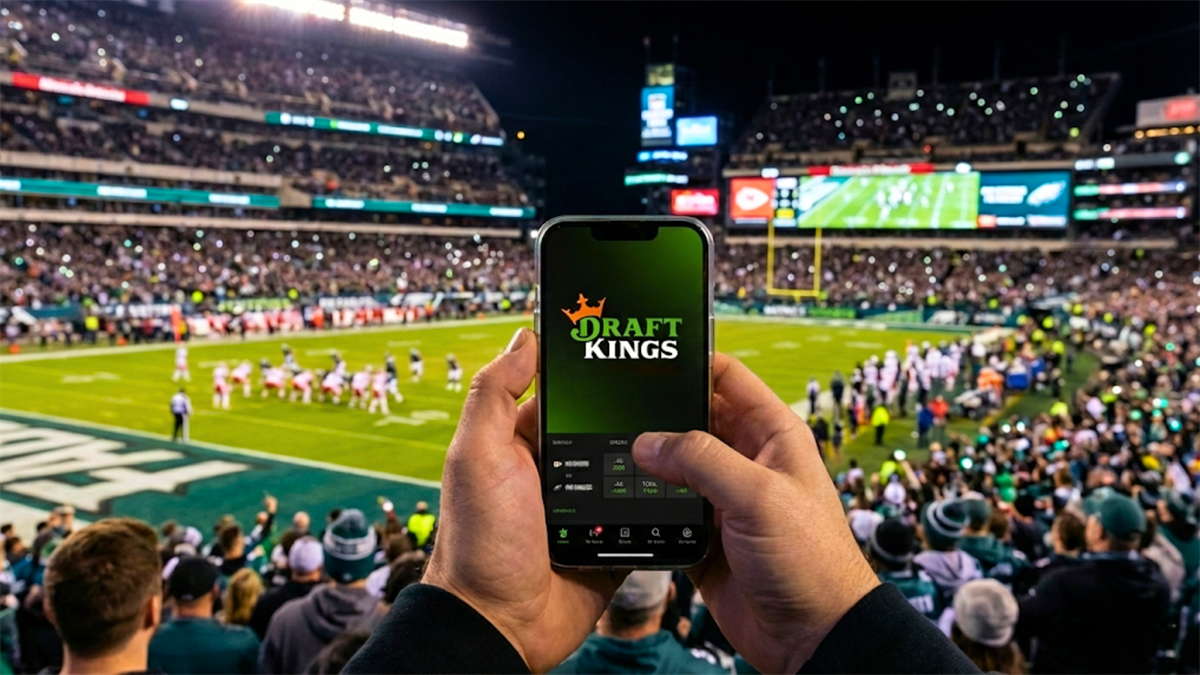
Investing in the gaming sector often requires a strong stomach, not just for the regulatory headlines, but for the games themselves. Recently, DraftKings (NASDAQ: DKNG) stock has experienced some turbulence, dropping approximately 8% to trade near $32.25. While broader market forces played a role in the drop, the primary culprit appears to be the scoreboard.
During the recent NFL playoffs, customer-friendly outcomes, where favorites win and cover the point spread, have forced sportsbooks to pay out heavily. When the betting public wins, the house loses revenue in the short term. However, punishing a casino stock because players had a lucky weekend ignores the fundamental reality of the gambling industry: the house always wins eventually.
High payouts are a variance issue, not a structural flaw. Unlike a coffee shop that sells a latte for a fixed margin, a sportsbook’s margin fluctuates based on who wins the game. With the stock trading significantly below its 52-week high of $53.61 and the Super Bowl approaching, a disconnect has formed between short-term luck and long-term business growth. Investors looking at the ticker today are seeing a price driven by last week’s game scores, not next year’s earnings potential.
Luck vs. Logic: The Truth About Hold Rates
To understand why the recent sell-off may be an overreaction, investors must distinguish between two critical metrics: Handle and Hold Rate.
- Handle is the total amount of money wagered by customers. This measures the volume and health of the business.
- Hold Rate is the percentage of that handle the sportsbook keeps as revenue after paying out winnings.
In the gambling business, the Hold Rate fluctuates wildly from week to week. Sometimes the underdog wins, and the sportsbook keeps a large portion of the bets. Other times, like the recent NFL playoffs, the favorites win, and the sportsbook pays out cash. This volatility was also evident in the third quarter of 2025, which can serve as a recent example of this dynamic. DraftKings reported that unfavorable NFL outcomes cost the company more than $300 million in revenue during the quarter.
However, looking past the lost revenue reveals a stronger underlying business. Despite the bad luck on the field, the total amount wagered (Handle) grew by 10% year-over-year to $11.4 billion. This indicates that customer engagement is at an all-time high.
This dynamic is known as mean reversion. Over a long enough timeline, win rates normalize. Investors selling stock now are effectively reacting to last week's game score rather than the casino's long-term health. If the betting volume continues to grow by double digits, revenue will inevitably follow once the game scores return to statistical averages.
Engineering a Better House Edge
DraftKings is not simply waiting for luck to turn in its favor. The company is actively engineering its platform to generate higher margins through a concept called Structural Hold. This involves shifting the mix of bets toward products that are inherently more profitable for the operator, specifically parlays.
A parlay is a single bet that links together two or more individual wagers. For the bettor to win, every single leg of the parlay must win. If even one leg fails, the house keeps the entire wager. Mathematically, these bets are much harder for customers to win, meaning they carry significantly higher margins for DraftKings compared to traditional straight bets on a game winner.
Recent data confirms that DraftKings is successfully driving this shift:
- NFL Parlay Mix: Increased by 800 basis points in recent reporting periods.
- NBA Parlay Mix: Increased by 1,000 basis points year-over-year.
As the mix of wagers shifts toward these complex bets, the company’s Structural Hold increases. This effectively insulates the company from long-term volatility. Even if a few NFL favorites cover the spread in January, the structural advantage of parlays ensures that the company remains profitable over the course of a full season. This strategic pivot transforms the business model from one dependent on game outcomes to one driven by product mix.
A Floor Under the Price: Buybacks, Bulls, Taxes, and Targets
Beyond football scores, negative sentiment has also been fueled by regulatory headlines. News recently emerged regarding a proposal in Arizona to potentially raise taxes on gaming operators to as high as 45%. This mirrors similar tax hikes seen in states like Illinois during 2024. While higher taxes are a legitimate headwind that eats into profits, the market often prices in the worst-case scenario immediately.
However, the Illinois Precedent suggests resilience. When Illinois raised taxes, DraftKings adapted by adjusting its marketing spend and promotional credits to protect its bottom line. The company has levers to pull to mitigate tax impacts, a nuance often lost in the initial panic selling.
This bearish sentiment has created a noticeable valuation gap. While DraftKings’ stock trades in the low $30s, the financial community sees significantly more value in the company’s cash flow potential.
- Consensus Target: The average analyst price target sits at $47.10, implying an upside of approximately 46% from current levels.
- Bullish Updates: Major financial institutions remain optimistic. In January 2026, analysts at Morgan Stanley raised their price target to $53, citing the company’s strong cash flow trajectory despite the noise around tax rates.
Furthermore, management has put a safety net in place. The DraftKings board has authorized a $2 billion share repurchase program. In the third quarter alone, the company bought back 1.6 million shares. When the stock price drops, this authorization becomes even more powerful. It allows the company to retire more shares for the same amount of cash, which permanently boosts future earnings per share (EPS).
Placing Your Bets: Looking Past the Super Bowl
The factors currently driving DraftKings' stock down are either temporary variance issues or manageable business risks that appear fully priced in at $32 per share.
The upcoming Super Bowl is the year's largest customer-acquisition event. Historically, this event has driven a massive influx of new users and increased betting volume. While the margin on the big game itself matters, the true value lies in acquiring customers who will continue to bet on the NBA, MLB, and future NFL seasons. A low-margin January is a small price to pay for double-digit volume growth.
For investors willing to look past the box scores of the last few weeks, the current dip offers an entry point into a market leader. With growing handle, a structural shift toward high-margin parlays, and a management team actively buying back its own stock, the odds appear to be shifting back in the house's favor.
Where Should You Invest $1,000 Right Now?
Before you make your next trade, you'll want to hear this.
MarketBeat keeps track of Wall Street's top-rated and best performing research analysts and the stocks they recommend to their clients on a daily basis.
Our team has identified the five stocks that top analysts are quietly whispering to their clients to buy now before the broader market catches on... and none of the big name stocks were on the list.
They believe these five stocks are the five best companies for investors to buy now...
The article "The Super Bowl Catalyst: Why DraftKings Could Snap Back Fast" first appeared on MarketBeat.
Mentioned In This Article
Latest News
| 9 hours | |
| 10 hours |
Fanatics CEO Warns $7 Billion Betting Ad War Looms as Kalshi, Polymarket Join Fight
DKNG
Benzinga Prediction Markets
|
| Oct-12 | |
| Oct-09 | |
| Oct-09 | |
| Oct-08 | |
| Oct-08 | |
| Oct-07 |
Cathie Wood Trims SpaceX, DraftKings, Robinhood Shares. Adds $16 Mil In Air Taxi Stocks.
DKNG
Investor's Business Daily
|
| Oct-07 | |
| Oct-07 | |
| Oct-06 |
EXCLUSIVE: Are DraftKings, Flutter Toast? Only 1 in 6 Benzinga Viewers Think Prediction Markets Will Kill Them
DKNG
Benzinga Prediction Markets
|
| Oct-06 | |
| Oct-05 |
DraftKings Stock Jumps On Upgrade, Analyst Sees Prediction Market Wins
DKNG +5.43%
Investor's Business Daily
|
| Oct-05 | |
| Oct-05 |
