3 European Stocks Built to Shrug Off Tariffs

A year into the second Trump administration, the talk of the market has been tariffs, tariffs, and more tariffs. Threats to increase the tariffs on Canada and Mexico, new tariffs on Europe and Asia, and even worldwide ‘reciprocal’ tariffs have sent markets into a tailspin multiple times.
This year kicked off with a new batch of European tariff threats over Denmark’s rebuke of the offer to purchase Greenland, and as of late January, South Korea faces 25% tariffs for not approving the 15% tariffs put in place by last year’s trade deal. Everyone caught up now?
While most tariff threats are mere saber-rattling, the hostility has prompted U.S. trading partners to begin insulating themselves from unpredictable import tax policies. India and China have been particularly aggressive in filling the void left by the United States, and comments by United States and European officials at the Davos summit last week signal that this icy relationship isn’t thawing anytime soon. European stocks also continue to outpace U.S. stocks, and the gap has widened over the last three months with the S&P 500 advancing less than 1.5%.
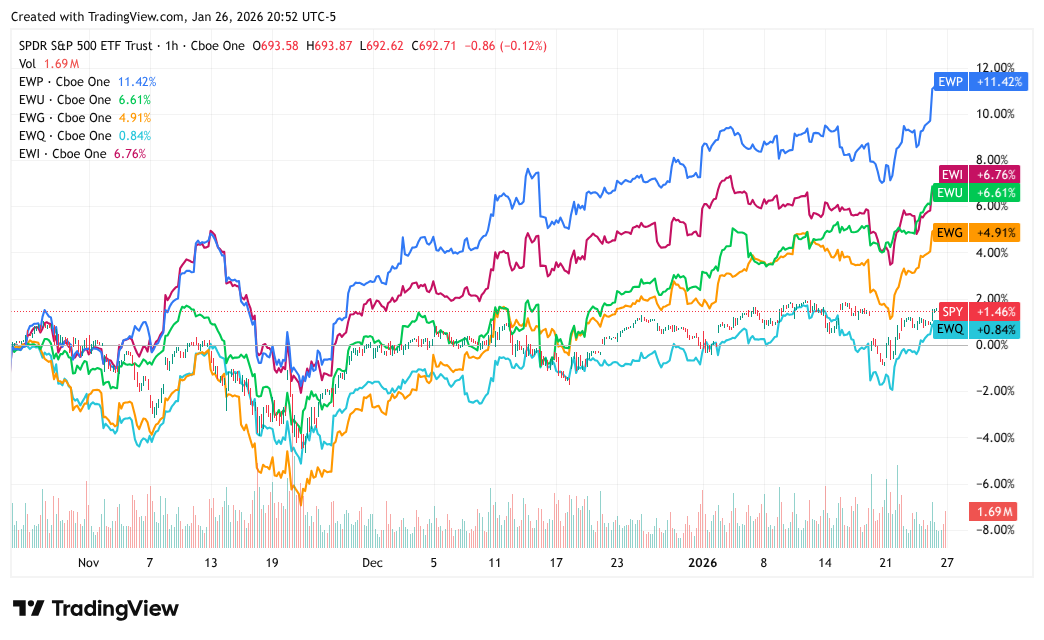
The 'Sell America' trade is likely overblown, but international diversification has been a growing trend for several years now. And with gold and silver reaching new all-time highs, it's apparent that investors are spreading capital across borders and asset classes. Recent moves by BlackRock and Vanguard to reallocate funds internationally emphasize this trend, further nudging investors toward consensus on global diversification. The best-performing international stocks in 2026 will likely be ones with wide moats that protect against U.S. tariffs.
3 European Stocks Minimally Affected by Tariffs
Europe’s tariff reprieve could be short-lived, especially if the bloc continues seeking new agreements with other trading partners. The best way to avoid future unpredictability is to invest in European companies that generate revenue outside the United States, or in companies that sell products and services likely to be exempt from import taxes. Here are three stocks available to trade in the United States that fit that bill. (Note: these stocks all trade over-the-counter as American Depository Receipts, or ADRs. Make sure you understand the differences between ADR and traditional shares before buying).
Rheinmetall: Primary Beneficiary of Increased Defense Spending in Europe
One of 2025’s biggest winners in any market was German defense contractor Rheinmetall AG (OTCMKTS: RNMBY), which is up nearly 200% over the last 12 months and 1,800% in the last five years. We wrote about Rheinmetall’s breakout last year as the Ukraine war deepened and Germany removed the debt brake that limited government defense spending.
Now that the United States has threatened sovereignty in Greenland, European defense budgets will likely make a concerted effort to avoid U.S. contractors like Lockheed Martin Corp. (NYSE: LMT) in favor of domestic enterprises like Rheinmetall.
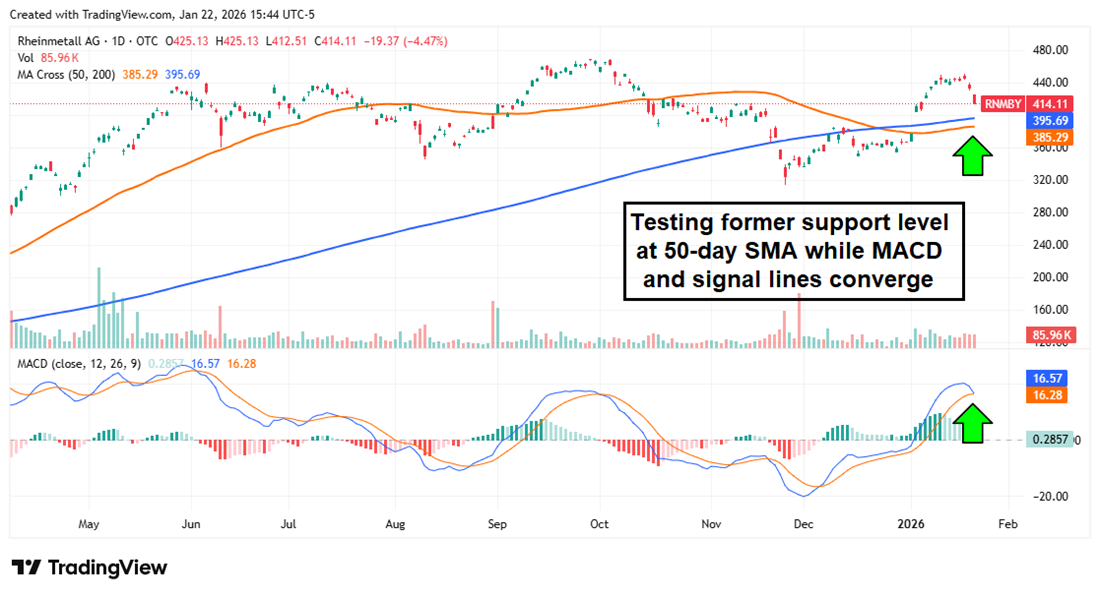
The stock is nearing a crucial inflection point as well, with the share price approaching the 50-day simple moving average (SMA) that had been a strong support level for most of 2025. Despite the technical wobbling, fundamental tailwinds are in place for Rheinmetall to produce outsized gains again in 2026.
BT Group: Safe Sector and Strong Dividend
Utilities and telecommunications stocks are often popular safe havens, and BT Group plc (OTCMKTS: BTGOF) provides mobile and broadband services across the U.K. market. But unlike other European telecom firms, BT Group’s revenue comes almost entirely from domestic customers, and it exports no products or services to the United States. Consistent revenue, a healthy dividend (4.2% yield), and trade war protection are an enticing combo, which explains why shares are up more than 35% in the last 12 months.
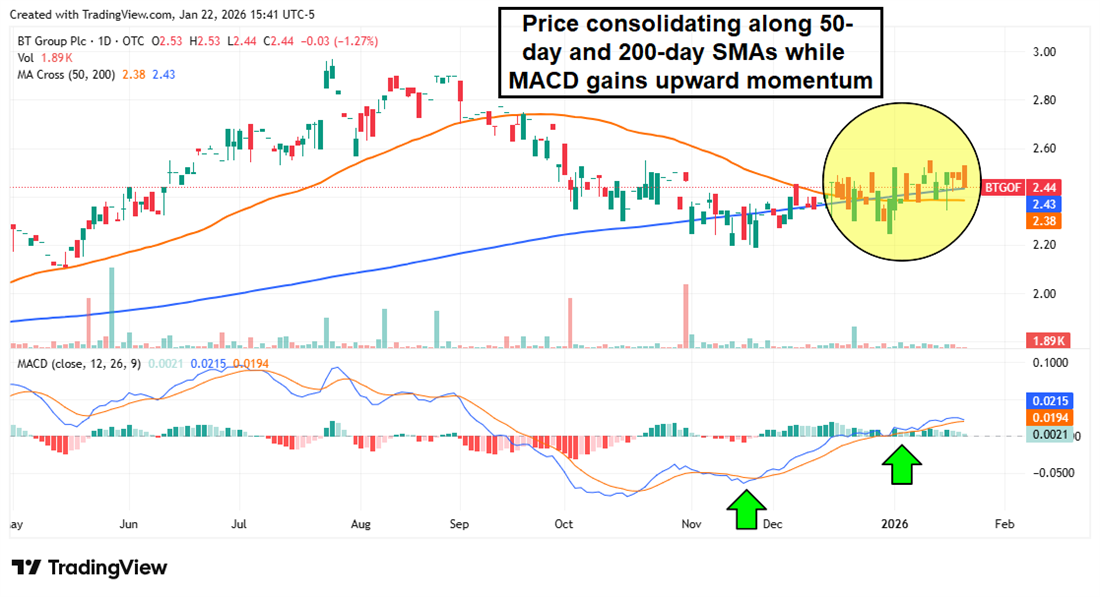
Technical signals suggest the share price is consolidating as the 50-day and 200-day SMAs converge. However, the Moving Average Convergence Divergence (MACD) indicator is sending increasingly bullish signals, suggesting the short-term price movement has upside potential.
Veolia: Is a Breakout Imminent After a Year of Sideways Trading?
Sometimes a slow burn is the best way to get results. You wouldn’t keep watching Severance if they explained all the mysteries in the first few episodes, would you? This can be true of stocks as well, especially in international markets where undervalued stocks can remain in the bargain bin for years.
Veolia Environnement SA (OTCMKTS: VEOEY) is one of these companies, and while its work isn’t mysterious, it is important. The company manages water and waste treatment, two crucial services that cannot be exported or imported across borders. Veolia’s contracts are usually long-term agreements indexed to inflation, which provide a steady income stream resistant to trade-war-related turbulence. It also pays a 2.9% dividend yield and trades at just 8 times forward earnings.
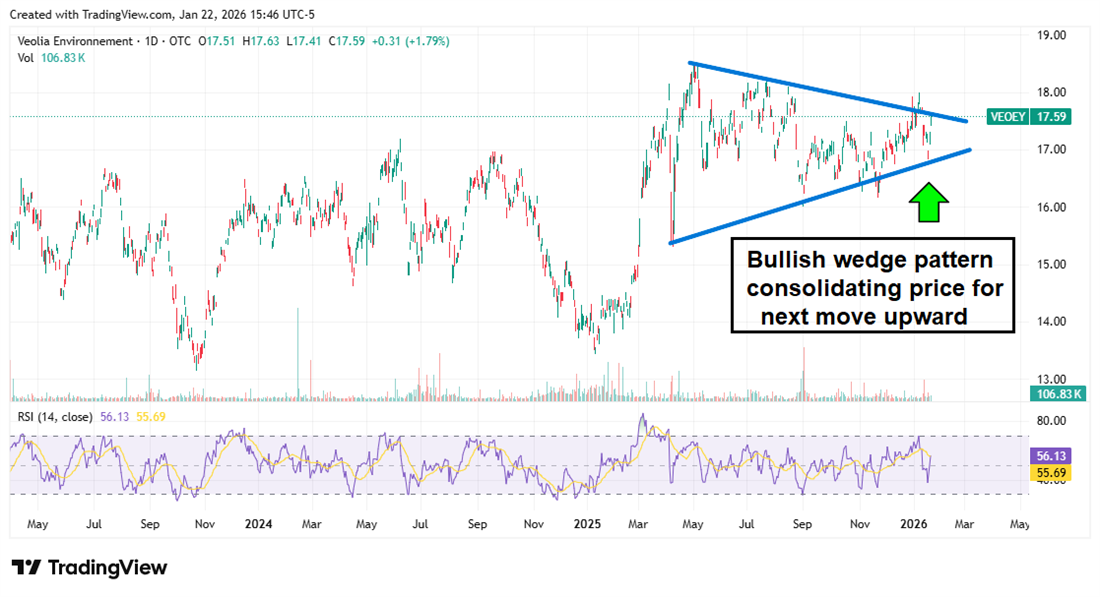
After a year of basically going nowhere, the stock appears poised for a technical breakout in 2026. A bullish wedge pattern has formed on the daily chart, characterized by lower highs and higher lows. This wedge is a continuation pattern, typically occurring before the next wave of momentum pushes the current trend higher. Veolia is nearing a tipping point in its bullish wedge, and if the trend is confirmed, the next move higher could occur at any time.
Where Should You Invest $1,000 Right Now?
Before you make your next trade, you'll want to hear this.
MarketBeat keeps track of Wall Street's top-rated and best performing research analysts and the stocks they recommend to their clients on a daily basis.
Our team has identified the five stocks that top analysts are quietly whispering to their clients to buy now before the broader market catches on... and none of the big name stocks were on the list.
They believe these five stocks are the five best companies for investors to buy now...
The article "3 European Stocks Built to Shrug Off Tariffs" first appeared on MarketBeat.
Mentioned In This Article
Latest News
| Oct-09 | |
| Oct-09 | |
| Oct-09 | |
| Oct-09 | |
| Oct-09 | |
| Oct-09 | |
| Oct-08 | |
| Oct-08 | |
| Oct-08 | |
| Oct-08 | |
| Oct-07 | |
| Oct-06 |
Boeing Wins $14.7 Bil Missile Deal. U.S. Sends Resources To Middle East As Conflict Escalates.
LMT
Investor's Business Daily
|
| Oct-06 | |
| Oct-06 | |
| Oct-06 |
