Nintendo Stock Falls 20%-But the Rebound Case Is Growing
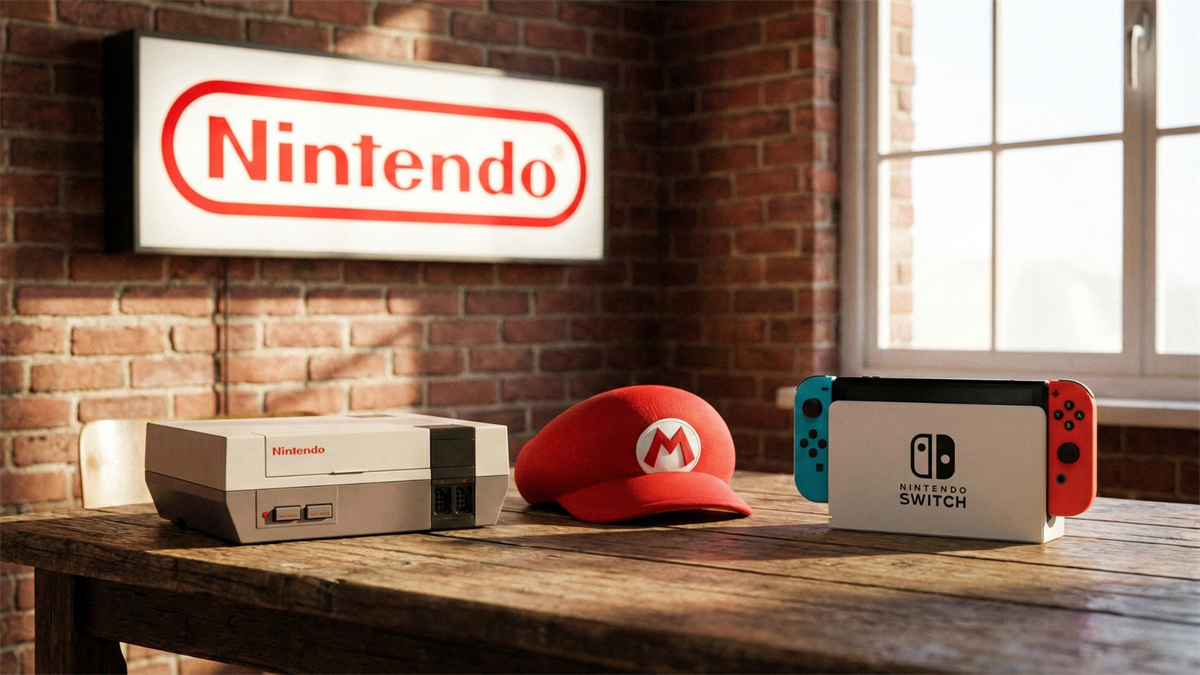
In the first half of 2025, Nintendo (OTCMKTS: NTDOY) was not only one of the best-performing consumer discretionary stocks but a market standout as well. It surged 76% in anticipation of the company’s long-awaited Switch2 release. But it seems traders weren’t looking to stay long, as the stock is down 20% in the last 12 months and over 18% year-to-date as of Feb. 5.
It wasn’t that Switch2 sales disappointed. The company has sold 155.4 million units of its new console, surpassing the previous record of 154 million units by the Nintendo DS. However, there have been concerns over the number not being better. That corresponds with lower profit numbers, cautious forward guidance, tariff risks, and softer-than-expected holiday demand.
However, this could be a case of a stock being so bad, it’s good. There are catalysts that suggest 2026 could be a bounce-back year for NTDOY stock.
The Best May Be Yet to Come for Switch2 Sales
Nintendo’s latest investor presentation hints that the best growth phase for the Switch2 ecosystem may still be ahead. The company announced that active monthly users reached an all-time high, with engagement levels up nearly 25% year-over-year.
That’s an encouraging sign that players are not just buying the console but staying in the ecosystem. In addition, the paid Nintendo Switch Online membership base expanded, with the attach rate improving due to the launch of more bundled hardware options.
This will also be a year when Nintendo releases Switch2 versions of many of its most popular titles. Alongside upcoming releases tied to "The Legend of Zelda" and "Splatoon" franchises, Nintendo confirmed ongoing development for its next-generation game engine, which could enhance long-tail monetization for Switch2.
This gives investors a clear reason to view 2026 not as a late-cycle phase, but as a platform-expansion year.
Adding to the excitement, Super Mario turns 40 this year. To celebrate the milestone, a "Super Mario Galaxy" movie will be released. The box office success of "The Super Mario Bros. Movie" in 2023 nearly doubled the brand’s licensing revenue, and management reiterated plans for cross-promotional campaigns that convert movie audiences into active players. If the upcoming Galaxy movie can perform as well, it could spark both console and software demand heading into the holiday season.
Cost and Tariff Headwinds Could Ease
The company’s margin pressure in recent quarters stemmed from higher memory component prices and elevated transport and tariff expenses. However, management highlighted during the presentation that these headwinds are beginning to moderate. Contract memory prices started declining in early 2026, and component costs for NAND and DDR5 memory have shown early signs of stabilization.
Nintendo also stated that it is diversifying its supply chains outside of China and pursuing more local assembly in Vietnam. Those moves will help hedge against prolonged tariff risks. These measures, combined with favorable foreign exchange positions, suggest that much of the recent cost compression may prove temporary.
Why the Thesis Could Be Wrong
The bullish case assumes Switch2 remains the dominant platform through 2026, but it comes with risks. Consumer fatigue could set in if Nintendo’s first-party lineup slows, especially with Sony Group (NYSE: SONY) and Microsoft (NASDAQ: MSFT) expected to introduce hardware refreshes this year.
Hardware margins also remain sensitive to component pricing. Memory and silicon costs could rebound rather than normalize. In that case, Nintendo’s profitability could remain under pressure longer than expected. And while franchise-based films have driven engagement, movie tie-ins are inherently unpredictable. Disappointing box-office results could dent sentiment and licensing revenue.
Lastly, the gaming industry’s transition toward cloud and subscription ecosystems still poses a strategic challenge. Nintendo has chosen a slower, more conservative path toward online monetization, which could leave it trailing competitors on recurring revenue growth if player preferences shift more quickly than expected.
The NTDOY Chart Supports the Comeback Story
For those who buy into the supportive thesis for Switch2 sales, then the next question is whether now is a good time to get in on Nintendo stock. The chart answers in the affirmative.
For starters, the latest selling has pushed the stock price below its lower Bollinger band. This is a technical signal indicating a trend reversal, and NTDOY stock has historically responded to such a signal with a rebound.
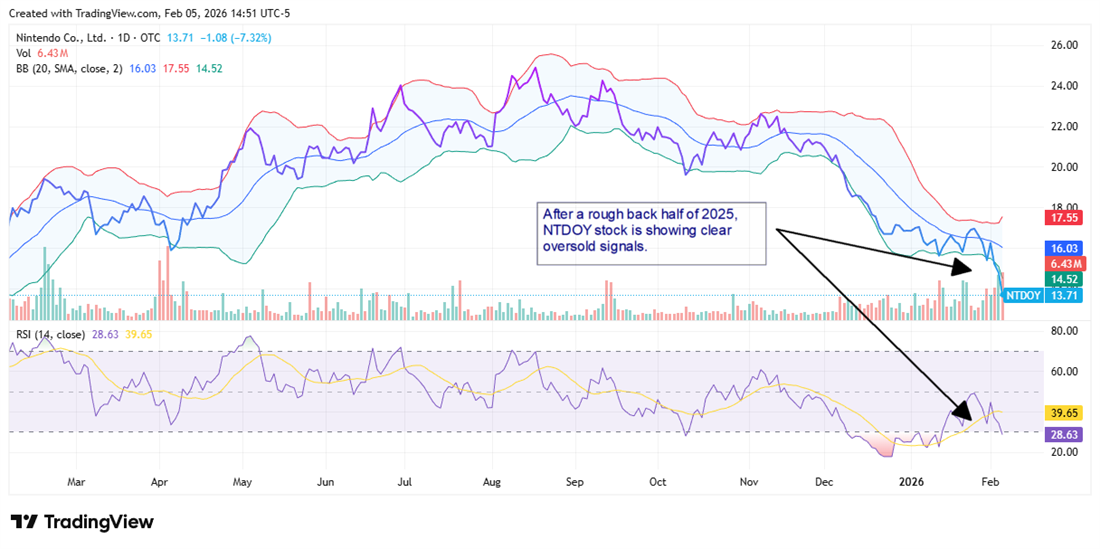
The stock is also oversold from a momentum perspective. The relative strength indicator (RSI) is at 28.6, which indicates oversold conditions. On their own, neither signal is a confirmed buy signal. However, when you put them together, it’s a good indication that sentiment could change.
If it does, investors should look for NTDOY stock to reclaim the 20-day simple moving average (SMA). That would be a 17% gain from the price as of this writing.
Where Should You Invest $1,000 Right Now?
Before you make your next trade, you'll want to hear this.
MarketBeat keeps track of Wall Street's top-rated and best performing research analysts and the stocks they recommend to their clients on a daily basis.
Our team has identified the five stocks that top analysts are quietly whispering to their clients to buy now before the broader market catches on... and none of the big name stocks were on the list.
They believe these five stocks are the five best companies for investors to buy now...
The article "Nintendo Stock Falls 20%—But the Rebound Case Is Growing" first appeared on MarketBeat.
Mentioned In This Article
Latest News
| 2 hours | |
| 2 hours | |
| 3 hours | |
| 3 hours | |
| Oct-08 | |
| Oct-08 | |
| Oct-08 | |
| Oct-08 | |
| Oct-08 | |
| Oct-08 | |
| Oct-08 | |
| Oct-08 | |
| Oct-08 | |
| Oct-08 | |
| Oct-08 |
