Stock Of The Day: Will Hims & Hers Go Into Another Short Squeeze?
Hims & Hers Health, Inc. (NYSE:HIMS), our Stock of the Day, is trading higher on Monday after the company announced an end to its feud with Novo Nordisk A/S (NYSE:NVO).
The stock is now susceptible to a short squeeze, which occurs when a highly shorted stock has a rapid and large move higher. When the squeeze ends, the stock can crash and end up right back where it was when the squeeze started.
When an investor wants to short a stock, it is because they think the price is going lower. They borrow the shares from someone else, and sell them. Their intent is to buy the shares back in the future at a lower price, return them, and keep the difference.
If the stock moves higher, the short sellers lose money. And the higher it goes, the bigger the losses become.
As it keeps moving up, some of the short sellers begin to panic. They start buying aggressively, which pushes the price even higher. Other panicked short sellers see this and do the same. A snowball effect takes place.
The climax of the squeeze comes when some of the people who loaned their shares to the short sellers see how high the price has risen and decide to sell.
They demand their shares back. The shorts must go into the market and buy regardless of price to return them. This makes the price skyrocket.
When all this is over, the stock can crash back to where it started. This can be seen on the chart below.
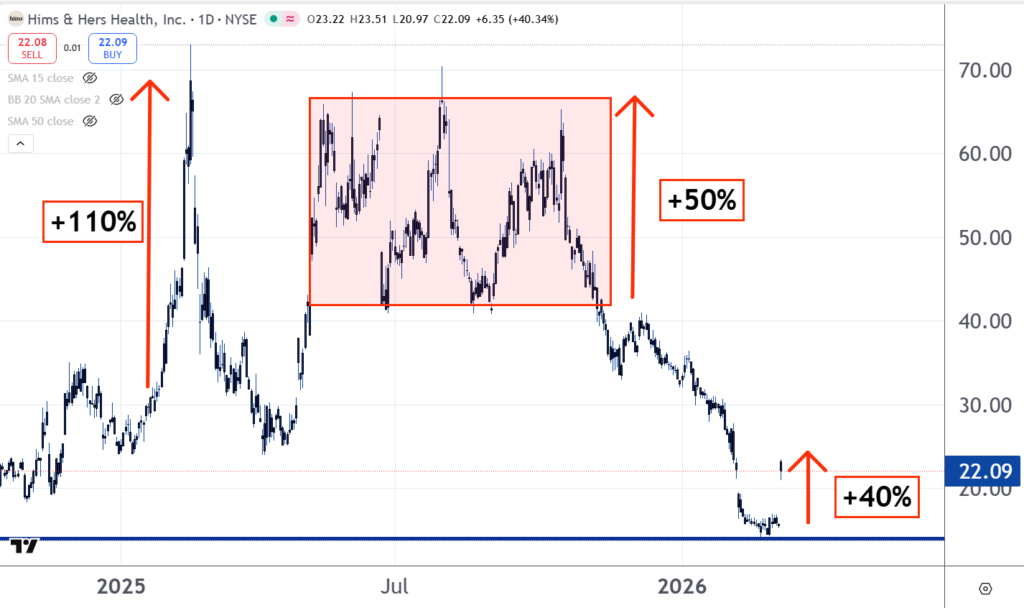
Since last January, there have been four squeezes. The first one made the price double. The next three moved the price up by about 50%. All were followed by crashes soon after.
If this is a short squeeze moving Hims higher, similar action may follow.
Mentioned In This Article
Latest News
| 30 min | |
| 34 min | |
| Oct-13 | |
| Oct-13 | |
| Oct-13 | |
| Oct-12 | |
| Oct-12 | |
| Oct-11 | |
| Oct-09 | |
| Oct-09 | |
| Oct-09 | |
| Oct-08 | |
| Oct-08 | |
| Oct-08 | |
| Oct-07 |
