The SpaceX IPO Could Be the Biggest Ever-Here's What We Know
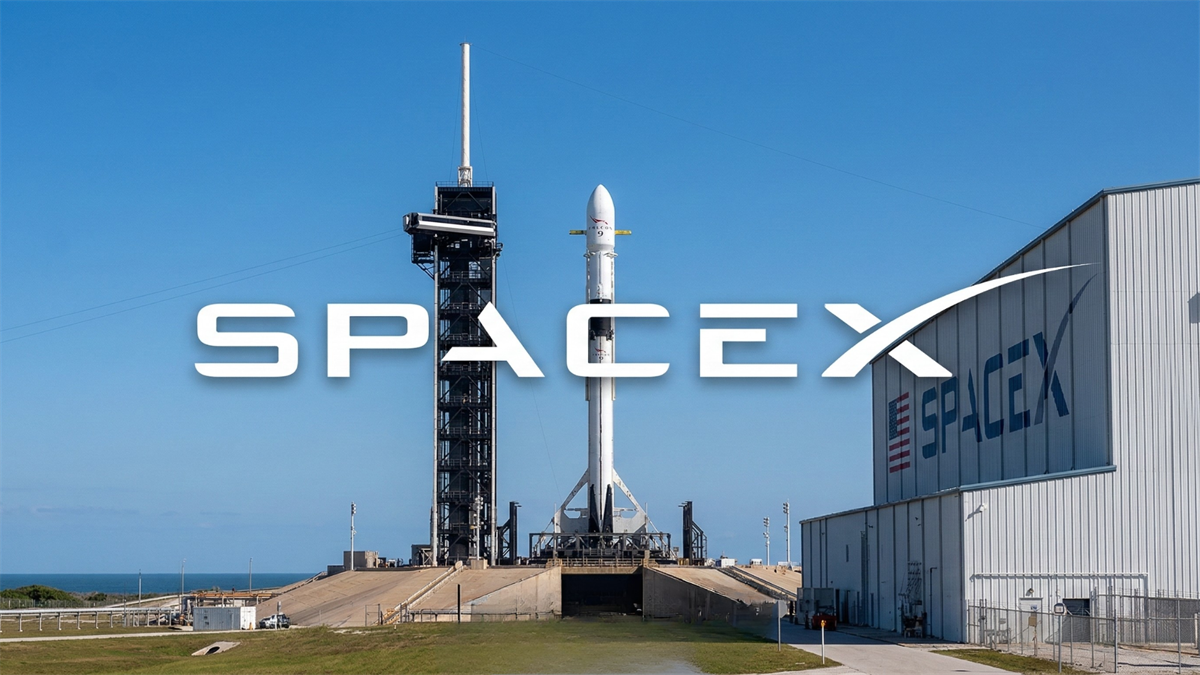
While it is yet to be confirmed, rumors are swirling around an eventual SpaceX initial public offering (IPO). Expected to be announced before mid-year 2026, the news will likely unleash an influx of capital into space stocks, not just into SpaceX. Valuation estimates are around $1.5 trillion, which would make this one of the largest IPOs in history, if not the largest.
Some whispers suggest the IPO could happen as early as Q2 2026. They mention the confidential filing of documents with the SEC, a move that would help smooth out the IPO process. Filing confidentially would allow the company to keep sensitive information discreet, control the narrative, and potentially reduce market volatility after the IPO.
Starlink Is Central to the SpaceX IPO
Starlink’s profitability is one of the most important factors for investors because it’s the clearest window into SpaceX’s IPO readiness and valuation. Starlink is a major SpaceX business line that operates a growing constellation of low-Earth-orbit satellites to enable uninterrupted global internet connectivity. If Starlink can generate steady, predictable cash flow, it can help fund SpaceX’s capital-intensive launch and Starship ambitions and reduce reliance on external financing.
Even so, the whisper is that SpaceX will seek to raise $50 billion via IPO, a tidy sum for any business's war chest.
Why SpaceX Is a Keystone of the Commercial Space Industry
Why is SpaceX important to the space industry? Because it is the single largest commercial space operation, commanding approximately 70% to 80% of the market share, including launch and services, and its launch pace is accelerating. The company is on track to exceed 2025's record-setting pace by 3,000 basis points (bps) or more, having successfully launched multiple rockets weekly from each of its launch bases year to date as of early March 2026.
SpaceX customers span the range from governments to consumer-focused businesses seeking operational and delivery services, including servicing the International Space Station, satellite launches, and constellation maintenance, as well as private access, excluding the more than 10 million active Starlink subscribers.
And the space industry has tailwinds. Long in the making, governments globally, and specifically the United States government, have shifted focus from public, government-operated space industries to commercial, privately operated ones. As it stands, estimates put the private space industry's value at approximately $625 billion in early 2026, with a 12% compound annual growth rate (CAGR) for at least the next five years, doubling the market by early next decade.
Starship is SpaceX’s long-term goal. It is a fully reusable, super-heavy-lift rocket, the largest ever built. It includes a lift and an upper stage, which enable up to 150 metric tons of payload and about 250 to 330 Blackwell GPUs, depending on the configuration. The rockets are designed for frequent reuse, aiming to reduce costs through rapid transitions and to maximize cost-effectiveness. Tests are progressing, with additional launches and captures expected in 2026. Eventually, Starship will enable the commercialization of near space, the Moon Mission, and the Mission to Mars.
xAI Ties Into SpaceX and Starlink
SpaceX surprised the market in early 2026 by announcing the takeover of xAI. xAI is Elon Musk’s AI startup that is developing the Grok model. Grok is a large language model (LLM) that aims to be more truthful rather than inoffensive and can be rawer than other models. Responses tend to have an edgy element and are often humorous.
The acquisition may seem questionable, but it aligns with the development of the space industry. The goal is to leverage Starlink and SpaceX for compute capacity, building data centers in space, where space (no pun intended) is unlimited, physical security is optimal, and solar power is uninterrupted.
The hurdle is cost, but SpaceX appears to be on track despite what Grok describes as an insanely high barrier to getting megawatts of equipment into space. AI is seen as critical to the development of space, as it can autonomously operate vehicles, systems, and constellations, and is already gaining traction across industries. $50 billion raised in an IPO could lift a lot of gear into space.
IPO Structure Unclear: Elon Wants Tesla Shareholders to Participate
One of the hurdles to SpaceX's IPO is the deal structure. Musk, in a nod to his long-time followers, says loyalty should be rewarded and aims to give Tesla (NASDAQ: TSLA) shareholders early access to the event. The questions to be answered are: how exactly TSLA shareholders will gain exposure, and what “long-term” holders are. If any TSLA shareholder gains early access, TSLA shares will likely experience a pump-and-dump-like event, as SpaceX buyers pile in, then exit, so that is an unlikely scenario and ultimately hurts the people Musk wants to help.
The structure could resemble a SPAC merger. Activist investor Bill Ackman has suggested that SpaceX merge with Pershing Square SPARC Holdings, a special purpose acquisition rights company (SPARC) that can handle the transaction. If done this way, TSLA investors might receive SPARs units ahead of the IPO, giving them direct access to shares before they go public.
The Future of Space Is Branded SpaceX
While other industry players are growing, none are as critical to the space industry, and none are likely to have the size and scope of SpaceX. Not only does SpaceX have the early-mover advantage, but Elon Musk's megalomaniacal vision is all-encompassing. The combination of launch and delivery services, the emerging Starship business, Starlink, xAI, and its market share set up SpaceX to dominate the industry at all levels, providing the infrastructure for others to build on. Via this company, humans could begin actively expanding activities into orbit and on the moon, setting the stage for the Mars Mission, which has always been Musk’s goal.
The Risk Is Significant, Don’t Invest Blindly
The risk to investors is significant, as this will be among the most anticipated and heavily subscribed IPOs on record. Prices are likely to be elevated at the open and could potentially skyrocket before gains are capped. Investors will have three choices in this situation: buy at the open and hope for the best, try to time the entry and avoid getting caught in price swings, or sit back and watch, patiently allowing the market to let off steam and price action to stabilize.
Where Should You Invest $1,000 Right Now?
Before you make your next trade, you'll want to hear this.
MarketBeat keeps track of Wall Street's top-rated and best performing research analysts and the stocks they recommend to their clients on a daily basis.
Our team has identified the five stocks that top analysts are quietly whispering to their clients to buy now before the broader market catches on... and none of the big name stocks were on the list.
They believe these five stocks are the five best companies for investors to buy now...
The article "The SpaceX IPO Could Be the Biggest Ever—Here’s What We Know" first appeared on MarketBeat.
Mentioned In This Article
Latest News
| 2 hours | |
| 3 hours | |
| Oct-09 | |
| Oct-09 | |
| Oct-09 | |
| Oct-09 | |
| Oct-09 |
Tesla's China Retail Sales Fall 9% Even as Shanghai Exports Surge 58%
TSLA
Benzinga Prediction Markets
|
| Oct-09 | |
| Oct-09 | |
| Oct-09 | |
| Oct-09 | |
| Oct-09 | |
| Oct-09 | |
| Oct-09 | |
| Oct-09 |
