|
|
|

|
|||||
|
|
|
Subscribers to Chart of the Week received this commentary on Sunday, March 15.
As the three major indexes head for weekly drops, let’s check in with one of the more intriguing exchange-traded funds (ETF) out there. The Invesco QQQ Trust (QQQ) follows the Nasdaq-100 Index (NDX), but stagflation concerns brought on by elevated oil prices and lackluster inflation data have dampened its bullish outlook. Below, lets take a closer look at the ETFs recent performance and see if quantitative data can dictate what happens next.
QQQ is headed for a third consecutive weekly loss, fourth-straight drop, and has broken below its year-to-date breakeven level. The ETF has been consolidating above its 200-day moving average since February, stuck in sideways price action even after an impressive post-earnings pop from Oracle (ORCL). While the tech behemoth doesn’t sit on the QQQ, its influence remains weighty on the broader tech sector.
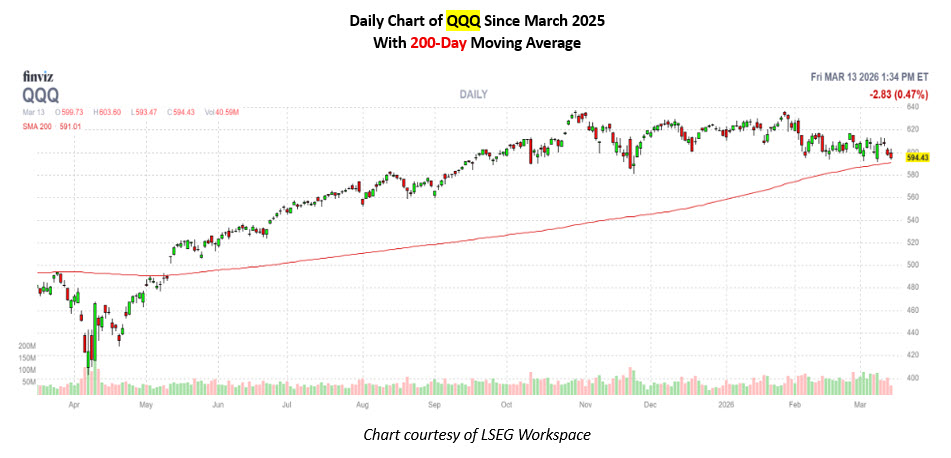
Per Senior V.P. of Research Todd Salamone, QQQ’s pullback to the 200-day trendline late last week was a time- and price-based corrective move. Now roughly four months off its Oct. 29 record peak of $637.01, the subsequent 6% drawdown matches price action over similar periods that resulted in positive price action one month and three months later. The most recent being November 2024, which saw QQQ higher by 5.2% three months later.
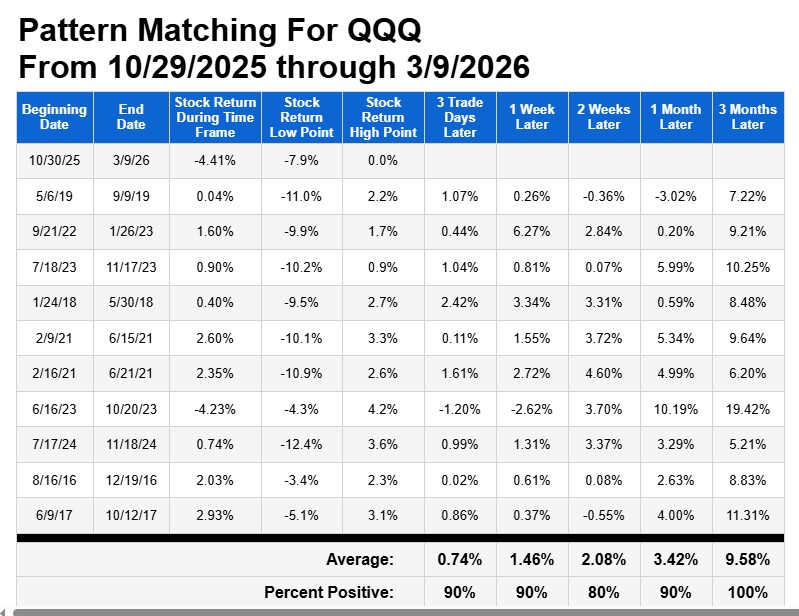
The ETF held this important trendline all week, extending its sideways price action at and around the $600 area. Overhead, the 80-day moving average has capped price action for the past month, defining the channel.
Historically, the QQQ has pulled back to the 200-day moving average 10 times (including last week’s signal) in the past decade. Schaeffer’s Senior Quantitative Analyst Rocky White has pulled data showing the ETF’s performance, historically in this time frame, including stock, call, and put return on a weekly and monthly basis.
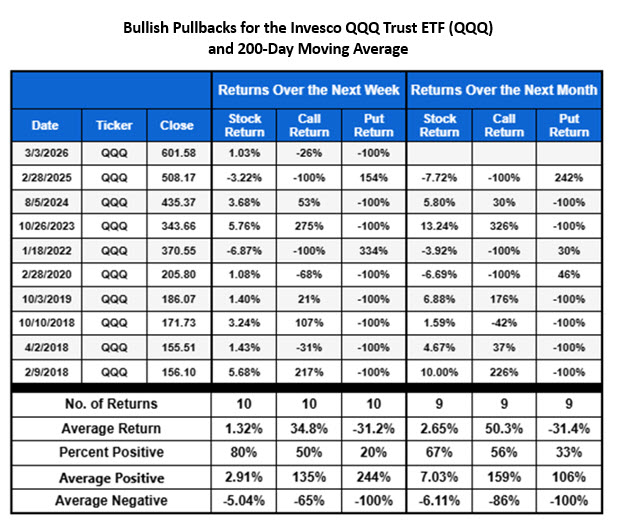
Should the QQQ see an average one-month return of 2.7% from its current perch of roughly $594, it would put shares back near $610, erasing its March deficit of 2%. Taking advantage of this sideways action could be a good move for bulls, though the reward could be an exercise in patience.
| May-19 | |
| May-18 | |
| May-18 | |
| May-18 | |
| May-17 | |
| May-13 | |
| May-13 | |
| May-12 | |
| May-12 | |
| May-12 | |
| May-07 | |
| May-06 | |
| May-06 | |
| May-05 | |
| May-05 |

Join thousands of traders who make more informed decisions with our premium features. Real-time quotes, advanced visualizations, alerts, and much more.
Learn more about Finviz Elite