Memory & Neocloud Panic: Time to Buy?
Memory Names Fall on China Competition, Kospi Buyback Ending
Memory-related names such as Micron (MU), SanDisk (SNDK), and SK Hynix (SKHY) have been some of Wall Street’s best performers, amid a memory chip shortage and exploding demand. However, these stocks have been crushed in October. China’s leading memory manufacturer, ChangXin Memory Technologies (CXMT), announced a major technological breakthrough that boosts its chip density by 30-50%. Investors fear that, with Chinese competition, supply will flood the market and prices will crash. Additionally, memory stocks have fallen further as Samsung and SK Hynix’s massive buyback programs ended.
Despite CXMT’s breakthrough, the selling is likely overdone for a variety of reasons:
1. The technology gap remains large.
2. CXMT is nowhere near mass-producing these ultra-complex chips.
3. CXMT will struggle to acquire the technology needed to produce these chips because of U.S. export controls.
With the recent sell-off, Micron shares are now extremely cheap. The memory leader sports a P/E ratio of just 12x, while Wall Street analysts expect revenue and EPS to grow at a triple-digit clip.
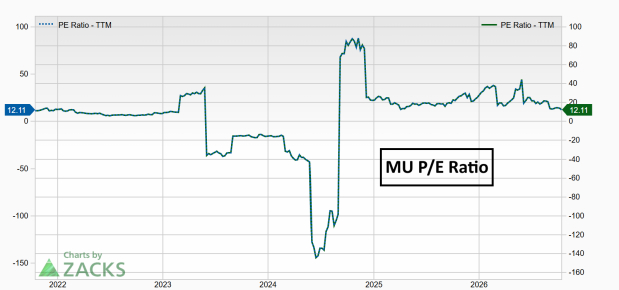
Image Source: Zacks Investment Research
Neoclouds Plunge on CoreWeave Debt Anxiety
Neoclouds, the specialized cloud infrastructure providers that deliver high-performance graphics processing units (GPUs) and accelerated computing for artificial intelligence companies, fell this week amid debt concerns. On Wednesday, CoreWeave (CRWV), a Bitcoin miner turned neocloud, plunged 15% after a chart circulated on Twitter showing rising borrowing costs. Originally issued in June with a 9.625% coupon, the yield on CoreWeave’s $1.25 billion senior unsecured notes due 2032 violently spiked to 15%.
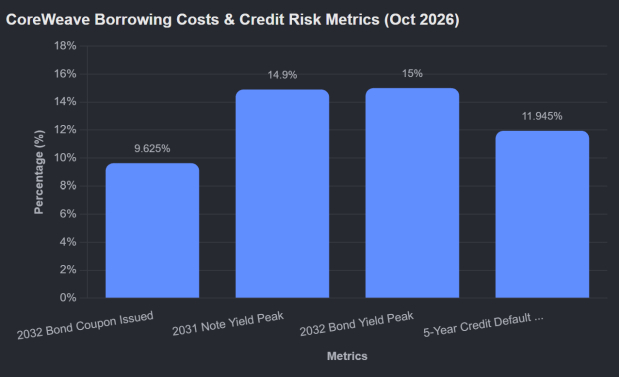
Image Source: Zacks Investment Research
NVIDIA (NVDA) is the dominant AI chipmaker and a partner and investor in CoreWeave. Thursday, NVIDIA CEO helped to quell the debt concerns surrounding CoreWeave, saying “NVIDIA does not need to backstop CoreWeave. CoreWeave’s cost of capital is actually decreasing, and its strength is improving every day.”
Semiconductor Selling Intensifies
Amid hotter U.S. inflation, AI debt concerns, and the pressure on memory stocks, the iShares Semiconductor ETF (SOXX) has fallen for 8 consecutive sessions, marking its longest losing streak since 2010. The good news for investors is that in the past six instances where the SOXX declined for 8 straight sessions, it gained ground 2 days later 100% of the time.
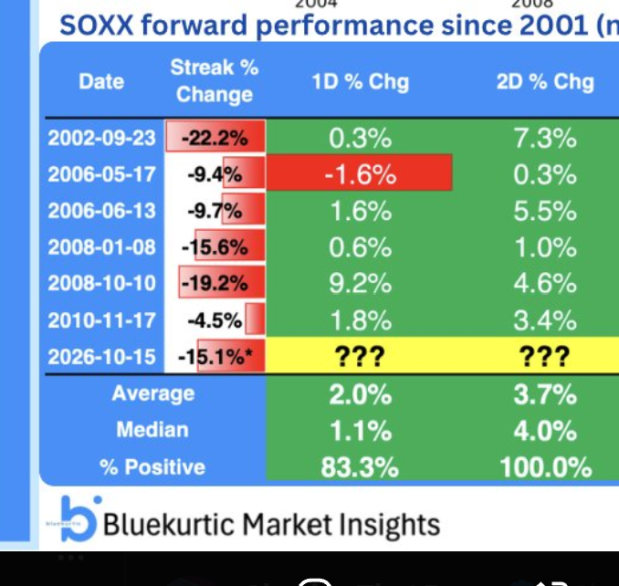
Image Source: Bluekurtic Market Insights
Bottom Line
While recent macro pressures, Chinese technological breakthroughs, and AI debt anxieties have pressured the semiconductor sector, history suggests this sharp pullback may be an overreaction.
Want the latest recommendations from Zacks Investment Research? Today, you can download 7 Best Stocks for the Next 30 Days. Click to get this free report
Micron Technology, Inc. (MU): Free Stock Analysis Report
NVIDIA Corporation (NVDA): Free Stock Analysis Report
Sandisk Corporation (SNDK): Free Stock Analysis Report
iShares Semiconductor ETF (SOXX): ETF Research Reports
CoreWeave Inc. (CRWV): Free Stock Analysis Report
SK Hynix, Inc. - Sponsored ADR (SKHY): Free Stock Analysis Report
This article originally published on Zacks Investment Research (zacks.com).
Mentioned In This Article
Latest News
| 13 min | |
| 30 min | |
| 34 min | |
| 34 min | |
| 34 min |
The Riskiest Corner of the AI Trade Is Crashing Into Higher Rates
CRWV +5.94%
The Wall Street Journal
|
| 35 min | |
| 50 min | |
| 1 hour | |
| 1 hour | |
| 1 hour | |
| 1 hour | |
| 1 hour | |
| 1 hour | |
| 1 hour | |
| 1 hour |
