Cerus Beats On Breakeven Quarter And Lands RedeS Win, But Slowing Growth And Two Regulatory Slips Muddy The Story
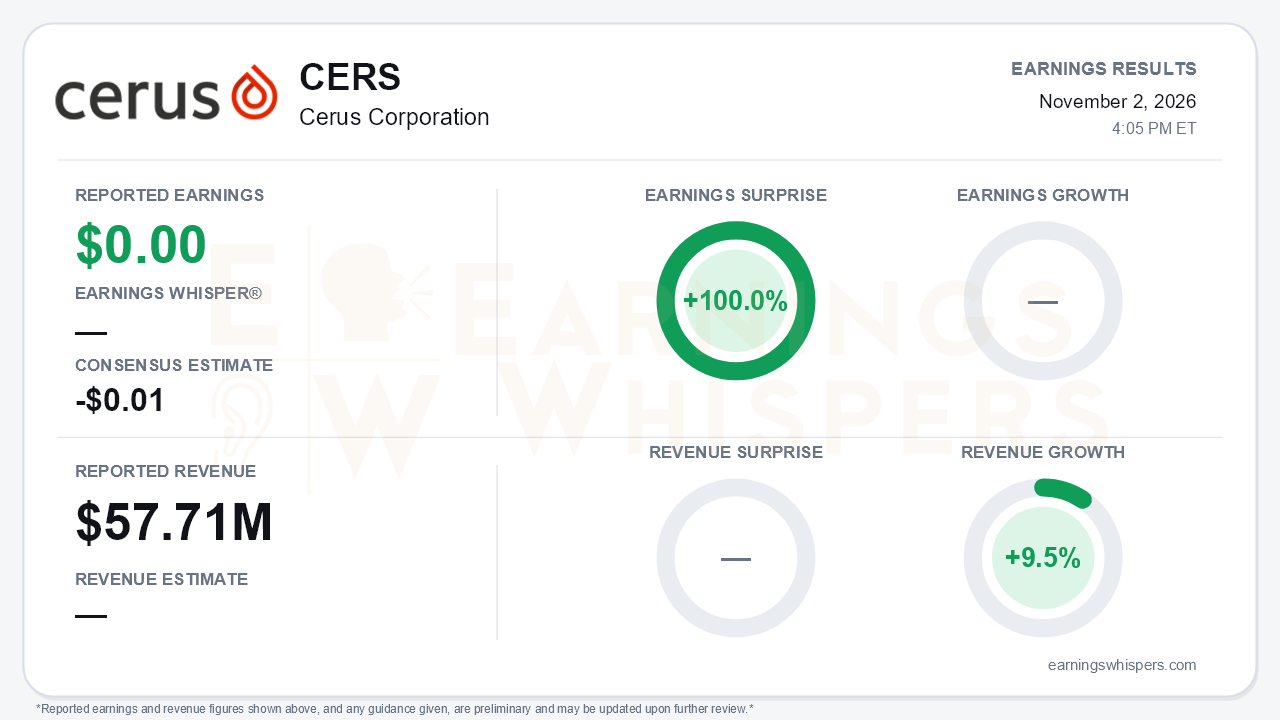
Cerus Corporation (NASDAQ: CERS) reported breakeven results of $0.00 per share for the third quarter, beating the consensus estimate for a $0.01 loss by 100.0%. Product revenue was $57.71 million, up 9.5% year over year, and total revenue including government contracts was $64.0 million. The company also reported positive topline Phase 3 RedeS results for its INTERCEPT red blood cell system and reaffirmed full-year product revenue guidance of $229 million to $231 million. The headline reads as a clean quarter with a pipeline win. Beneath it sits the central tension: profitability and cash generation improved meaningfully, but top-line growth kept decelerating and the timelines for the two most important regulatory catalysts both moved further out.
The quality of the beat deserves some scrutiny. On a GAAP basis, Cerus still lost $0.55 million, compared with an essentially breakeven $19,000 loss a year ago. Operating income fell to $0.4 million from $1.2 million. Product gross margin slipped to 52.4% from 53.4% a year earlier, which the company attributed to a weaker dollar against the euro and inflationary product costs. SG&A rose 18% to $21.9 million, partly because the prior-year period benefited from a one-time tax credit. Lower R&D spending, which fell to $14.3 million as RedeS enrollment ended and INT200 development wound down after the PMA submission, did much of the work. Still, the sequential trend is better than the year-over-year comparison suggests. Gross margin improved from 51.4% in Q2. Adjusted EBITDA nearly doubled sequentially to $5.7 million, the tenth straight positive quarter. Operating cash flow swung to a positive $3.0 million from negative $2.7 million in Q2.
The operating picture splits sharply by geography and product. North America product revenue grew 12%, accelerating from 9% in Q2, with platelet doses up 5%. Blood Centers of America member growth is outpacing the region overall. IFC remains the standout. U.S. IFC sales rose to $5.6 million from $3.9 million, volumes climbed roughly 80%, and kit mix reached 90% versus 70% in Q2, a shift management described as margin-accretive. EMEA is the weak spot. Growth there fell to 5% from 10% in Q2 and 28% in Q1, and international platelet kits declined 3%. Management cited lost Russian orders tied to the Ukraine conflict, deferred orders from EFS in France, and a roughly 2% currency headwind that reverses the FX tailwind of the first half. The result is a third consecutive quarter of slower product growth: 24% in Q1, about 12% in Q2, and roughly 10% now.
Guidance reinforces that deceleration. After raises in Q1 and Q2, the full-year range was only reaffirmed this time. With $168.8 million of product revenue through nine months, the outlook implies fourth-quarter product revenue of roughly $60 million to $62 million, which points to modest growth. The RedeS readout is a genuine milestone. The trial met its primary efficacy endpoint of non-inferior hemoglobin increment with no significant safety difference, and a full clinical study report is expected around the first half of 2027 to support a U.S. PMA. However, management now expects the European CE mark for red cells in late 2027, versus the first-half 2027 timing cited earlier this year. Separately, the FDA has asked for additional data on the INT200 platelet PMA, so approval as early as the first half of 2027 is no longer assured. Bears have legitimate ammunition here. The positive data arrived alongside longer paths to revenue.
The balance sheet adds another layer. Cash and investments of $57.1 million sit against $35.0 million in term debt and $28.5 million drawn on the revolver. The company is also refreshing its shelf registration. That filing is routine housekeeping, but it preserves dilution optionality for a company still funding late-stage development.
The market setup had already soured heading into the report. Investor sentiment swung from modestly positive at 0.11 to negative at -0.13, a meaningful shift for this scale. Shares closed the pre-report period at $2.28, down 6.2% since the open after the July report and about 7% below the 200-day moving average. The stock has surrendered most of its August run to $3.08 and sits just 10.7% above its inter-earnings low. Price and AVWAP trend readings are both negative, consistent with a stock the market has been steadily marking down.
The bottom line is that Cerus delivered better margins, stronger EBITDA, positive cash flow, and a successful pivotal trial, the kind of operational progress turnaround skeptics question. The investment debate, however, has shifted toward growth durability and timing. Slowing EMEA sales, a guidance range that stopped moving higher, and delays on both the RBC CE mark and INT200 approval mean the RedeS win extends the long-term story without shortening the wait.
Read our earnings preview for Cerus Corporation: https://www.earningswhispers.com/article/CERS/21377
This earnings review was originally published on Earnings Whispers.
This article is for informational purposes only and is not investment advice. Earnings Whispers and its staff may hold positions in the securities mentioned. It is AI-assisted, based on proprietary Earnings Whispers data and company reports, and edited by Earnings Whispers staff.
Mentioned In This Article
Latest News
| 2 hours | |
| 2 hours | |
| 5 hours | |
| 5 hours | |
| Oct-26 | |
| Oct-19 | |
| Oct-14 | |
| Jul-30 | |
| Jul-30 | |
| Jul-16 | |
| Jun-17 | |
| Jun-08 | |
| May-27 | |
| May-15 | |
| May-01 |
