Sensus Healthcare Posts Its Best Quarter Of 2026, But Drops Its Full-Year Profitability Target
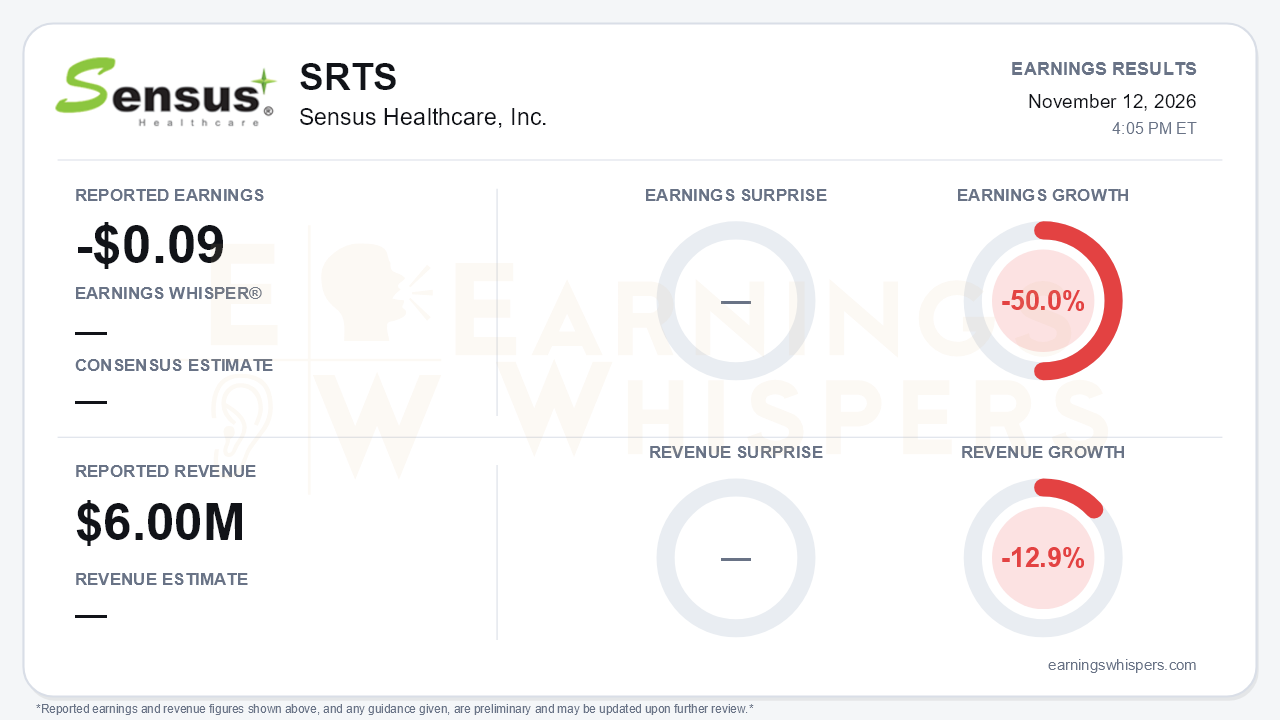
Sensus Healthcare's third quarter was its strongest of 2026, but it also brought a quiet reset of the year's central promise. The company reported a GAAP loss of $0.09 per share on revenue of $6.0 million. Earnings fell 50.0% year over year and revenue declined 12.9%. No consensus estimate or Earnings Whisper was available, so the report has to be judged on its trajectory rather than a beat or a miss. On that basis, the quarter was a clear sequential rebound. Revenue rose from $2.3 million in Q2 and $3.4 million in Q1, and the year-over-year decline was far milder than the nine-month comparison of $11.7 million versus $22.5 million. That is the central tension: operating results improved sharply, yet management no longer reiterated the profitable-year objective it set at the start of 2026.
The headline EPS decline overstates the deterioration. The prior-year quarter included a $1.5 million tax benefit, while this quarter carried none after the deferred tax asset was written off earlier in the year. Before taxes, the loss actually narrowed from $2.4 million to $1.5 million. The operating loss improved from $2.6 million to $1.6 million. Gross margin jumped to 55% from 39.1% a year ago, and the sequential gain was even sharper, from 34.8% in Q2 and 29.2% in Q1. The driver was mix: more lower-priced but higher-margin SRT-100 units and fewer SRT-100 Vision systems. That same mix lowered average selling prices. Three Fair Deal and rental placements also deferred revenue recognition. R&D fell 38.9% on lower lobbying costs and reduced headcount, while G&A rose 21.1% on legal and professional fees. Adjusted EBITDA improved to a loss of $1.5 million from losses of $3.0 million in Q2 and $4.2 million in Q1.
The quality of the volume deserves scrutiny. Sensus shipped 26 systems, versus 11 in Q2 and 14 in Q1. However, eight of those were Q2 orders delayed by bank financing approvals. The underlying 18 units fall short of the 20-plus quarterly pace management endorsed on the Q2 call. That shortfall extends a pattern of missed self-imposed markers:
- Q1 shipments only matched Q4's 14 units rather than exceeding them.
- Q2 revenue fell instead of rising.
The historically largest customer remains at zero, and management does not expect it to return. The more constructive read is diversification. Excluding that customer, revenue and gross margin grew both year over year and sequentially. Q3 direct shipments to dermatology practices exceeded Q1 and Q2 combined.
The catalyst list is real. Two large private equity-backed dermatology groups made initial purchases. Together they cover roughly 450-plus practices; one bought outright and one used a Fair Deal Agreement. Management says that, with dedicated reimbursement codes in effect, physician conversations have shifted from education to how to adopt SRT. CMS has proposed a 26% increase in hospital Level 1 radiation delivery codes, which management expects to take effect January 1, 2027. Other developments include:
- the 1,000th SRT system placed after quarter end;
- the September launch of TreatSkinCancer.com;
- market development in Australia, New Zealand and broader Asia-Pacific, with Europe and Korea conferences planned for Q4.
The risk is conversion speed. Multi-site organizations bring longer sales cycles, and financed placements push revenue into future periods.
The balance sheet is where bears have legitimate ammunition. Cash fell to $12.9 million from $15.2 million in June and $22.1 million at year-end. The quarterly decline did moderate to about $2.3 million. Inventory stands at $18.0 million, up from $14.6 million at year-end. Notes receivable have climbed to about $3.3 million from roughly $0.4 million, which suggests more customer financing is sitting on Sensus's books. The company has no borrowings. However, with no quantified Q4 outlook and the profitability goal softened to "working towards sustainable profitability," investors have less to anchor on.
Market data offers only limited context. Shares opened at $2.80 after the August report, below the current 200-day moving average of $3.48. That gap suggests the market had already been skeptical of the turnaround heading into this quarter. Investor sentiment and current-price data were not available.
The bottom line is that Sensus delivered a genuinely better quarter: sharply higher sequential revenue, a 55% gross margin, a narrower operating loss, and new PE-backed dermatology customers. But the improvement was flattered by carryover units, underlying volume missed management's own run-rate, and the full-year profitability target has been dropped. Until Sensus shows it can ship 20-plus units consistently without draining cash, the reimbursement-driven growth story remains promising but unproven.
This earnings review was originally published on Earnings Whispers.
This article is for informational purposes only and is not investment advice. Earnings Whispers and its staff may hold positions in the securities mentioned. It is AI-assisted, based on proprietary Earnings Whispers data and company reports, and edited by Earnings Whispers staff.
Mentioned In This Article
Latest News
| Nov-12 | |
| Nov-12 | |
| Nov-10 | |
| Oct-29 | |
| Aug-17 | |
| Aug-13 | |
| Jul-30 | |
| May-07 | |
| Apr-23 | |
| Mar-27 | |
| Feb-26 | |
| Feb-18 | |
| Feb-13 | |
| Feb-12 | |
| Feb-12 |
