Our Bond's Q3 Shows A Subscription Inflection And A 2027 Growth Target, But Losses, Cash And Equity Compliance Still Define The Story
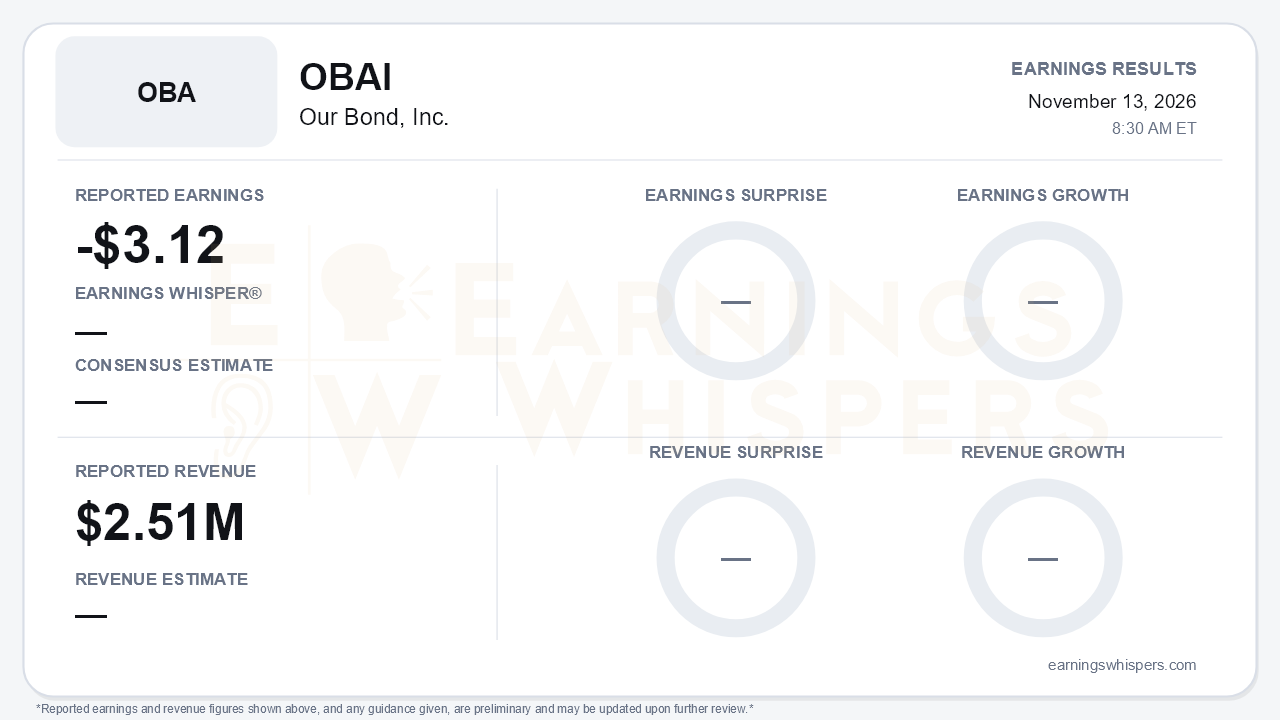
Our Bond, Inc. (NASDAQ: OBAI) reported a third-quarter loss of $3.12 per share on revenue of $2.51 million. No consensus estimate or Earnings Whisper was available, so there is no surprise to measure. The more useful comparison is inside the business. Subscription revenue from Bond's AI-powered personal security platform rose about 41% year over year and 40% sequentially to $526,000. Total revenue climbed 19% from the second quarter, and deferred revenue more than doubled since year-end to $1.2 million. That is the most measurable evidence yet that Bond's long-promised pivot to recurring revenue is gaining traction. The central tension is that the cost structure and balance sheet have not caught up. The net loss of $4.7 million was nearly twice quarterly revenue, and quarter-end cash was just $2.2 million.
The quality of the top line deserves scrutiny. Total revenue of about $2.5 million was still below the roughly $2.7 million reported a year earlier. The higher-margin subscription line grew, but the larger physical security business declined about 16%. Management frames that decline as a deliberate shift toward recurring revenue, and the mix did improve: SaaS rose to roughly 21% of revenue from about 14% a year ago. Even so, the headline business is not yet growing on an annual basis.
The forward indicators are better. Bookings rose 19% to $3.1 million, and the sequential jump in deferred revenue suggests contracted business is accumulating ahead of recognition. The bottom line has not followed. Operating expenses rose to $4.2 million from $3.8 million as sales and marketing spending climbed to about $1.0 million from $0.7 million, and the net loss improved only marginally from $4.8 million in the second quarter.
The call marked a clear shift in tone. Management moved from describing a company 'about to cross the chasm' to one 'reaching the inflection point,' and this time it had numbers to point to. The two city deals announced last quarter are now live:
- **Municipal program:** A city of roughly 270,000 residents shows about 60% adoption among those offered the service.
- **Jerusalem:** City-worker adoption was cited at 80-85% on the call, up from the 70%-plus first-phase figure in an October 19 announcement.
- **New wins and pipeline:** An S&P 500 fintech company selected Bond for executive and at-risk employee protection, and the GSX trade show added more than 50 large enterprise and government opportunities.
- **New growth engine:** Management is building out an executive-protection business led by a former Secret Service agent.
The biggest forward-looking development is Bond's first explicit 2027 outlook. Management projects roughly 50% revenue growth, with about 90% expected to come from AI SaaS. It also announced about $6 million in annualized cost reductions and set a cash-flow breakeven target of roughly $20 million ARR, about double the current ~$10 million run rate.
Bears have legitimate ammunition. About $3 million of the $6 million in cost cuts reflects nonrecurring 2026 expenses rather than structural savings. Roughly half of the 2027 growth depends on new customers still early in the sales cycle. The pipeline is concentrated in a few dozen large deals, several of which have been delayed, and a $3 million government contract had already been flagged as unlikely last quarter.
The balance-sheet realignment is a genuine change in the setup, but it is not a clean resolution. About $15 million of debt and preferred stock is converting to equity, which removes interest and dividend obligations, and Ascent agreed to invest up to $10 million at $2.75 per share. The source materials conflict on what this achieves:
- The press release says the realignment is expected to produce positive stockholders' equity of at least $2.5 million, the Nasdaq threshold.
- The call analysis puts equity at negative $17 million at September 30 and says Bond remained about $3 million short of that threshold.
Until the conversions close and the 'up to' PIPE is actually funded, investors should treat equity compliance as unresolved. That matters more given $2.2 million in cash against a quarterly loss of about $4.7 million. The conversions and PIPE are also dilutive, even though the PIPE was priced at a 23% premium.
The market context reflects deep skepticism. No investor sentiment readings were available for this report. Bond regained compliance with Nasdaq's minimum bid price rule only after a 1-for-20 reverse split in October. That split means the $0.48 opening price after the August report is not directly comparable to current trading. The PIPE price of $2.75 sits far below the stock's 200-day moving average of $25.12, a reminder of how much value shareholders have already absorbed.
The bottom line is that Our Bond delivered its most credible evidence yet that the subscription model is working. Accelerating SaaS revenue, rising bookings, doubled deferred revenue and high municipal adoption all point the same way. The 2027 plan offers a coherent path toward breakeven. Still, total revenue remains below last year, losses are barely shrinking, and the company's survival depends on completing a dilutive recapitalization. The operating story improved this quarter. The financial story now has to follow.
This earnings review was originally published on Earnings Whispers.
This article is for informational purposes only and is not investment advice. Earnings Whispers and its staff may hold positions in the securities mentioned. It is AI-assisted, based on proprietary Earnings Whispers data and company reports, and edited by Earnings Whispers staff.
Mentioned In This Article
Latest News
| Nov-14 | |
| Nov-13 | |
| Nov-12 | |
| Nov-11 | |
| Nov-11 | |
| Nov-09 | |
| Nov-04 | |
| Nov-03 | |
| Oct-20 | |
| Oct-19 | |
| Oct-15 | |
| Oct-15 | |
| Oct-01 | |
| Sep-29 | |
| Sep-17 |
