|
|
|

|
|||||
|
|
|
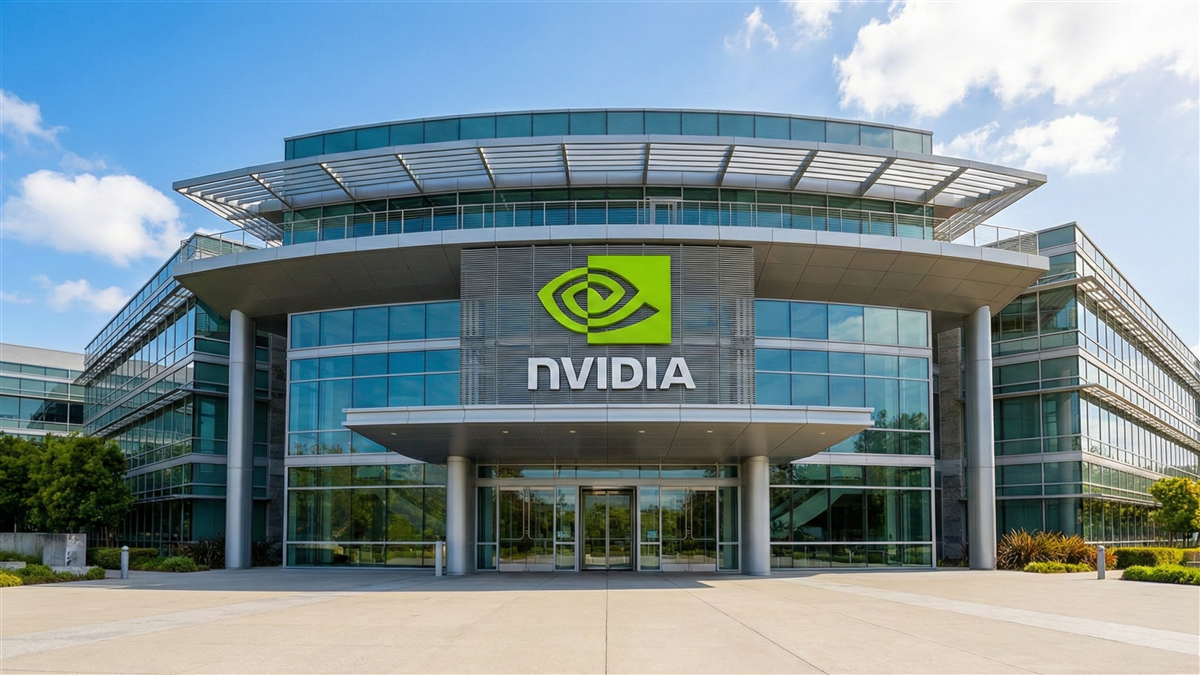
With a market capitalization of $4.3 trillion, semiconductor giant NVIDIA (NASDAQ: NVDA) is the most valuable publicly traded company in the world. NVIDIA is also viewed by many as the world’s most important company. Investors watch the firm’s earnings like hawks, looking to gauge the health of the artificial intelligence (AI) trade and, by extension, the overall market.
NVIDIA’s importance has extended so far that many also thoroughly watch the investments the company itself makes. Attracting funding from NVIDIA is often viewed as an indication that a company has a key advantage that can allow it to succeed.
NVIDIA’s latest 13F filing provides a snapshot of its investment performance for part of Q3. All 13F return data covers the period from the end of June through the end of July, unless otherwise noted.
Right off the bat, it is important to note that NVIDIA did not alter its portfolio from Q2 to Q3. None of its holdings changed, nor did the number of shares NVIDIA owns in each of the six stocks.
However, these names did deliver significantly different performances in the quarter, with some sinking and others soaring.
Notably, Applied Digital (NASDAQ: APLD) had a spectacular Q3. Shares more than doubled in value, rising by approximately 128%. A significant portion of the rise was due to the firm’s July 30 earnings release.
Shares popped 31% the next day. In its release, Applied Digital announced an expansion of its data center leasing agreement with another NVIDIA holding, CoreWeave (NASDAQ: CRWV). The agreement previously called for Applied Digital to lease 250 megawatts (MW) in AI data center capacity to CoreWeave. The company anticipated it would generate $7 billion in revenue over 15 years from this.
CoreWeave then increased its commitment to 400 MW, or approximately $11 billion over 15 years. That is certainly a huge development for Applied Digital, which generated just $37 million in revenue that quarter. Overall, Applied Digital was NVIDIA’s best-performing investment in Q3, an impressive showing for the firm’s second-largest holding. APLD has gained another 18% since the end of September.
Nebius (NASDAQ: NBIS) also did extremely well in Q3, rising by around 103%. The biggest contributor to this was the company’s AI data center deal with Microsoft (NASDAQ: MSFT).
Shares skyrocketed by 49% on Sept. 9 in reaction to the announcement. The deal was even larger and condensed over a shorter time frame than Applied Digital’s. Nebius said it would supply Microsoft with dedicated graphics processing unit (GPU) infrastructure through 2031.
These services hold a total contract value of approximately $17.4 billion. Last quarter, Nebius generated just $146 million in revenue. Since the end of September, NBIS is down around 15%.
On the other hand, CoreWeave was NVIDIA’s worst performer in Q3, with shares dropping 16%. Its Aug. 12 earnings release hit shares hard, with the stock dropping over 33% in the following two days.
The company's adjusted loss per share of 27 cents significantly missed expectations of 20 cents. Guidance for the next quarter was also not as good as anticipated. Still, revenue grew by 207%, and the firm's contracted backlog rose by 86% to $30.1 billion.
CoreWeave’s adjusted earnings before interest, taxes, depreciation, and amortization (EBITDA) margin fell from 63% to 62% despite revenues soaring. This was a concern, as margins often expand when revenues rise so quickly. However, the company is expanding its operations rapidly to meet demand, creating higher costs now that it hopes will pay off in the long run. CRWV has fallen another 40% since the end of September.
Unfortunately for NVIDIA, stellar performances by Applied Digital and Nebius did little to alleviate the pain felt from CoreWeave. NVIDIA's portfolio appreciated by around $167 million due to the combined impact of APLD and NBIS. Meanwhile, its CoreWeave position depreciated by over $636 million.
Overall, NVIDIA’s total portfolio declined from a value of approximately $4.3 billion in Q2 to $3.8 billion in Q3, representing a return of -11.3%. As of Sept. 30, CoreWeave accounted for 86% of NVIDIA’s holdings, displaying the dominant effect that the stock’s performance should have on the portfolio going forward. It will be interesting to see if NVIDIA alters its allocation in the future, and which names it may add or remove from the list.
Before you make your next trade, you'll want to hear this.
MarketBeat keeps track of Wall Street's top-rated and best performing research analysts and the stocks they recommend to their clients on a daily basis.
Our team has identified the five stocks that top analysts are quietly whispering to their clients to buy now before the broader market catches on... and none of the big name stocks were on the list.
They believe these five stocks are the five best companies for investors to buy now...
The article "NVIDIA’s 13F Reveals 2 Q3 Winners—And 1 Painful Miss" first appeared on MarketBeat.
| 2 hours | |
| 3 hours | |
| 4 hours | |
| 7 hours |
Specialty Chip Stock Teams Up With Nvidia. Its Chart Shows Bullish Traits.
NVDA
Investor's Business Daily
|
| 7 hours | |
| 7 hours |
Nvidia Stock: Pay Less For Ownership, Aim For Unlimited Upside With This Strategy
NVDA
Investor's Business Daily
|
| 7 hours | |
| 8 hours | |
| 8 hours | |
| 8 hours | |
| 9 hours | |
| 9 hours | |
| 9 hours | |
| 9 hours | |
| 9 hours |

Join thousands of traders who make more informed decisions with our premium features. Real-time quotes, advanced visualizations, alerts, and much more.
Learn more about Finviz Elite