Is Elon Musk's Pay Package Really $1 Trillion? And What Could It Mean for Tesla's Stock?
Key Points
In November, shareholders approved a pay package of up to roughly $1 trillion for Tesla CEO Elon Musk that is dependent on the company meeting certain benchmarks.
The targets are ambitious and some portions regarding robots and robotaxis may not be realistic.
It's almost the end of 2025, which means it's time for the annual corporate holiday party season, and performance reviews. Many companies conduct annual reviews for employees at the end of the calendar year, and electric carmaker Tesla (NASDAQ: TSLA) is no exception.
If you're looking for some negotiating power in your own pay-raise negotiations, you could point out that, on Nov. 5, 2025, Tesla shareholders approved a pay raise that gives Elon Musk, Tesla's leader and CEO, a total potential package of $1 trillion. That's a one with 12 zeroes. Hopefully, your boss will see much less extra money for you as a no-brainer in comparison.
Where to invest $1,000 right now? Our analyst team just revealed what they believe are the 10 best stocks to buy right now. Continue »
But is the trillion-dollar Tesla headline figure accurate? Below are some details, and what it could mean for Tesla investors down the road.
The details
The gist of the pay package is outlined in an SEC filing first released on Sept. 17, 2025. In a nutshell, Musk can receive nearly 424 million shares of Tesla as a dozen progressive performance milestones are met over the next decade. Meeting each of the milestones would result in Musk earning 35.2 million shares on 12 different occasions.
At the time of this writing, Tesla's share price is around $420, making the value of 424 million shares $178 billion as I write this. It's hardly peanuts, but that's well short of the $1 trillion figure. Another key detail is that Tesla's market capitalization will need to reach $8.5 trillion for milestone 12 to be met.
Using Tesla's current shares outstanding (3.5 billion) and the market cap target suggests a share price of about $2,400. That's nearly 6 times the current share price, which is extremely ambitious. (Note that 424 million shares multiplied by $2,400 gets you to over $1 trillion.)
Before I talk about the feasibility of the growth targets set out by the company and shareholders, let's review some of these performance milestones. The first is a straightforward car delivery target: Tesla must deliver 20 million vehicles. For context, in 2024, Tesla delivered 1.8 million vehicles and it has delivered an estimated 7.8 million vehicles since its founding.
The second milestone is for Tesla to achieve 10 million Full Self-Driving (FSD) subscriptions. Tesla doesn't currently say how many subscriptions it has, but one estimate is that 12% of its current fleet of 7.8 million vehicles has a subscription. This works out to 936,000 subscriptions. A tenfold increase is an aggressive growth target.
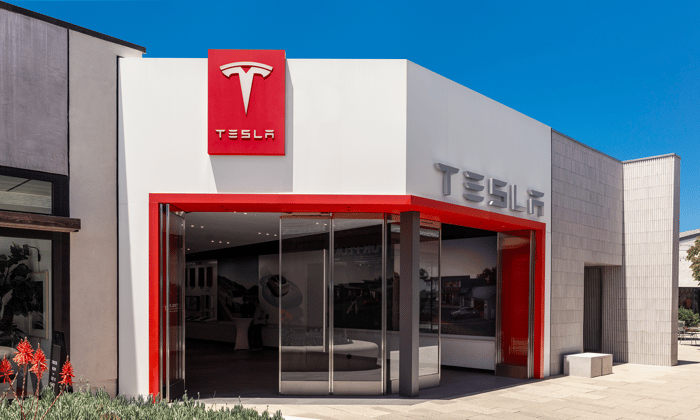
Image source: Tesla.
Milestones three and four relate to robots and robotaxis. Tesla must sell 1 million robots and have 1 million robotaxis "in operation" to meet this target. The remaining eight milestones relate to earnings before interest, taxes, depreciation, and amortization (EBITDA) targets -- a widely used measure of profits -- which means they are profitability targets for Tesla as a whole. The first target is $50 billion in EBITDA, and the peak EBITDA target is $400 billion. Total Tesla EBITDA was $11 billion over the past 12 months, so for it to jump almost fivefold to hit the low end of the target is also very ambitious.
Piece of cake, right? Well...
Snap back to reality
At this point, investors might be feeling the pull of gravity on these ambitious growth targets for Musk to get his $1 trillion payday. There's no question that Musk's pay structure aligns his interests with shareholders, but are the targets feasible? It's not clear, and one big concern is that the stock could plummet if these lofty expectations aren't met. My biggest hang-ups are that the Optimus humanoid robots (announced at the company's Artificial Intelligence Day event in 2021 and what I assume are the bots in the projections) are still being tested and are only prototypes. Robotaxis are also off to a slow start in Austin and the San Francisco Bay Area, though Musk has wildly ambitious goals for around 1,500 robotaxis in those areas by the end of 2025.
Tesla's existing electric vehicle (EV) business is more straightforward because it is firmly established and has solid growth prospects. But success is far from assured -- Chinese EVs are quite advanced and expanding rapidly in China and across the globe. BYD, Li Auto, and XPeng are growing at a much faster rate these days. And the domestic incumbents are making inroads, as evidenced by the popularity and affordability of General Motors' Chevy Equinox.
Is the stock worth it?
Analysts project Tesla will grow sales nearly 15% this year to $110 billion, and earnings per share will reach $2.27, for a forward price-to-earnings ratio of 185. That earnings multiple is a bit rich for my blood given the competitive climate in EVs and concern that robots and self-driving cars might not reach their commercial potential. Musk could defy gravity and reach these lofty goals, but I would not recommend betting on it.
Don’t miss this second chance at a potentially lucrative opportunity
Ever feel like you missed the boat in buying the most successful stocks? Then you’ll want to hear this.
On rare occasions, our expert team of analysts issues a “Double Down” stock recommendation for companies that they think are about to pop. If you’re worried you’ve already missed your chance to invest, now is the best time to buy before it’s too late. And the numbers speak for themselves:
- Nvidia: if you invested $1,000 when we doubled down in 2009, you’d have $470,242!*
- Apple: if you invested $1,000 when we doubled down in 2008, you’d have $54,445!*
- Netflix: if you invested $1,000 when we doubled down in 2004, you’d have $589,717!*
Right now, we’re issuing “Double Down” alerts for three incredible companies, available when you join Stock Advisor, and there may not be another chance like this anytime soon.
*Stock Advisor returns as of December 1, 2025
Ryan Fuhrmann has positions in the stocks mentioned. The Motley Fool has positions in and recommends Tesla. The Motley Fool recommends BYD Company and General Motors. The Motley Fool has a disclosure policy.
Mentioned In This Article
Latest News
| 48 min | |
| 1 hour | |
| 2 hours | |
| 2 hours | |
| 3 hours | |
| 6 hours | |
| 7 hours | |
| 8 hours | |
| 10 hours | |
| 12 hours | |
| 14 hours | |
| Oct-17 | |
| Oct-17 | |
| Oct-17 | |
| Oct-17 |
