Here's Why Alphabet Is the Best-Performing "Magnificent Seven" Stock in 2025 (and Why It Has Room to Run in 2026)
Key Points
In the long run, financial results ultimately prevail over market sentiment.
Investor perception toward Alphabet has shifted from pessimistic to realistic.
Alphabet remains a balanced buy for 2026.
Let's turn the calendar back six months to early June.
Alphabet (NASDAQ: GOOG) (NASDAQ: GOOGL) was down over 10% year to date, while the S&P 500 had recovered from the tariff-induced sell-off in April and was roughly flat on the year.
Where to invest $1,000 right now? Our analyst team just revealed what they believe are the 10 best stocks to buy right now, when you join Stock Advisor. See the stocks »
Fast-forward to today, and Alphabet is up 67% year to date, has more than doubled off of its 52-week low, and surpassed Microsoft to become the third-most valuable company in the world behind Nvidia and Apple. In 2025, Alphabet is by far the best-performing "Magnificent Seven" stock, with Nvidia in a distant second place with a 35.1% year-to-date gain.
Here's why Alphabet's rise wasn't a fluke, how you can identify Alphabet-like stocks before they pop, and why Alphabet has room to run in 2026.
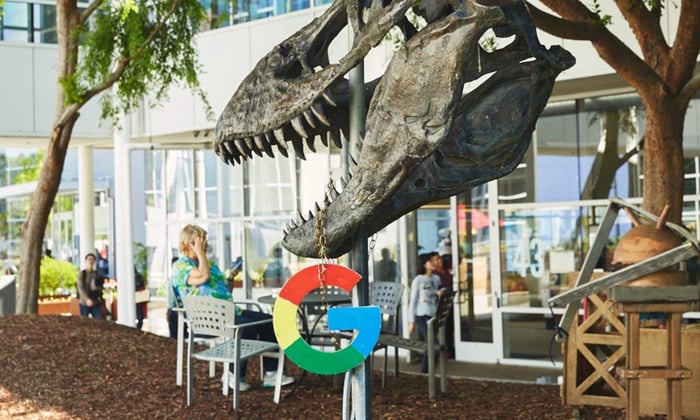
Image source: Alphabet.
Alphabet was epically mispriced
Finance classes will teach you theories such as the efficient market hypothesis, which essentially posits that asset prices are accurately determined based on available information. In practical application, the hypothesis attributes outsize gains to taking on outsize risks -- effectively discrediting the finding of true value independent of risk in the market.
Alphabet is a prime example of why the hypothesis is incorrect.
Earlier this year, Alphabet got so cheap that it traded at a discount to the S&P 500. It was the least expensive Magnificent Seven stock, despite the company generating substantial free cash flow, achieving steady high-margin growth, repurchasing a significant amount of stock, paying dividends, and maintaining a solid balance sheet.
Simply put, Wall Street failed to price in Alphabet's growth potential and labeled it as an artificial intelligence (AI) loser. That assumption couldn't be further from the truth.
From laggard to leader
Alphabet has a massively diversified business, spanning Google Search, Google Cloud, YouTube, Android, Google services like Gmail and Google Drive, "other bets" like Waymo and Google Fiber, research and development arm Google DeepMind, and more. But despite all these moving parts, Alphabet still depends on Google Search for over half of its revenue and the majority of its operating income.
Large language models (LLMs) present the greatest threat to Google Search in its history. And for a while, there were fears that tools like OpenAI, Claude, Copilot, DeepSeek, Grok, and others would slowly erode Alphabet's once-dominant share of the search market. If queries shifted from web-based text links to conversational, that would disrupt the very fabric of Google Search's identity.
Instead of sitting on its hands and letting the LLM wave weather its once-impenetrable moat, Alphabet integrated its model, Gemini, into Google Search, as well as a stand-alone app. Rather than reinvent the wheel, Alphabet essentially upgraded Chrome with AI features, making it more powerful and providing an incentive for users to stay on the platform instead of switching to a different tool entirely.
The strategy worked. Google Search continues to grow despite upgrades from rival LLMs. Alphabet is generating all-time-high earnings and investing heavily in long-term projects, including the expansion of Google Cloud infrastructure. Alphabet is thriving and is far from being a legacy tech giant, with its best days in the rearview mirror. And yet just six months ago, the market was pricing Alphabet like a washed-up relic.
Engagement continues to rise on Gemini -- with the app surpassing 650 million monthly active users.
As an added vote of confidence, Berkshire Hathaway announced a stake in Alphabet -- marking a stark contrast from quarter after quarter of trimming its Apple position -- indicating Warren Buffett and his team perceive Alphabet as a good value.
Meta Platforms is considering purchasing Alphabet's Tensor Processing Unit (TPU) chips, which Alphabet developed with Broadcom. Custom-made TPUs are a cost-effective solution for data centers, offering a more affordable alternative in certain applications than graphics processing units, such as those manufactured by Nvidia or Advanced Micro Devices.
Flipping the script
Alphabet's investment thesis has evolved, but the bigger change impacting its stock price is perception. Now, the market views Alphabet as a leader in search through its reimagined Chrome and Gemini. Google's TPUs are recognized as a leading method for training AI models, opening a new revenue stream for Alphabet by selling TPUs to hyperscalers.
Alphabet is a textbook example of the upside potential that comes with investing in dirt cheap growth stocks rather than simply betting big on red-hot highfliers. When growth expectations are virtually nonexistent, a company doesn't have to do much to garner a favorable response from Wall Street.
If we examine Alphabet's timeline over the last six or so months, I would say that a significant change occurred in late summer and fall, when Alphabet began to be recognized as a major player in AI rather than a laggard. The recent run-up over the last few weeks is attributed to a positive response to Gemini 3, which was announced in mid-November, and news that Meta was interested in buying TPU chips.
These announcements are undoubtedly great news for Alphabet investors, but they didn't emerge from nowhere. Alphabet's Google Search and Gemini results have been exceptional for several quarters. Alphabet and Broadcom's seventh-generation TPU is 30 times more powerful than the first cloud TPU from 2018. But still, the partnership has been going on for a while now.
Alphabet remains a solid buy now
Alphabet has room to run in 2026 because its valuation is still reasonable at 30 times forward earnings. With multiple levers to pull to grow earnings, Alphabet is a balanced buy now. But it isn't the dirt cheap value stock it used to be. Now, Alphabet is at a similar valuation to peers like Microsoft and Amazon, and more expensive than Meta Platforms.
All told, Alphabet is a great example of why there's a lot of money to be made in the stock market if you can find quality companies that are mispriced because fears are overshadowing fundamentals and growth potential.
Should you invest $1,000 in Alphabet right now?
Before you buy stock in Alphabet, consider this:
The Motley Fool Stock Advisor analyst team just identified what they believe are the 10 best stocks for investors to buy now… and Alphabet wasn’t one of them. The 10 stocks that made the cut could produce monster returns in the coming years.
Consider when Netflix made this list on December 17, 2004... if you invested $1,000 at the time of our recommendation, you’d have $540,587!* Or when Nvidia made this list on April 15, 2005... if you invested $1,000 at the time of our recommendation, you’d have $1,118,210!*
Now, it’s worth noting Stock Advisor’s total average return is 991% — a market-crushing outperformance compared to 195% for the S&P 500. Don’t miss out on the latest top 10 list, available when you join Stock Advisor.
*Stock Advisor returns as of December 1, 2025
Daniel Foelber has positions in Nvidia. The Motley Fool has positions in and recommends Advanced Micro Devices, Alphabet, Amazon, Apple, Berkshire Hathaway, Meta Platforms, Microsoft, Nvidia, and Tesla. The Motley Fool recommends Broadcom and recommends the following options: long January 2026 $395 calls on Microsoft and short January 2026 $405 calls on Microsoft. The Motley Fool has a disclosure policy.
Mentioned In This Article
Latest News
| 12 min | |
| 24 min | |
| 40 min | |
| 2 hours | |
| 3 hours | |
| 3 hours | |
| 4 hours | |
| 4 hours | |
| 4 hours |
PwC Australia moves beyond advising with AI cybersecurity offering
GOOG GOOGL
International Accounting Bulletin
|
| 5 hours | |
| 7 hours | |
| 8 hours | |
| 8 hours | |
| Oct-08 | |
| Oct-08 |
