|
|
|

|
|||||
|
|
|

Over the past six months, Ally Financial has been a great trade, beating the S&P 500 by 5.3%. Its stock price has climbed to $44.45, representing a healthy 18.8% increase. This was partly thanks to its solid quarterly results, and the run-up might have investors contemplating their next move.
Is there a buying opportunity in Ally Financial, or does it present a risk to your portfolio? Dive into our full research report to see our analyst team’s opinion, it’s free for active Edge members.
We’re glad investors have benefited from the price increase, but we don't have much confidence in Ally Financial. Here are three reasons why ALLY doesn't excite us and a stock we'd rather own.
Reviewing a company’s long-term sales performance reveals insights into its quality. Any business can experience short-term success, but top-performing ones enjoy sustained growth for years.
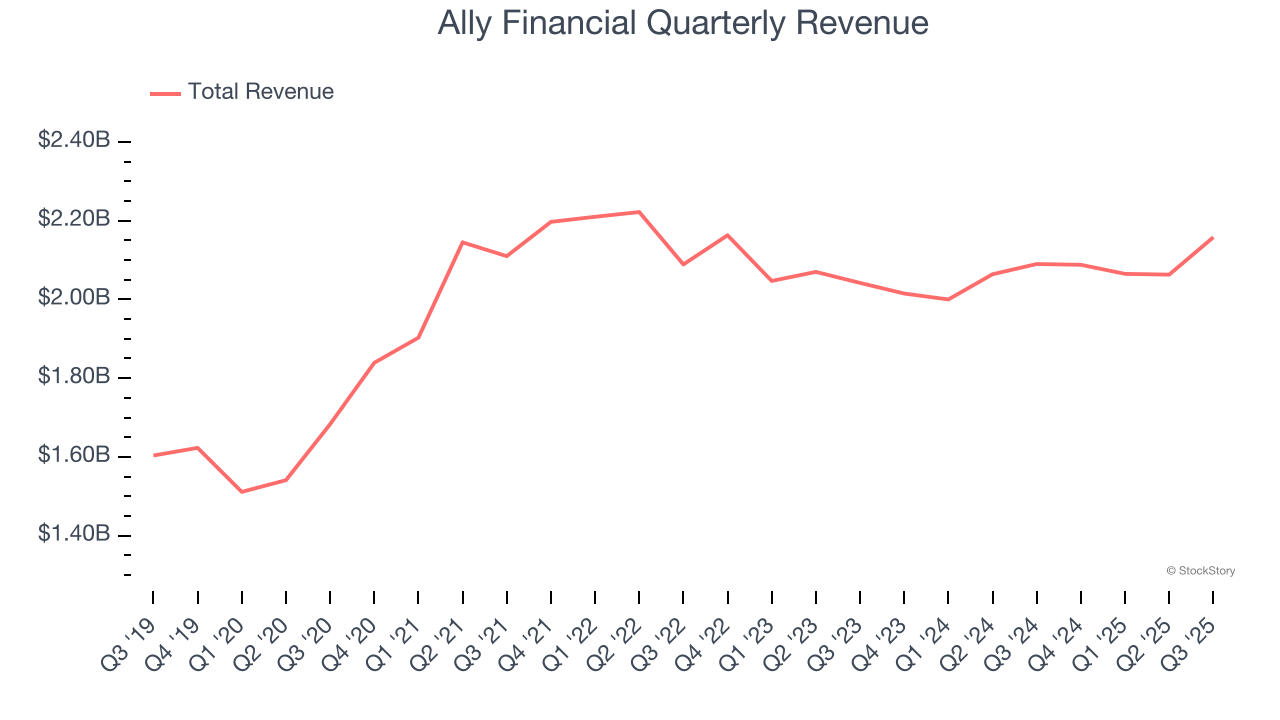
Regrettably, Ally Financial’s revenue grew at a tepid 5.7% compounded annual growth rate over the last five years. This was below our standard for the financials sector.
Analyzing the long-term change in earnings per share (EPS) shows whether a company's incremental sales were profitable – for example, revenue could be inflated through excessive spending on advertising and promotions.
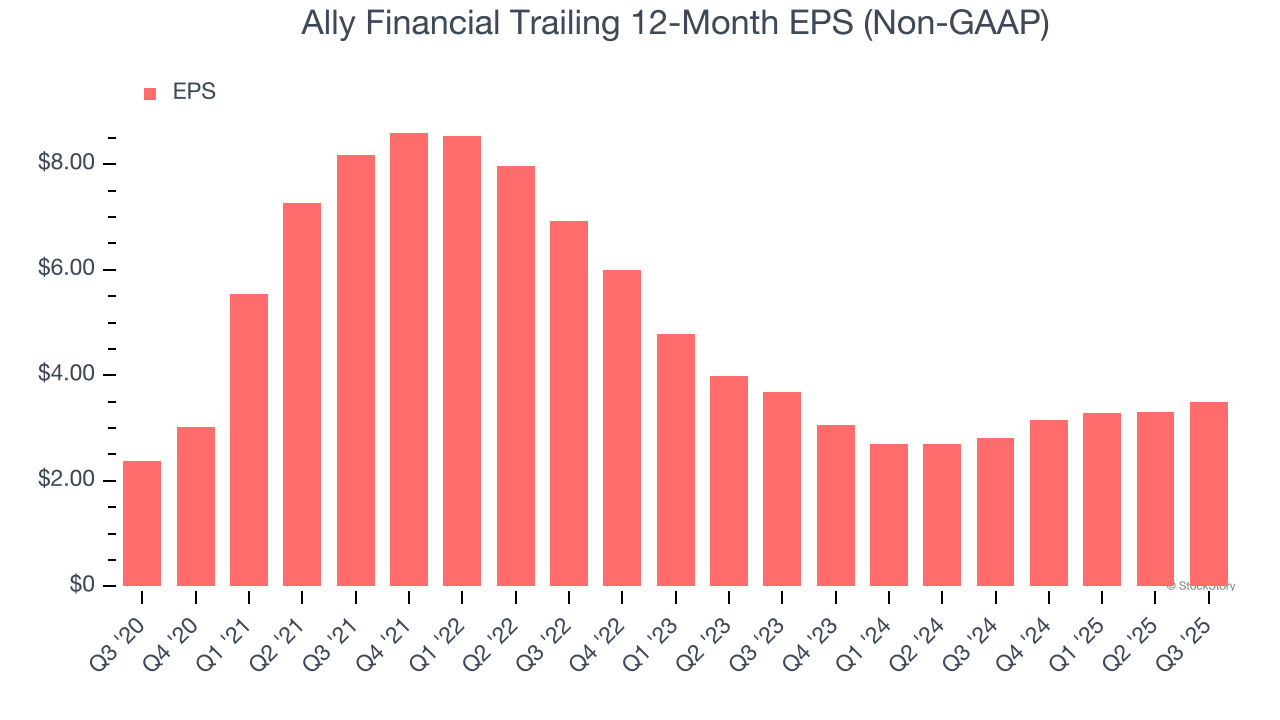
Ally Financial’s EPS grew at an unimpressive 8.1% compounded annual growth rate over the last five years. On the bright side, this performance was better than its 5.7% annualized revenue growth and tells us the company became more profitable on a per-share basis as it expanded.
Leverage is core to a financial firm’s business model (loans funded by deposits). To ensure economic stability and avoid a repeat of the 2008 GFC, regulators require certain levels of capital and liquidity, focusing on the Tier 1 capital ratio.
Tier 1 capital is the highest-quality capital that a firm holds, consisting primarily of common stock and retained earnings, but also physical gold. It serves as the primary cushion against losses and is the first line of defense in times of financial distress.
This capital is divided by risk-weighted assets to derive the Tier 1 capital ratio. Risk-weighted means that cash and US treasury securities are assigned little risk while unsecured consumer loans and equity investments get much higher risk weights, for example.
New regulation after the 2008 financial crisis requires that all firms must maintain a Tier 1 capital ratio greater than 4.5%. On top of this, there are additional buffers based on scale, risk profile, and other regulatory classifications, so that at the end of the day, firms generally must maintain a 7-10% ratio at minimum.
Over the last two years, Ally Financial has averaged a Tier 1 capital ratio of 9.7%, which is considered unsafe in the event of a black swan or if macro or market conditions suddenly deteriorate. For this reason alone, we will be crossing it off our shopping list.
We see the value of companies driving economic growth, but in the case of Ally Financial, we’re out. With its shares outperforming the market lately, the stock trades at 8.7× forward P/E (or $44.45 per share). While this valuation is optically cheap, the potential downside is huge given its shaky fundamentals. There are superior stocks to buy right now. We’d recommend looking at a safe-and-steady industrials business benefiting from an upgrade cycle.
If your portfolio success hinges on just 4 stocks, your wealth is built on fragile ground. You have a small window to secure high-quality assets before the market widens and these prices disappear.
Don’t wait for the next volatility shock. Check out our Top 5 Growth Stocks for this month. This is a curated list of our High Quality stocks that have generated a market-beating return of 244% over the last five years (as of June 30, 2025).
Stocks that have made our list include now familiar names such as Nvidia (+1,326% between June 2020 and June 2025) as well as under-the-radar businesses like the once-micro-cap company Tecnoglass (+1,754% five-year return). Find your next big winner with StockStory today.
StockStory is growing and hiring equity analyst and marketing roles. Are you a 0 to 1 builder passionate about the markets and AI? See the open roles here.
| Jul-24 | |
| Jul-23 | |
| Jul-21 | |
| Jul-21 | |
| Jul-21 | |
| Jul-21 | |
| Jul-21 | |
| Jul-20 | |
| Jul-13 | |
| Jun-18 | |
| May-20 | |
| May-14 | |
| May-14 | |
| May-14 | |
| May-06 |

Join thousands of traders who make more informed decisions with our premium features. Real-time quotes, advanced visualizations, alerts, and much more.
Learn more about Finviz Elite