|
|
|

|
|||||
|
|
|
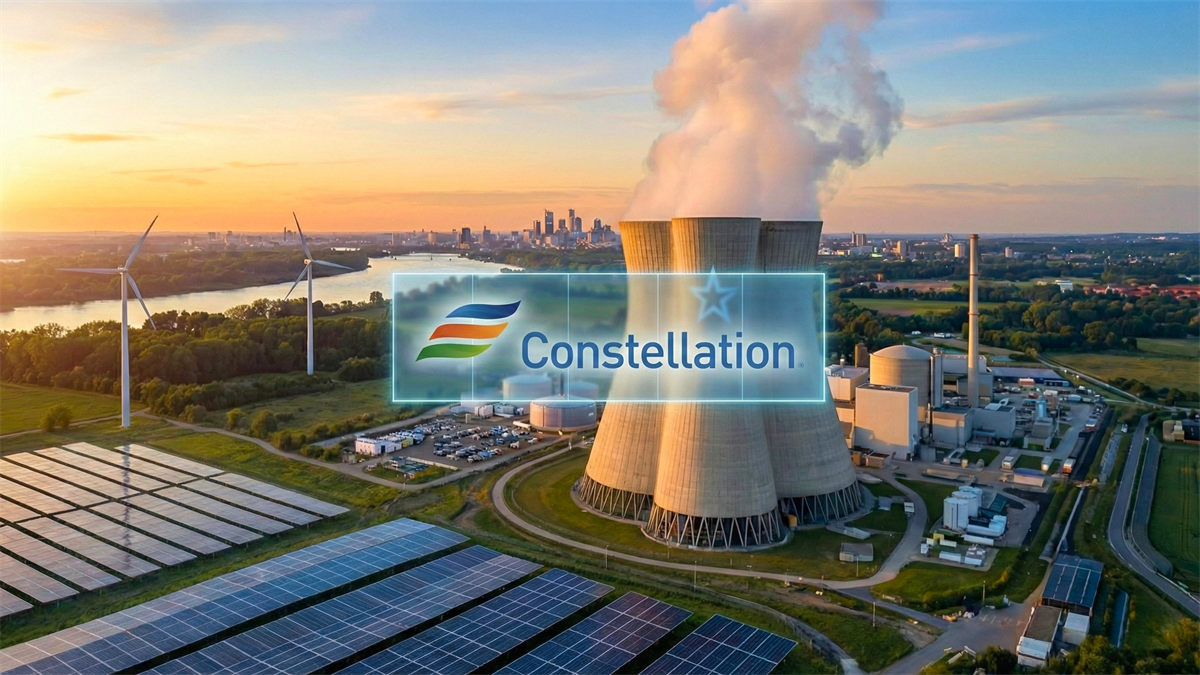
A strategic shift is quietly reshaping how Wall Street invests in the energy sector. In a recent note, Bank of America advised clients to buy weakness in select power producers, highlighting Constellation Energy (NASDAQ: CEG) as a prime example. This call signals a broader pivot away from the boom-and-bust cycles of traditional oil and gas and toward the companies providing the non-negotiable commodity of the modern era: reliable electricity.
The investment case for a company like Constellation is no longer about slow, predictable utility returns. The most valuable energy asset is shifting from a barrel of oil to a guaranteed megawatt of clean, 24/7 power. This evolution positions Constellation less as a simple utility and more as a core infrastructure provider for the digital age, built on a foundation of federally-backed stability and plugged directly into the explosive growth of artificial intelligence (AI).
For investors accustomed to the volatility of energy markets, Constellation offers a unique and compelling element of stability. Unlike commodity producers whose profits are subject to global supply shocks and price swings, a significant portion of Constellation's revenue is shielded from market downturns by federal policy.
The key to this stability is the Nuclear Production Tax Credit (PTC). This program functions as a price floor for the company's nuclear fleet, the largest in the nation. If wholesale electricity prices fall, the PTC provides a federal tax credit that protects revenue. For 2025, that threshold is set around $44.75 per megawatt-hour. This mechanism provides significant downside protection and predictable cash flow, a rarity in the energy sector. This investor certainty was solidified in July 2025 with the passage of the One Big Beautiful Bill Act (OBBBA), which made these tax credits a permanent fixture of the energy landscape.
This long-term visibility into a core revenue stream provides a bond-like foundation for Constellation’s earnings. For investors, this regulatory backstop supports a strong and growing dividend while reducing the risk profile typically associated with high-growth stocks, creating an attractive hybrid investment.
While federal policy provides stability, Constellation's primary growth driver is its indispensable role in the AI revolution. The proliferation of data centers has created an insatiable demand for massive amounts of constant, carbon-free power, a need that intermittent renewables cannot meet alone. Constellation's nuclear fleet, which operates with an industry-leading 96.8% capacity factor, is the definitive solution for this 24/7 demand.
The restart of the Crane Clean Energy Center, formerly Three Mile Island, serves as a powerful case study. The project is underpinned by a 20-year power purchase agreement with Microsoft and backed by a finalized $1 billion loan guarantee from the Department of Energy. Showing impressive execution, Constellation has accelerated the plant's restart timeline to 2027.
Critically, the company has pursued a front-of-the-meter strategy, connecting the plant's power to the broader grid rather than attempting a private, direct connection to a data center. This savvy approach allowed it to bypass the regulatory bottlenecks that stalled several competitors in late 2024. This single project is just the beginning. Constellation has already identified an additional 900 megawatts of potential uprates across its existing nuclear sites, representing a pipeline of low-cost, high-impact growth. These long-term contracts with hyperscalers are re-rating the stock, causing the market to value Constellation less like a utility and more like a vital piece of tech infrastructure.
Constellation is leveraging its strong position to build an energy platform of unmatched scale. The company’s acquisition of Calpine Corporation, set to close in the fourth quarter of 2025, is a key part of this strategy. The deal adds 27 gigawatts of flexible natural gas generation. This is a crucial complement to the nuclear fleet. If nuclear provides the steady, marathon runner baseload power, Calpine's assets serve as the sprinter, able to ramp up quickly to meet peak demand and keep the grid stable.
Even with this major expansion, the company maintains solid financial health. Post-acquisition, Constellation will command an estimated $14 billion in total liquidity while preserving its investment-grade credit rating. This demonstrates disciplined financial management and provides ample firepower for future growth.
This combination of strategic growth and shareholder returns helps justify the stock’s premium valuation. While its price-to-earnings ratio (P/E) of around 41x is high for a utility, it reflects a projected forward earnings growth rate of over 14%. This is reinforced by a clear capital return policy, including a targeted 10% annual dividend growth and an active share repurchase program with approximately $600 million in remaining authority.
Institutional bullishness on Constellation Energy reflects a new market reality: the AI revolution runs on electricity, and Constellation is the leading American producer of the clean, reliable power it needs most. The company has successfully merged the stability of a de-risked utility with the secular growth profile of a tech infrastructure leader. For investors seeking a durable, direct way to participate in the AI boom without the sky-high valuations of software and chipmakers, Constellation Energy represents the physical backbone of the digital future.
Before you make your next trade, you'll want to hear this.
MarketBeat keeps track of Wall Street's top-rated and best performing research analysts and the stocks they recommend to their clients on a daily basis.
Our team has identified the five stocks that top analysts are quietly whispering to their clients to buy now before the broader market catches on... and none of the big name stocks were on the list.
They believe these five stocks are the five best companies for investors to buy now...
The article "AI Runs on Power—And Constellation Energy Controls the Switch" first appeared on MarketBeat.
| Apr-03 | |
| Apr-02 | |
| Apr-02 | |
| Apr-02 | |
| Apr-02 | |
| Apr-02 | |
| Apr-01 | |
| Apr-01 | |
| Apr-01 | |
| Apr-01 | |
| Apr-01 | |
| Apr-01 | |
| Apr-01 | |
| Apr-01 | |
| Apr-01 |

Join thousands of traders who make more informed decisions with our premium features. Real-time quotes, advanced visualizations, alerts, and much more.
Learn more about Finviz Elite