|
|
|

|
|||||
|
|
|
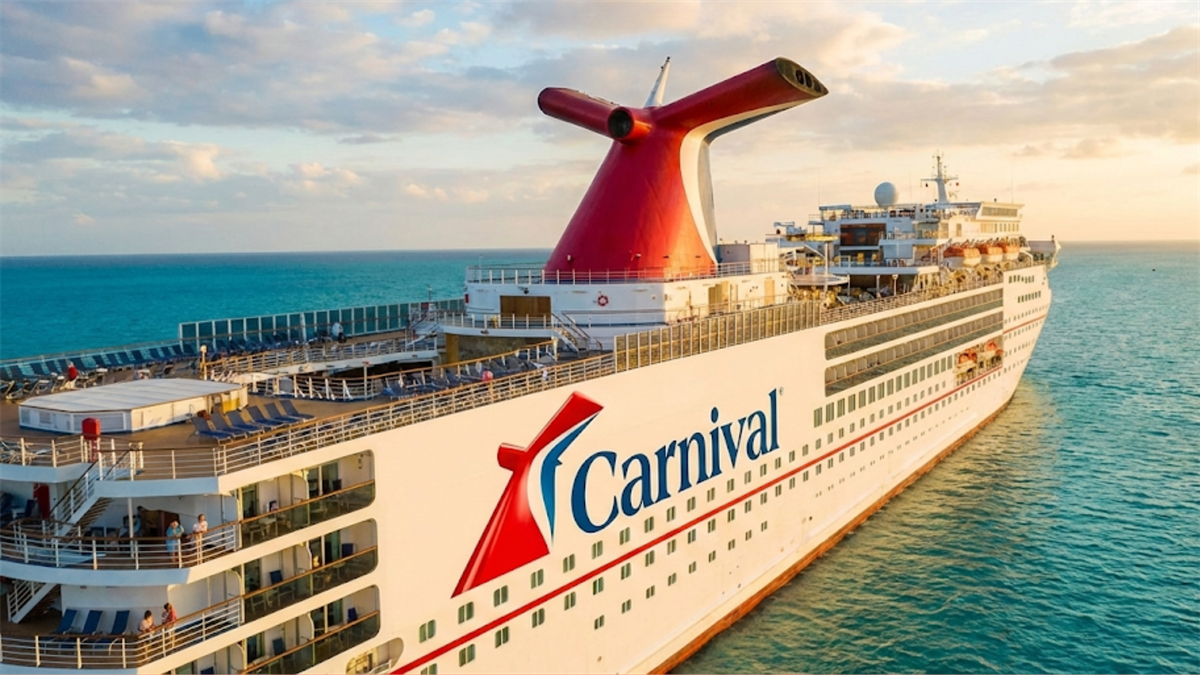
For years, the narrative surrounding the cruise industry was dominated by a single, relentless theme: survival. Following the global shutdowns of 2020, the investment story focused almost entirely on cash burn, mounting liabilities, and the long, arduous road to recovery. However, as 2025 draws to a close, that chapter has officially ended. Carnival Corporation (NYSE: CCL) has crossed a critical financial threshold, effectively replacing a recovery story with one of capital returns and sustained growth.
By delivering record-breaking financial results and achieving key balance sheet milestones, the world’s largest cruise operator has signaled that it is no longer playing defense. The focus has shifted from managing crisis to generating wealth, marked by a decisive return to paying shareholders directly.
The clearest indicator of this strategic pivot is the return of capital to investors. Carnival Corporation officially announced the reinstatement of its quarterly dividend, declaring a payout of 15 cents per share. Shareholders on record as of mid-February will receive this payment on February 27, 2026. This marks the first time the company has issued a dividend since the suspension of payouts in 2020.
While an annualized yield of approximately 1.9% is modest compared to some high-yield sectors, the signaling value of this move is immense. Corporate boards generally do not authorize dividends unless they are certain that the company’s financial crisis is over. Reinstating the payout confirms that management believes future cash flows are durable enough to support two primary goals simultaneously: continuing to pay down debt and rewarding shareholders with cash. It acts as a psychological all-clear for investors who remained on the sidelines during the volatile recovery years.
This decision to return cash to shareholders was fueled by operational performance that exceeded Wall Street expectations. The company survived 2025 and posted historic numbers, validating the strength of the consumer travel sector.
Key financial highlights from the Fourth Quarter and Full Year 2025 reports include:
These figures demonstrate that Carnival is attracting more customers and is managing its costs effectively despite global inflation, resulting in significantly higher profit margins.
Historically, the primary argument against investing in cruise lines has been the large debt load accumulated during the pandemic. However, the 2025 fiscal year served as a turning point for Carnival’s balance sheet. Management aggressively attacked its liabilities, reducing total debt by over $10 billion from its peak.
More importantly, the company achieved a net debt-to-adjusted EBITDA ratio of 3.4x by year-end. This ratio is a critical metric used by credit agencies to assess a company's ability to repay its loans. A 3.4x ratio is generally considered investment grade by most rating agencies.
In 2025 alone, the finance team successfully refinanced $19 billion in debt. This implies swapping older, high-interest loans for new debt with better terms or paying down principal entirely. This financial engineering simplifies the company's capital structure and lowers the risk of future interest rate spikes. Looking ahead, management projects that this leverage ratio will fall further, dipping below 3.0x in 2026. As the company regains a pristine credit rating, it becomes eligible for ownership by conservative pension funds and institutional investors that are often restricted from buying junk-rated debt, potentially expanding the pool of buyers for the stock.
Looking ahead to 2026, the economic laws of supply and demand appear to be working in the company's favor. Carnival enters the new year with approximately two-thirds of its 2026 inventory already booked. These reservations were made at historically high prices, indicating that consumers are willing to pay a premium for cruise vacations despite broader economic uncertainties. Recent data confirms that booking volumes around Black Friday and Cyber Monday hit record levels, indicating that demand is accelerating rather than slowing.
Two key factors amplify this pricing power:
Finally, a strategic change is on the horizon that could technically benefit the stock. The company has proposed unifying its current Dual-Listed Company (DLC) structure into a single entity under Carnival Corporation. Currently, the company trades separately on the London Stock Exchange and the New York Stock Exchange. The proposal involves delisting from the London Stock Exchange and trading solely on the NYSE, while also moving the legal corporate domicile to Bermuda.
While this sounds like administrative paperwork, it has real implications for investors. A unified listing consolidates all trading volume on a single exchange, thereby increasing liquidity. Furthermore, a simplified structure could lead to increased weighting in major U.S. stock indices such as the S&P 500. If the weighting increases, index funds that track the S&P 500 would be forced to purchase more shares, creating automatic buying pressure.
Carnival has successfully navigated the crisis years and transitioned into a compounder, a stock capable of offering capital appreciation through growth and regular income through dividends. With record bookings, a healed balance sheet, and a simplified corporate structure on the horizon, the recent run to 52-week highs is supported by fundamental improvements rather than speculation. The reinstatement of the dividend is merely the cherry on top of a fundamentally transformed company.
Before you make your next trade, you'll want to hear this.
MarketBeat keeps track of Wall Street's top-rated and best performing research analysts and the stocks they recommend to their clients on a daily basis.
Our team has identified the five stocks that top analysts are quietly whispering to their clients to buy now before the broader market catches on... and none of the big name stocks were on the list.
They believe these five stocks are the five best companies for investors to buy now...
The article "Carnival’s Dividend Return Marks the End of Survival Mode" first appeared on MarketBeat.
| 2 hours | |
| Apr-01 | |
| Apr-01 | |
| Mar-30 | |
| Mar-30 | |
| Mar-30 | |
| Mar-27 | |
| Mar-27 | |
| Mar-27 | |
| Mar-27 | |
| Mar-27 | |
| Mar-27 | |
| Mar-27 | |
| Mar-27 | |
| Mar-27 |

Join thousands of traders who make more informed decisions with our premium features. Real-time quotes, advanced visualizations, alerts, and much more.
Learn more about Finviz Elite