|
|
|

|
|||||
|
|
|
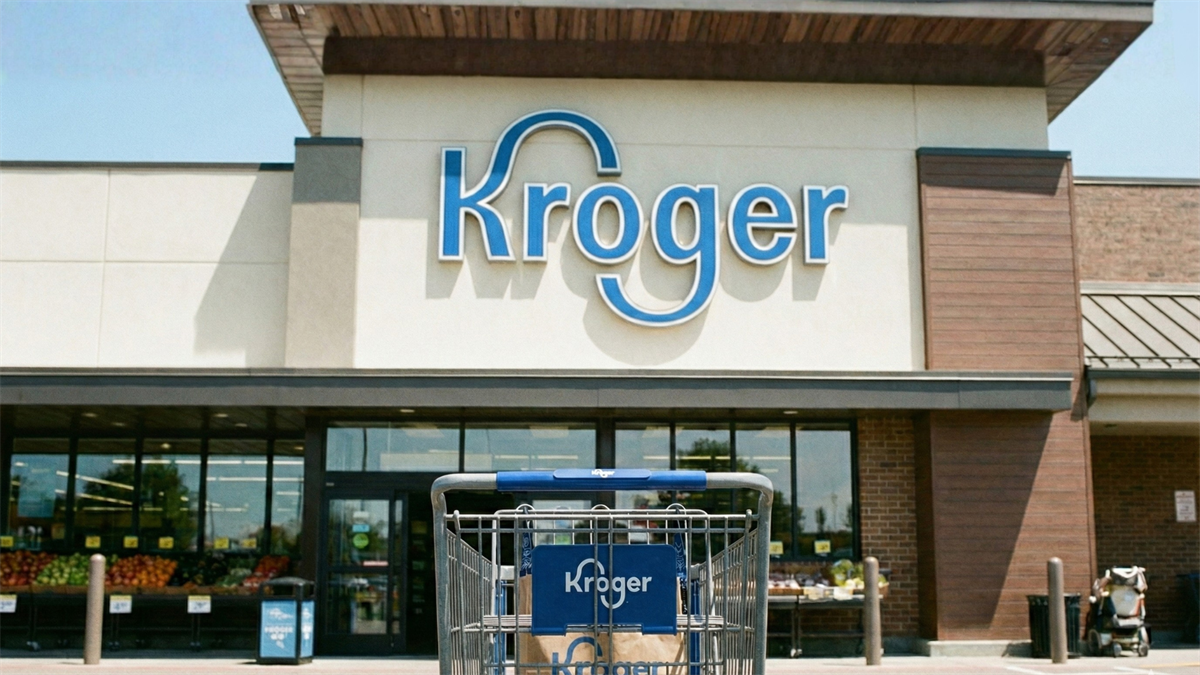
As the calendar turns from 2025 to 2026, investors are scanning the horizon for stability. The high-growth tech sector rallies of the past year are showing signs of fatigue, and economic forecasts for 2026 remain mixed. In environments like this, smart money often rotates into safe harbors. These are sectors that generate cash regardless of the economic climate. People still need to eat, and that simple reality is bringing renewed attention to the retail grocery sector.
Kroger Co. (NYSE: KR) has emerged as a compelling focal point in this rotation. For much of the last two years, the narrative surrounding the grocery giant was dominated by its complex, and ultimately terminated, merger effort with Albertsons.
Now, with legal distractions fading into the rearview mirror, Kroger is pivoting back to what it does best: generating cash and returning it to shareholders.
Management recently sent a powerful signal to the market in the form of a new buyback program. This move suggests they believe that Kroger’s stock price is significantly undervalued.
For the cautious investor looking to weather potential volatility in 2026, this signal transforms Kroger from a speculative merger play into a fundamental value play.
The most significant catalyst for Kroger heading into the new year occurred on Dec. 23, 2025. The company’s Board of Directors authorized an incremental 2 billion share repurchase program. When combined with the funds remaining from previous authorizations, Kroger now has a war chest of approximately $2.9 billion dedicated solely to buying back its own stock.
For investors, a buyback of this magnitude serves two critical functions. First, it acts as a floor under the stock price. When a company actively buys its own shares, it creates consistent demand. This can offset selling pressure during broader market dips.
Second, it engineers value through a concept known as EPS Accretion.
Crucially, Kroger can afford this without jeopardizing its financial stability. The company enters 2026 with a fortress-like balance sheet. As of the third quarter, Kroger’s net total debt to adjusted EBITDA ratio stood at 1.73x, well below the company’s own target cap. It indicates that they are not borrowing recklessly to fund these buybacks. Instead, they are utilizing free cash flow to reward shareholders. This signals a clear shift away from the capital-intensive merger strategy of the past.
While the buyback provides internal support for the stock, the external economic environment is providing a fundamental tailwind. The dynamic to watch in 2026 is the widening value gap between cooking at home and dining out.
Inflation has cooled somewhat since the peaks of 2023. However, the cumulative effect of price increases has permanently altered consumer behavior. According to USDA projections for 2026, this trend is set to accelerate in favor of grocery retailers:
This divergence creates a powerful incentive for consumers. As restaurant menu prices continue to climb, dining out becomes a luxury occasion rather than a weekly habit. Budget-conscious families are increasingly trading down from fast-casual restaurants to home-cooked meals. This shift drives volume and foot traffic directly into Kroger’s aisles.
Furthermore, the cost of goods sold (COGS) is stabilizing. While beef prices remain elevated due to a tighter cattle supply, other key commodities, such as grains and corn, have stabilized within a predictable range. This stability allows Kroger to manage its profit margins more effectively. Unlike the volatile periods of previous years, where rapid cost spikes ate into profits, the 2026 outlook suggests a more favorable environment. Kroger can likely maintain competitive pricing for customers without sacrificing its own profitability.
To understand Kroger's forward potential, investors must look past the headline noise of the recent third quarter. The company reported a significant $2.6 billion non-cash impairment charge related to its automated fulfillment network and partnership with Ocado. While the number is large, it essentially represents a clearing of the decks.
By taking the write-down, Kroger has acknowledged that its previous high-tech warehousing strategy didn't scale as expected. This removes a major layer of uncertainty from future earnings reports. With the write-down in the rearview, the focus shifts to what is actually working.
The bright spot in Kroger’s operations is its digital business. Sales in this division grew by 17% in the most recent quarter. This double-digit growth proves that Kroger is successfully capturing the online grocery market.
They are achieving this even as they pivot away from expensive automated warehouses toward more efficient fulfillment methods.
On the ground, the company’s Fresh initiative continues to gain traction. Management is emphasizing product quality and expanding its private-label brands. These include the budget-friendly Smart Way and the mid-tier Heritage Farm.
These private brands are crucial because they offer higher profit margins for the company while providing lower prices for the consumer. It is a win-win scenario in a cost-conscious economy.
The highly competitive grocery sector faces risk, and so does Kroger. Kroger's main rival is Walmart (NASDAQ: WMT), which leverages its scale to set prices. While a deep recession could shift shoppers to low-price Walmart, Kroger’s strong loyalty program and dominance in the fresh category offer a strong defense.
Investors must also monitor the ongoing litigation with Albertsons Companies (NYSE: ACI). After the termination of the merger, Albertsons sued Kroger in December 2024 for $600 million, alleging willful breach of contract for failing to secure deal approval. Though alarming, the market has absorbed the shock of this litigation, making it a known variable.
The investment case for Kroger in 2026 is built on two pillars: internal financial engineering and external market dynamics.
Internally, the $2.9 billion share repurchase capacity puts a definitive floor under the stock price. It signals management’s confidence in their standalone strategy. Externally, the widening inflation spread between restaurants and grocery stores provides a natural tailwind for sales volume.
Kroger may not offer the explosive growth potential of a tech startup. But in a market facing economic uncertainty, it provides something more valuable: predictability. For the first-year investor or the seasoned veteran, Kroger represents a boring but highly effective defensive play. It is a company with a fortress balance sheet, growing digital sales, and a clear plan to return cash to its owners.
Before you make your next trade, you'll want to hear this.
MarketBeat keeps track of Wall Street's top-rated and best performing research analysts and the stocks they recommend to their clients on a daily basis.
Our team has identified the five stocks that top analysts are quietly whispering to their clients to buy now before the broader market catches on... and none of the big name stocks were on the list.
They believe these five stocks are the five best companies for investors to buy now...
The article "The Kroger Catalyst: $2 Billion Reasons to Buy" first appeared on MarketBeat.
| 6 hours | |
| 13 hours | |
| 13 hours | |
| 14 hours | |
| 14 hours | |
| 17 hours | |
| Apr-23 | |
| Apr-23 | |
| Apr-23 | |
| Apr-23 | |
| Apr-23 | |
| Apr-23 | |
| Apr-23 | |
| Apr-23 | |
| Apr-23 |

Join thousands of traders who make more informed decisions with our premium features. Real-time quotes, advanced visualizations, alerts, and much more.
Learn more about Finviz Elite