Microsoft Slumps Heading Into Earnings-Here's What Matters Most
Microsoft Corporation (NASDAQ: MSFT) stock continues the three-month slide that started after the company’s last earnings report.
With just a few days left before earnings, MSFT stock has yet to break out of the bearish death cross pattern formed in November 2025.
In fact, it could be heading for a double dip. What does that mean to investors as Microsoft prepares to report earnings on Jan. 28?
A death cross pattern is one where a stock’s short-term simple moving average (SMA), usually the 50-day SMA, crosses below a longer-term SMA, usually the 200-day. It's a bearish pattern because it shows that both short- and long-term momentum are trending lower.
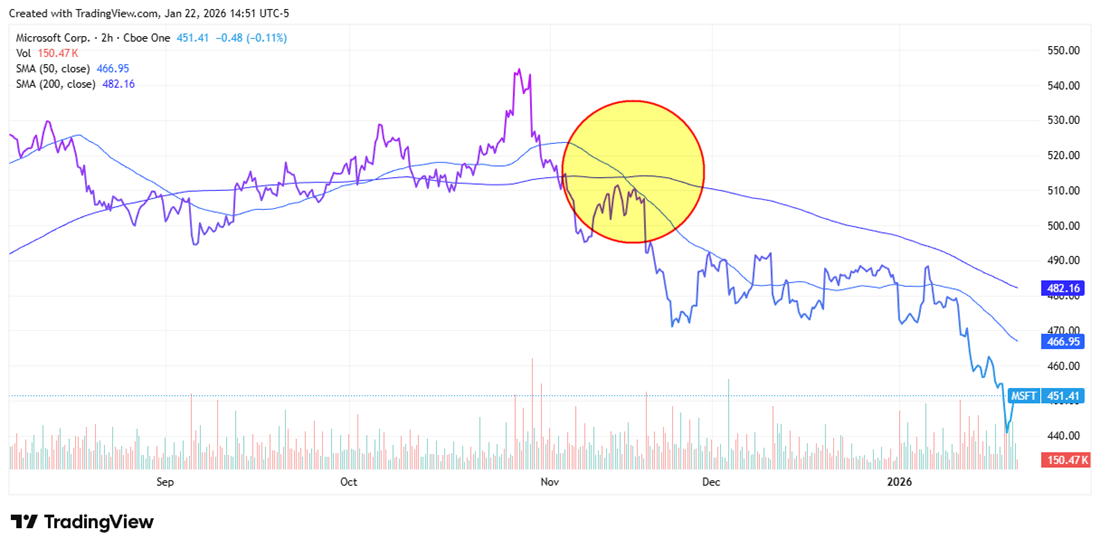
However, like any technical pattern, it’s not infallible. Plus, for long-term investors, golden cross patterns can be buying opportunities for quality stocks. That's particularly true when a stock is about to report earnings, which can trigger a swift reversal.
Microsoft’s Next Earnings Report Hinges on Azure and AI
Investors will be looking for signs that AI investments and cloud expansion are translating into tangible results. Key metrics to watch include Azure growth, especially whether AI workloads are driving incremental revenue versus simply shifting existing demand. Early adoption and monetization of products like Copilot and other enterprise AI tools could hint at longer-term productivity gains.
Capital expenditures are another focal point. Investors will want to see whether Microsoft is maintaining disciplined spending on new data centers or signaling plans to scale back after heavy AI-related investments. Margins will also be closely scrutinized: the market will weigh whether growth initiatives are sustainable without eroding profitability.
Finally, guidance tone matters—any reassurances on steady revenue and AI adoption trends could stabilize the stock ahead of a potentially volatile quarter, even if management doesn’t exceed expectations.
Valuation Looks More Reasonable After the Pullback
However, if something good has come out of the stock’s recent slide, it’s that MSFT stock looks fairly valued. The trailing 12-month price-to-earnings (P/E) ratio sits around 31.5x, near the lower end of its five-year historical range, and a discount to many technology stocks trading at 35x or higher. For long-term investors, this pullback presents an opportunity to add to a core holding at a more attractive entry point.
It’s also worth noting that Microsoft’s business is diversified across productivity software, cloud computing, and emerging AI platforms. Even if certain areas face short-term headwinds, the broader revenue mix and strong free cash flow help cushion the stock from sharp declines.
In short, the market is pricing in a moderation of growth rather than a permanent slowdown, which may open the door for disciplined investors looking beyond the next quarter.
Challenges to the Buy-and-Hold Thesis
The largest obstacle to holding MSFT stock or taking a long trading position centers on the AI bubble conversation. Microsoft is investing tens of billions of dollars into building out data centers. However, for now, even the company’s chief executive officer admits that AI has some kinks to work out.
The bearish narrative is that many companies will decide that AI will not offer enough long-term value to justify creating the AI applications that will keep demand for data centers strong. In that case, even a cash-rich company like Microsoft will face earnings pressure.
How likely is that? It’s hard to say, but many of the critiques of AI focus on generative AI, an area where Microsoft is a clear leader. The next wave is agentic AI, which is still in its infancy. This is where companies expect to see the largest gains in productivity. However, it’s not as consumer-facing, so adoption may not be obvious.
Microsoft Is a Stock to Own for the Long Haul
MSFT stock can be considered a core holding in any portfolio. The stock has been under pressure for several months, but the company is reaching into every major technology trend in 2026, including many areas of the AI stack.
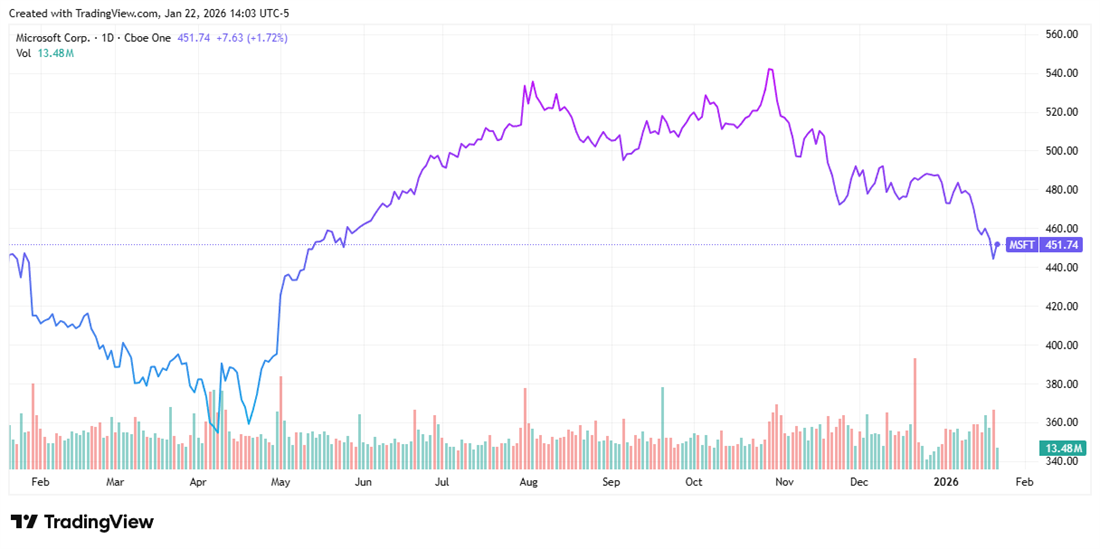
A sharp pullback can be unsettling, but as the saying goes, “when in doubt, zoom out.” To illustrate this, here’s the one-year price chart for MSFT stock:
Now look at the five-year chart:
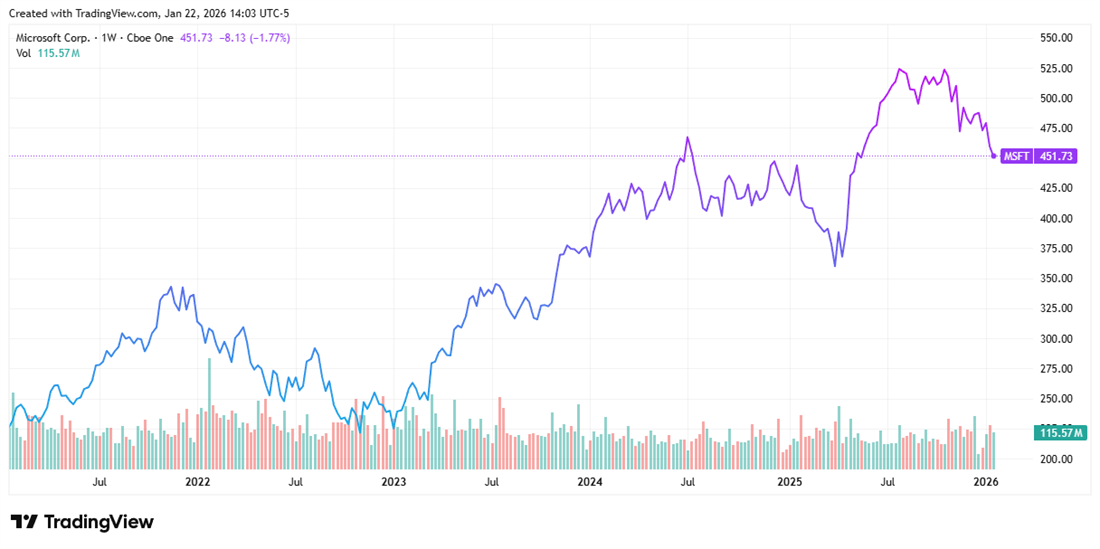
Viewing a stock’s performance over a wider lens helps investors understand what’s normal for a stock. And in this case, the pullback in MSFT stock has happened before and, in each case, has led to higher highs.
Where Should You Invest $1,000 Right Now?
Before you make your next trade, you'll want to hear this.
MarketBeat keeps track of Wall Street's top-rated and best performing research analysts and the stocks they recommend to their clients on a daily basis.
Our team has identified the five stocks that top analysts are quietly whispering to their clients to buy now before the broader market catches on... and none of the big name stocks were on the list.
They believe these five stocks are the five best companies for investors to buy now...
The article "Microsoft Slumps Heading Into Earnings—Here’s What Matters Most" first appeared on MarketBeat.
Mentioned In This Article
Latest News
| 2 hours | |
| 2 hours | |
| 3 hours | |
| 3 hours | |
| Oct-08 | |
| Oct-08 | |
| Oct-08 | |
| Oct-08 | |
| Oct-08 | |
| Oct-08 | |
| Oct-08 | |
| Oct-08 | |
| Oct-08 | |
| Oct-08 | |
| Oct-08 |
