|
|
|

|
|||||
|
|
|

Diversified science and technology company Danaher (NYSE:DHR) met Wall Streets revenue expectations in Q4 CY2025, with sales up 4.6% year on year to $6.84 billion. Its non-GAAP profit of $2.23 per share was 1.8% above analysts’ consensus estimates.
Is now the time to buy Danaher? Find out by accessing our full research report, it’s free.
Rainer M. Blair, President and Chief Executive Officer, stated, "We delivered a strong finish to the year with better-than-expected performance across our portfolio. We were particularly encouraged by continued strength in our bioprocessing business, along with improved momentum in Diagnostics and Life Sciences. Our teams' disciplined execution also enabled us to exceed our fourth quarter margin, earnings, and cash flow expectations."
Born from a real estate investment trust that transformed into a manufacturing powerhouse, Danaher (NYSE:DHR) is a global science and technology company that provides specialized equipment, software, and services for biotechnology, life sciences, and diagnostics.
A company’s long-term performance is an indicator of its overall quality. Any business can have short-term success, but a top-tier one grows for years. Unfortunately, Danaher’s 2% annualized revenue growth over the last five years was tepid. This was below our standards and is a rough starting point for our analysis.
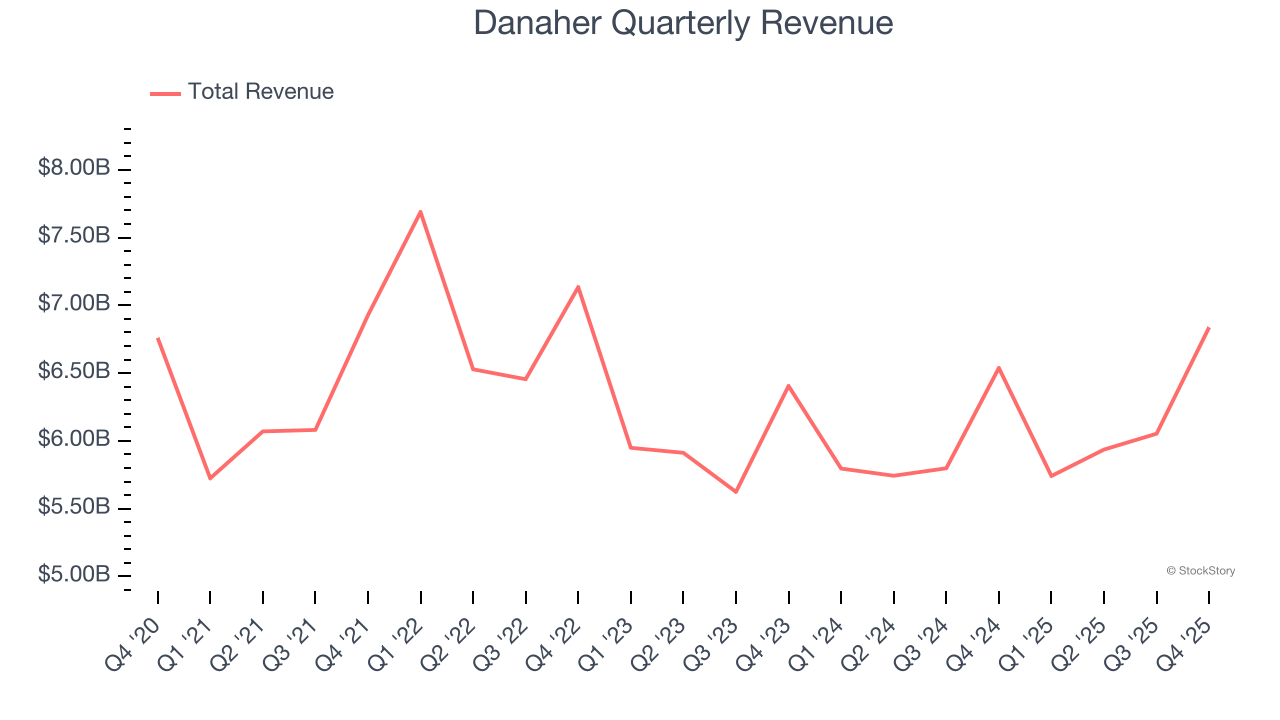
Long-term growth is the most important, but within healthcare, a half-decade historical view may miss new innovations or demand cycles. Danaher’s annualized revenue growth of 1.4% over the last two years aligns with its five-year trend, suggesting its demand was consistently weak.
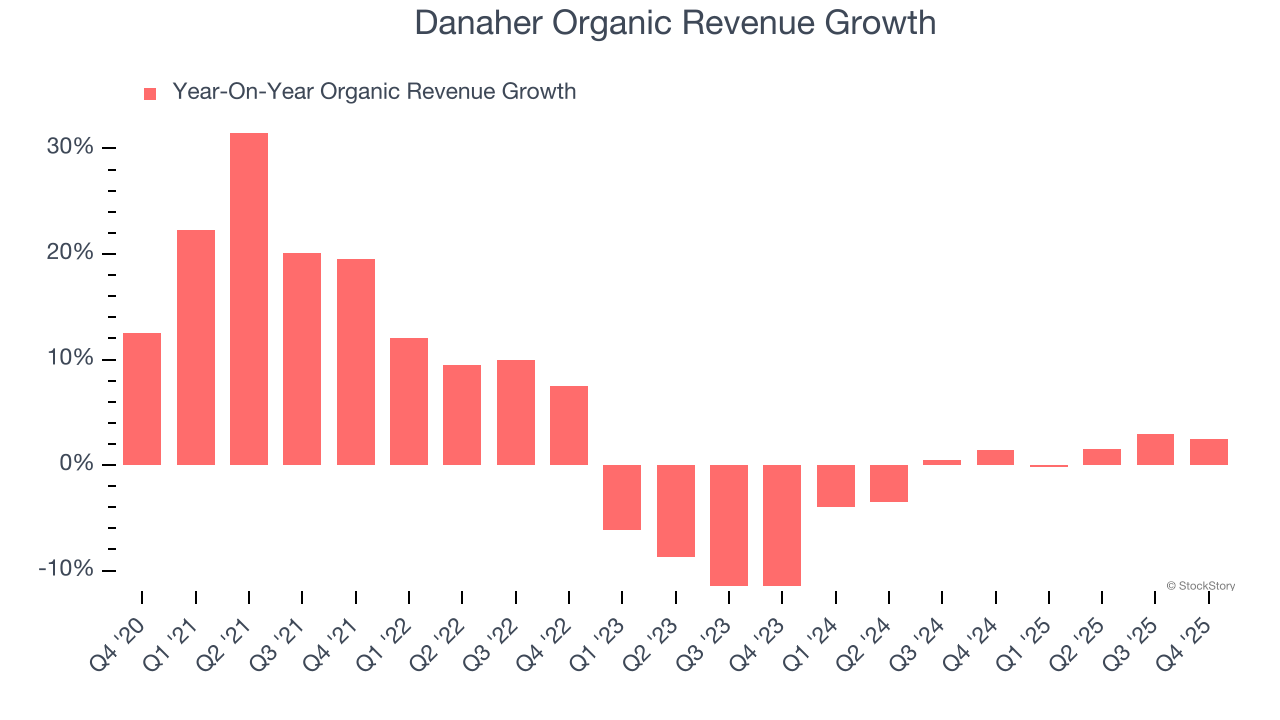
Danaher also reports organic revenue, which strips out one-time events like acquisitions and currency fluctuations that don’t accurately reflect its fundamentals. Over the last two years, Danaher’s organic revenue was flat. Because this number aligns with its two-year revenue growth, we can see the company’s core operations (not acquisitions and divestitures) drove most of its results.
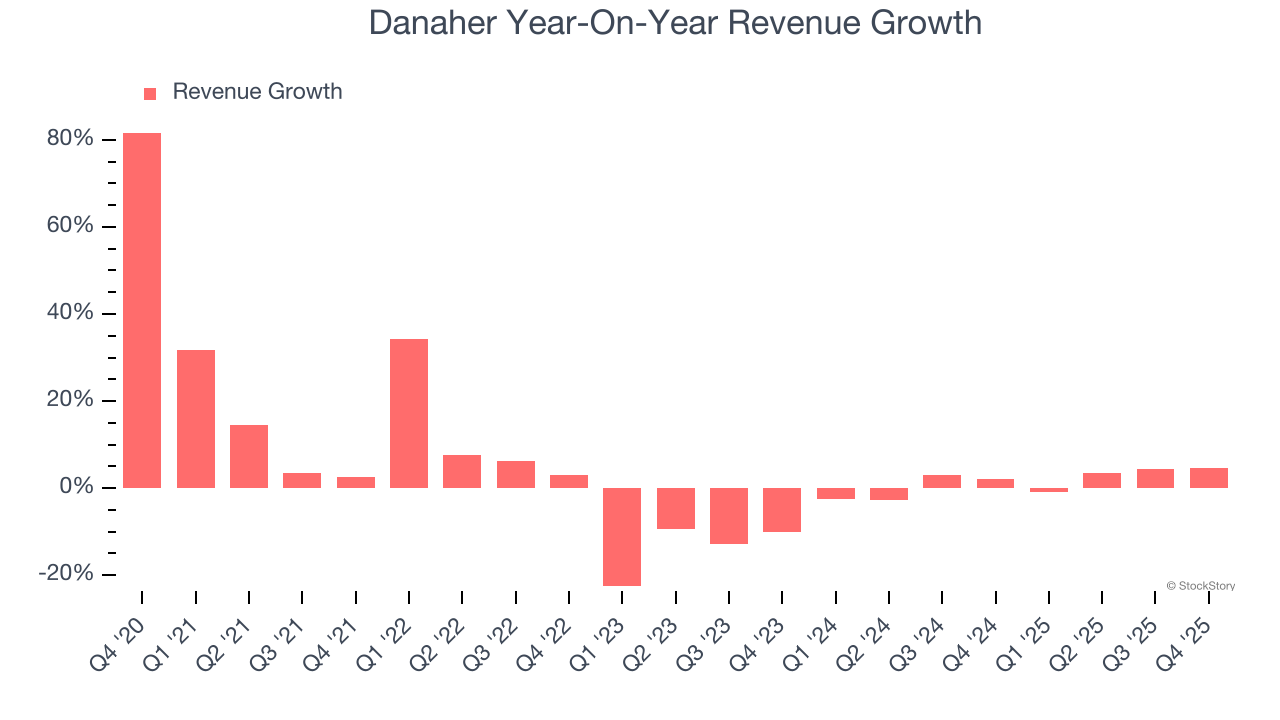
This quarter, Danaher grew its revenue by 4.6% year on year, and its $6.84 billion of revenue was in line with Wall Street’s estimates.
Looking ahead, sell-side analysts expect revenue to grow 3.8% over the next 12 months. While this projection suggests its newer products and services will catalyze better top-line performance, it is still below average for the sector.
The 1999 book Gorilla Game predicted Microsoft and Apple would dominate tech before it happened. Its thesis? Identify the platform winners early. Today, enterprise software companies embedding generative AI are becoming the new gorillas. a profitable, fast-growing enterprise software stock that is already riding the automation wave and looking to catch the generative AI next.
Danaher has been an efficient company over the last five years. It was one of the more profitable businesses in the healthcare sector, boasting an average operating margin of 24.7%.
Looking at the trend in its profitability, Danaher’s operating margin decreased by 11 percentage points over the last five years. The company’s two-year trajectory also shows it failed to get its profitability back to the peak as its margin fell by 3.7 percentage points. This performance was poor no matter how you look at it - it shows its expenses were rising and it couldn’t pass those costs onto its customers.
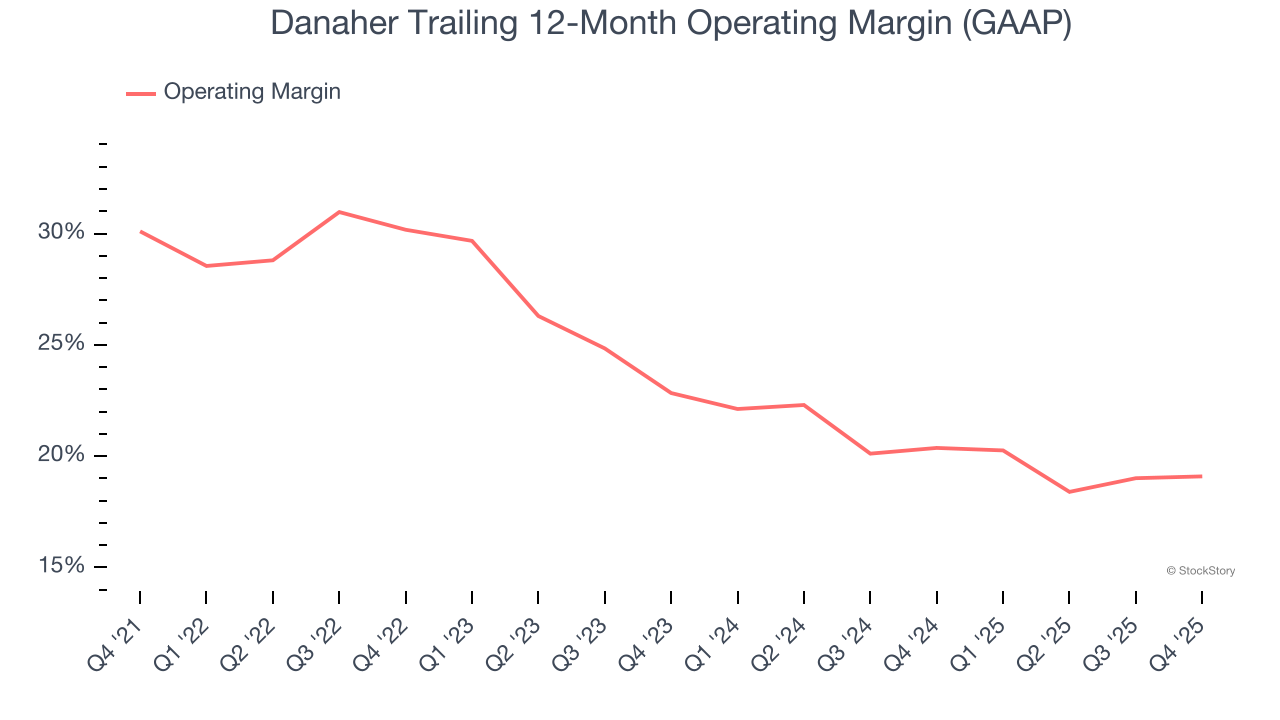
This quarter, Danaher generated an operating margin profit margin of 22%, in line with the same quarter last year. This indicates the company’s overall cost structure has been relatively stable.
Revenue trends explain a company’s historical growth, but the long-term change in earnings per share (EPS) points to the profitability of that growth – for example, a company could inflate its sales through excessive spending on advertising and promotions.
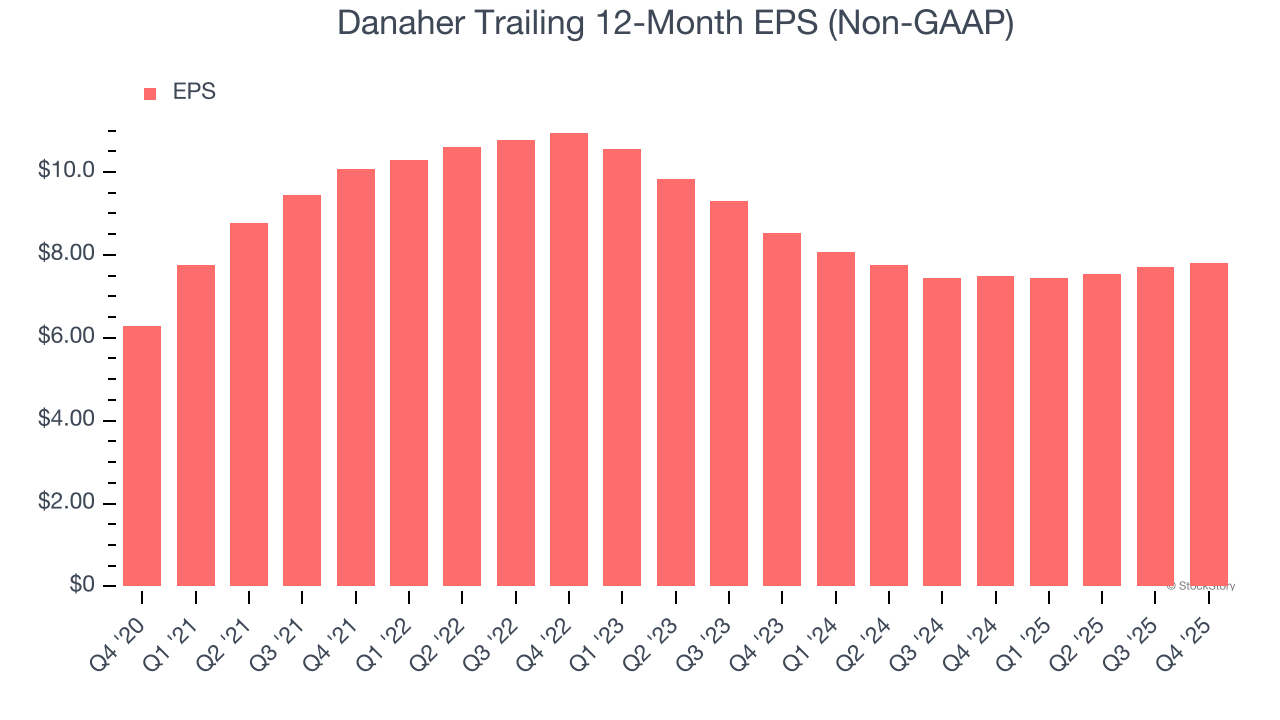
Danaher’s EPS grew at an unimpressive 4.4% compounded annual growth rate over the last five years. This performance was better than its flat revenue but doesn’t tell us much about its business quality because its operating margin didn’t improve.
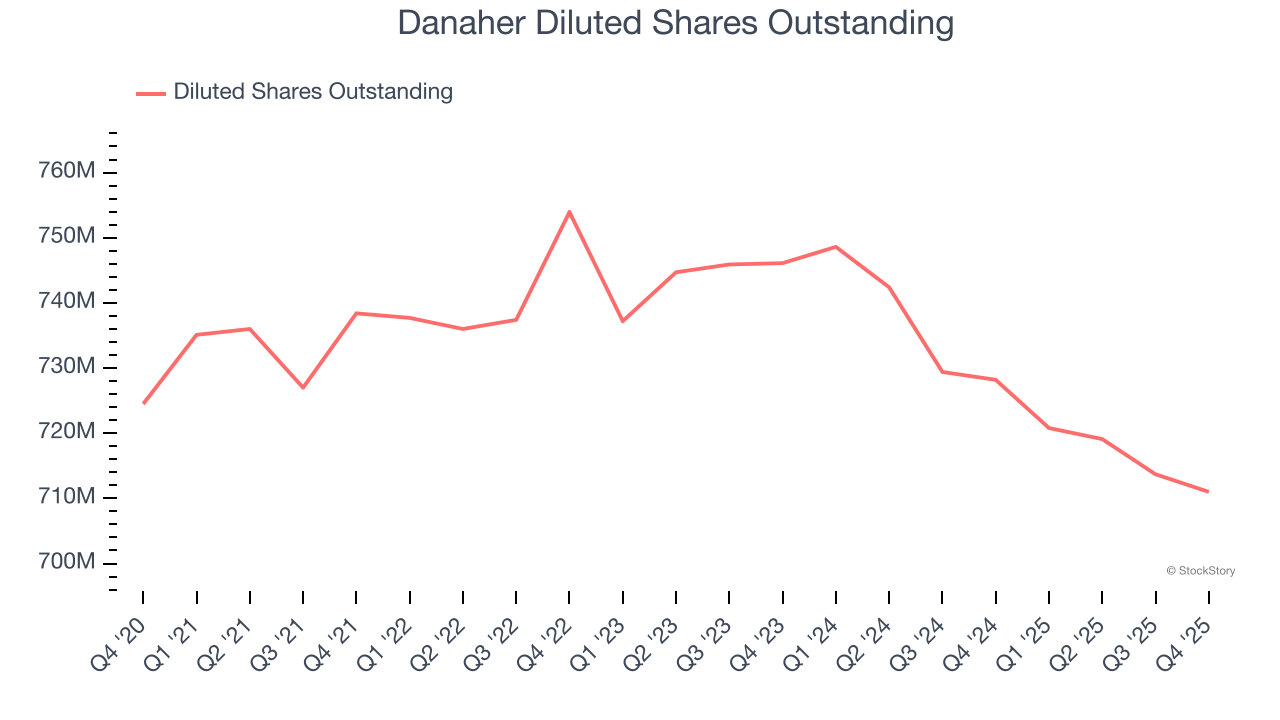
Diving into the nuances of Danaher’s earnings can give us a better understanding of its performance. A five-year view shows that Danaher has repurchased its stock, shrinking its share count by 1.9%. This tells us its EPS outperformed its revenue not because of increased operational efficiency but financial engineering, as buybacks boost per share earnings.
In Q4, Danaher reported adjusted EPS of $2.23, up from $2.14 in the same quarter last year. This print beat analysts’ estimates by 1.8%. Over the next 12 months, Wall Street expects Danaher’s full-year EPS of $7.80 to grow 8.1%.
Danaher roughly met analysts’ organic revenue expectations this quarter, leading to in line revenue. EPS beat slightly. Zooming out, we think this was a fine quarter without too many surprises good or bad. The stock remained flat at $238 immediately following the results.
So do we think Danaher is an attractive buy at the current price? The latest quarter does matter, but not nearly as much as longer-term fundamentals and valuation, when deciding if the stock is a buy. We cover that in our actionable full research report which you can read here (it’s free).
| Jul-03 | |
| Jun-29 | |
| Jun-26 | |
| Jun-24 | |
| Jun-24 | |
| Jun-22 | |
| Jun-22 | |
| Jun-17 | |
| Jun-16 | |
| Jun-11 | |
| Jun-11 | |
| Jun-10 | |
| Jun-08 | |
| Jun-08 | |
| Jun-03 |

Join thousands of traders who make more informed decisions with our premium features. Real-time quotes, advanced visualizations, alerts, and much more.
Learn more about Finviz Elite