FormFactor (NASDAQ:FORM) Posts Better-Than-Expected Sales In Q4, Stock Soars

Semiconductor testing company FormFactor (NASDAQ:FORM) reported Q4 CY2025 results beating Wall Street’s revenue expectations, with sales up 13.6% year on year to $215.2 million. On top of that, next quarter’s revenue guidance ($225 million at the midpoint) was surprisingly good and 10.3% above what analysts were expecting. Its non-GAAP profit of $0.46 per share was 30.6% above analysts’ consensus estimates.
Is now the time to buy FormFactor? Find out by accessing our full research report, it’s free.
FormFactor (FORM) Q4 CY2025 Highlights:
- Revenue: $215.2 million vs analyst estimates of $210.4 million (13.6% year-on-year growth, 2.3% beat)
- Adjusted EPS: $0.46 vs analyst estimates of $0.35 (30.6% beat)
- Adjusted Operating Income: $36.92 million vs analyst estimates of $30.34 million (17.2% margin, 21.7% beat)
- Revenue Guidance for Q1 CY2026 is $225 million at the midpoint, above analyst estimates of $203.9 million
- Adjusted EPS guidance for Q1 CY2026 is $0.45 at the midpoint, above analyst estimates of $0.32
- Operating Margin: 10.9%, up from 4.1% in the same quarter last year
- Free Cash Flow Margin: 16.1%, up from 14.9% in the same quarter last year
- Inventory Days Outstanding: 81, in line with the previous quarter
- Market Capitalization: $5.79 billion
“FormFactor’s fourth quarter revenue, gross margin, and earnings per share all exceeded both third quarter results and the high end of our outlook range, and we posted record revenue on both a quarterly and annual basis,” said Mike Slessor, CEO of FormFactor, Inc.
Company Overview
With customers across the foundry and fabless markets, FormFactor (NASDAQ:FORM) is a US-based provider of test and measurement technologies for semiconductors.
Revenue Growth
Reviewing a company’s long-term sales performance reveals insights into its quality. Any business can put up a good quarter or two, but the best consistently grow over the long haul. Unfortunately, FormFactor’s 2.5% annualized revenue growth over the last five years was tepid. This was below our standards and is a tough starting point for our analysis. Semiconductors are a cyclical industry, and long-term investors should be prepared for periods of high growth followed by periods of revenue contractions.
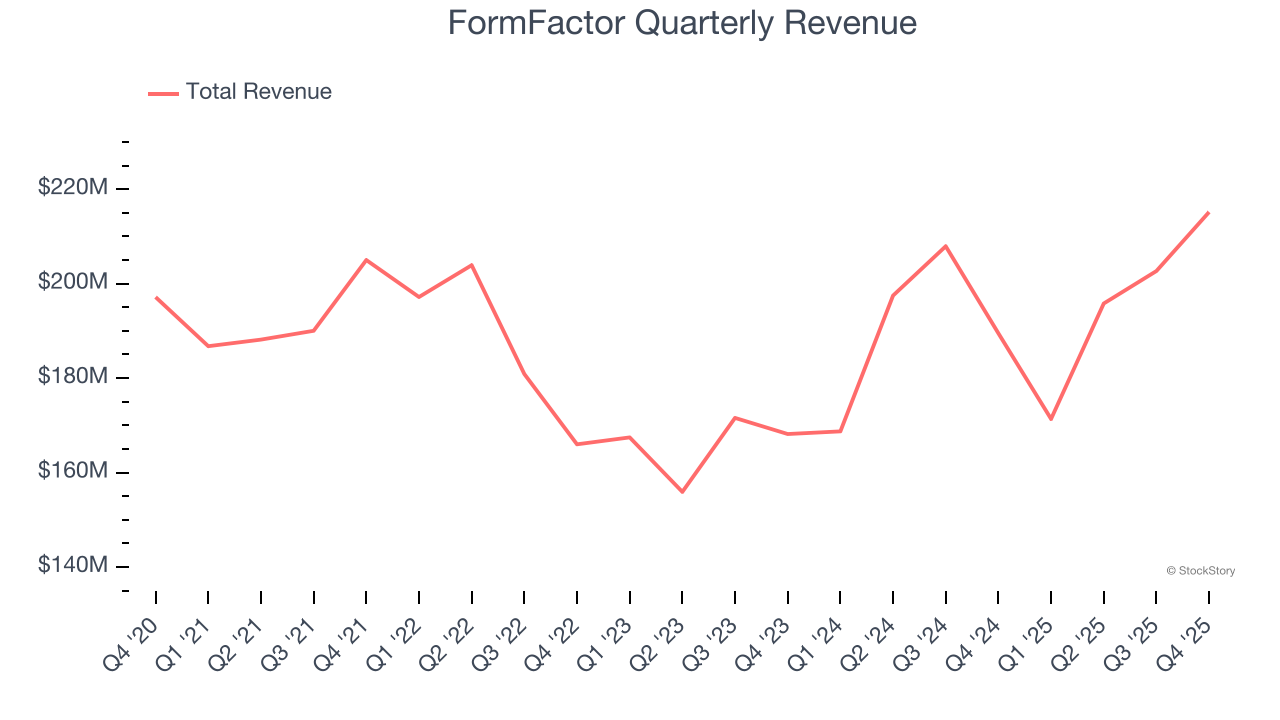
Long-term growth is the most important, but short-term results matter for semiconductors because the rapid pace of technological innovation (Moore's Law) could make yesterday's hit product obsolete today. FormFactor’s annualized revenue growth of 8.8% over the last two years is above its five-year trend, suggesting its demand recently accelerated.
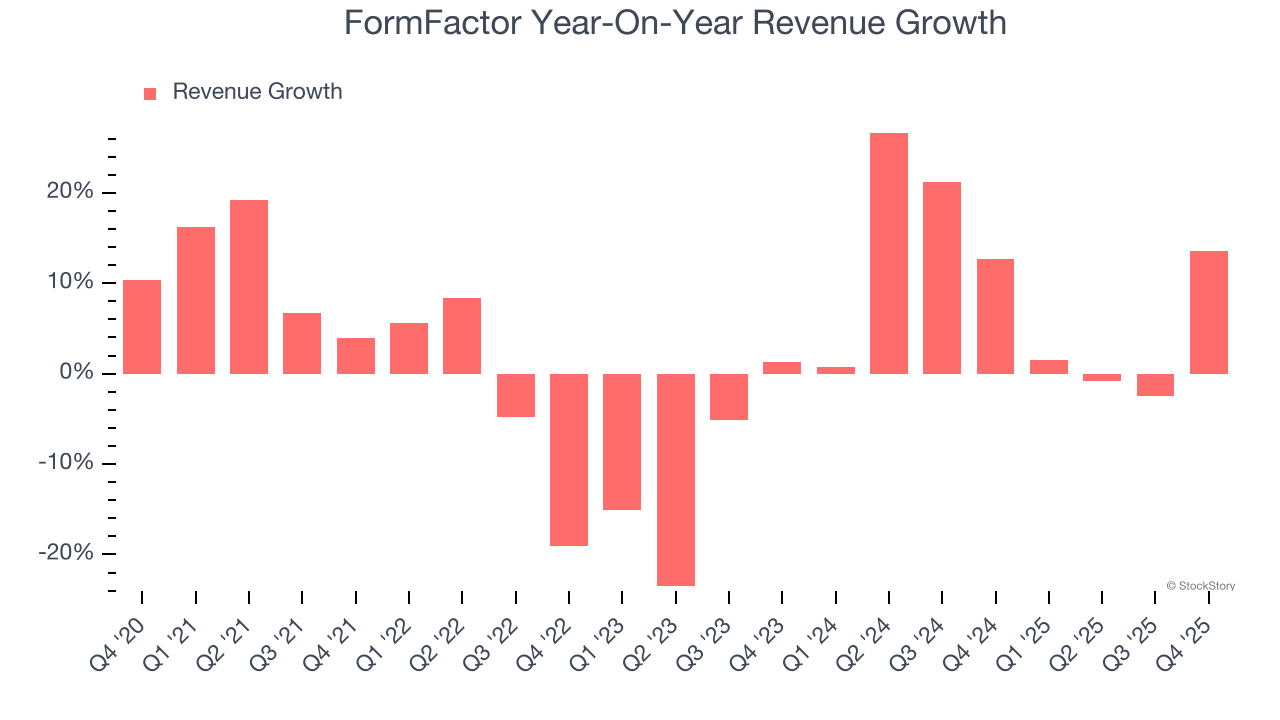
This quarter, FormFactor reported year-on-year revenue growth of 13.6%, and its $215.2 million of revenue exceeded Wall Street’s estimates by 2.3%. Adding to the positive news, FormFactor’s growth inflected positively this quarter, news that will likely give some shareholders hope. Company management is currently guiding for a 31.3% year-on-year increase in sales next quarter.
Looking further ahead, sell-side analysts expect revenue to grow 10.4% over the next 12 months. Although this projection indicates its newer products and services will catalyze better top-line performance, it is still below the sector average.
Software is eating the world and there is virtually no industry left that has been untouched by it. That drives increasing demand for tools helping software developers do their jobs, whether it be monitoring critical cloud infrastructure, integrating audio and video functionality, or ensuring smooth content streaming. Click here to access a free report on our 3 favorite stocks to play this generational megatrend.
Product Demand & Outstanding Inventory
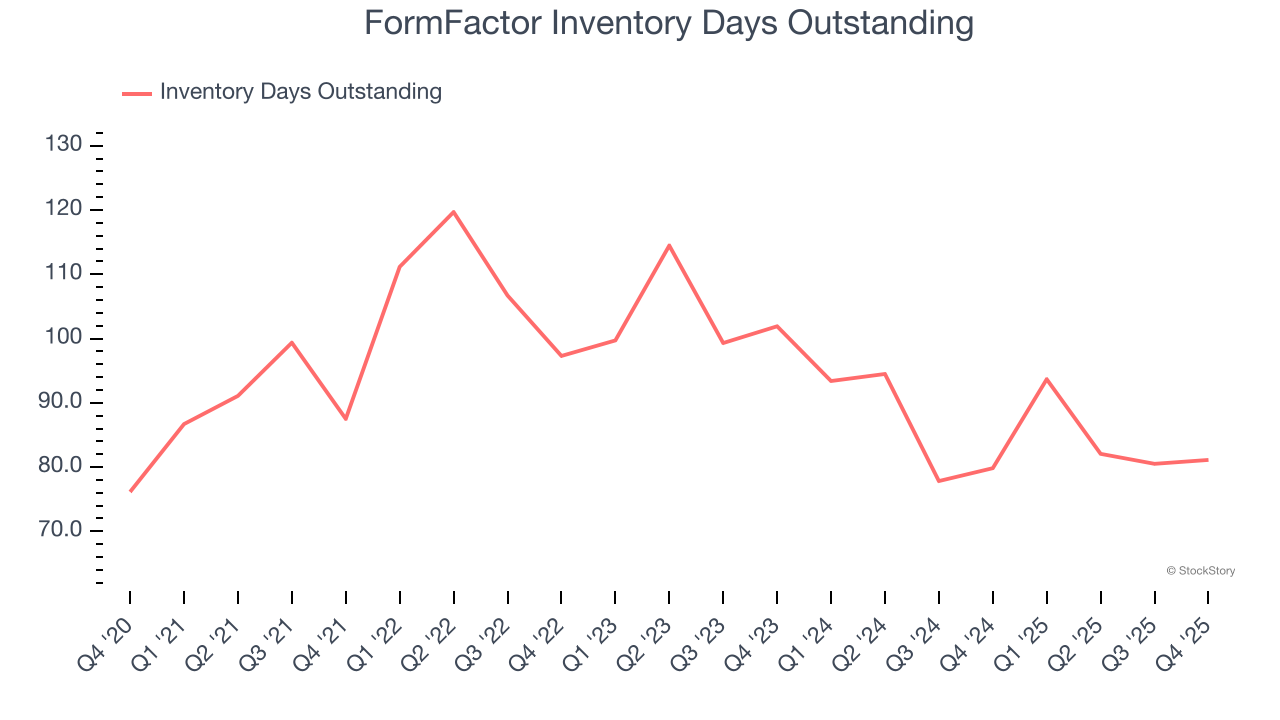
Days Inventory Outstanding (DIO) is an important metric for chipmakers, as it reflects a business’ capital intensity and the cyclical nature of semiconductor supply and demand. In a tight supply environment, inventories tend to be stable, allowing chipmakers to exert pricing power. Steadily increasing DIO can be a warning sign that demand is weak, and if inventories continue to rise, the company may have to downsize production.
This quarter, FormFactor’s DIO came in at 81, which is 14 days below its five-year average. Flat versus last quarter, there’s no indication of an excessive inventory buildup.
Key Takeaways from FormFactor’s Q4 Results
It was good to see FormFactor beat analysts’ EPS expectations this quarter. We were also excited its adjusted operating income outperformed Wall Street’s estimates by a wide margin. Zooming out, we think this quarter featured some important positives. The stock traded up 8.9% to $77.91 immediately following the results.
FormFactor may have had a good quarter, but does that mean you should invest right now? If you’re making that decision, you should consider the bigger picture of valuation, business qualities, as well as the latest earnings. We cover that in our actionable full research report which you can read here (it’s free).
Mentioned In This Article
Latest News
| Oct-07 | |
| Oct-02 | |
| Oct-01 | |
| Oct-01 | |
| Sep-30 |
FormFactor Stock Jumps As Chip-Gear Firm Gets Fresh Buy Rating
FORM +9.59%
Investor's Business Daily
|
| Sep-30 | |
| Sep-30 | |
| Sep-30 | |
| Sep-21 | |
| Sep-15 | |
| Sep-14 | |
| Aug-12 | |
| Jul-30 | |
| Jul-29 | |
| Jul-29 |
