Forget Chips, Buy Wires: BHP Hits Highs as Copper Overtakes Iron
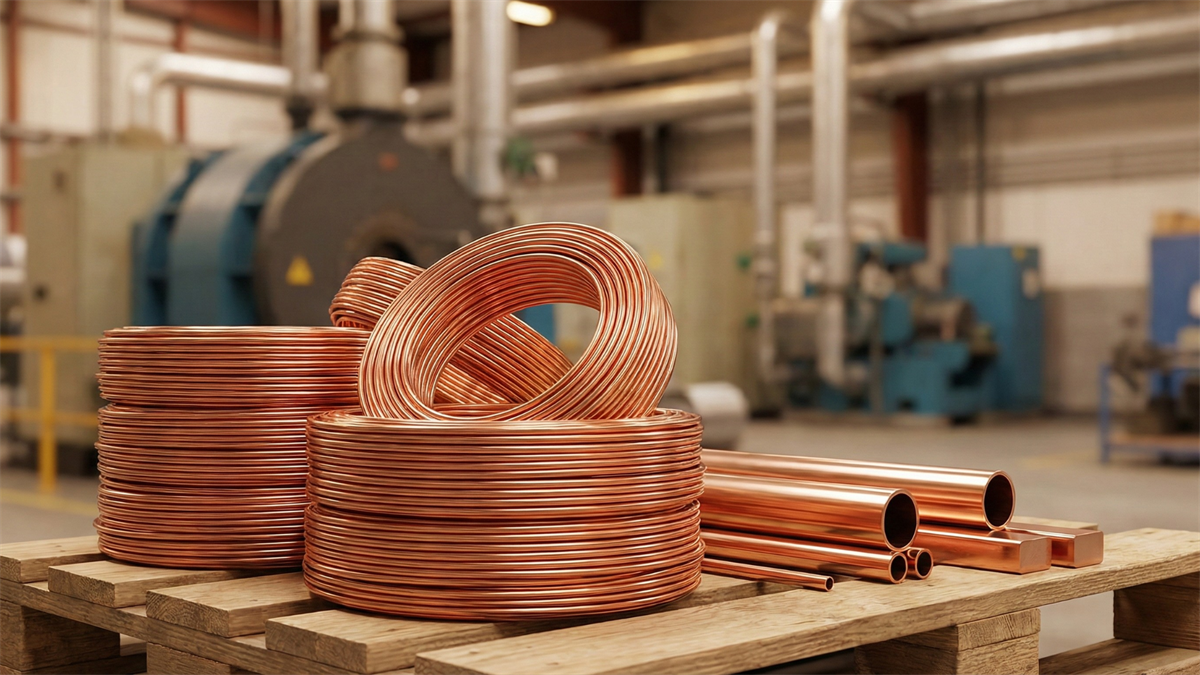
While investors obsess over the next fluctuation in chipmaker stock prices, a quiet revolution pushed the world’s largest miner to a record high on Feb. 17, 2026. BHP Group (NYSE: BHP) rose to approximately $74.27, signaling that the digital economy has finally hit a physical constraint: electricity.
For the first time in its 170-year history, BHP’s earnings report revealed a fundamental shift in the global economic engine.
The company’s copper division generated more underlying earnings than its iron ore division.
This crossover is a significant statistical anomaly; it marks the structural end of the Iron Age, defined by Chinese urbanization, and the beginning of the Copper Age, defined by Western artificial intelligence (AI) and electrification.
As the Great Rotation from technology stocks to materials gains momentum, investors are realizing that the AI revolution cannot exist without copper infrastructure to power it.
The New King of Commodities
The headline figures from BHP’s half-year results were robust, with underlying profit jumping 22% to $6.2 billion. However, the internal mix of those earnings tells the real story. Copper earnings (EBITDA) jumped to $7.95 billion, eclipsing Iron Ore earnings of $7.5 billion.
Historically, BHP has been viewed as a proxy for the Chinese property market. Iron ore was the cash cow that funded dividends, while other commodities played supporting roles. Today’s report flips that narrative. The company has successfully transitioned its portfolio exposure toward future-facing commodities. This pivot effectively removes the China discount often applied to miners, re-rating the stock from a cyclical value play to a secular growth proxy. By aligning its production with the needs of the digital age rather than those of the industrial age, BHP has insulated itself from slowing steel demand in the developing world.
47 Tonnes Per Megawatt: The Perfect Economic Storm
Two powerful macroeconomic forces are converging to create a supercycle for copper: inelastic commercial demand and strategic government support.
On the demand side, the buildout of AI infrastructure is consuming copper at rates that defy historical modeling. Standard data centers used for cloud storage are relatively efficient, requiring about two tonnes of copper for every megawatt (MW) of power capacity. However, new AI Training data centers are a different beast entirely. These facilities require massive power densities for liquid cooling and high-performance computing. According to S&P Global, the copper intensity for these AI-specific centers can skyrocket to 47 tonnes per MW.
This demand is price inelastic. Hyperscale developers are engaged in an existential arms race. They cannot afford to delay a $5 billion data center launch because copper wiring costs have risen. They will pay whatever the market will bear to secure the physical materials needed to go online.
On the supply side, the floor is being reinforced by geopolitics. Earlier this month, the U.S. government officially launched Project Vault, a $12 billion Strategic Critical Minerals Reserve. Designed to stockpile up to 60 days' worth of essential industrial metals, this initiative serves as a government-backed put option for producers in allied nations such as Australia and Chile. Unlike in previous cycles, when inventory gluts caused price crashes, the U.S. government has positioned itself as a buyer of last resort. This policy de-risks new mine development for BHP and tightens the available free-float inventory for the rest of the market.
A Growth Stock Paying Value Dividends
Typically, investors must choose between high-growth companies that reinvest every dollar and low-growth companies that pay dividends. BHP’s current financial position bridges this gap. Alongside its earnings beat, the Board declared a 73-cent interim dividend, a 46% increase year-over-year. This represents a payout ratio of 60%, signaling supreme confidence in future cash flows.
Critically, BHP is funding its massive copper growth pipeline, including projects in South Australia and the Andes, without stressing its balance sheet. The company announced a $4.3 billion silver streaming deal with Wheaton Precious Metals. In simple terms, a streaming deal allows BHP to sell future silver production (a by-product of its copper mines) in exchange for upfront cash today.
This move is brilliant financial engineering. By monetizing a non-core asset like silver, BHP raised billions in found money to maintain its fortress balance sheet (net debt at $14.7 billion) and fund copper expansion without issuing new debt or diluting shareholders. This capital allocation strategy offers investors the best of both worlds: immediate income and exposure to long-term capital appreciation.
The Cleanest Shirt in the Mining Sector
In a sector plagued by operational disruptions, BHP stands out for its stability. While competitors struggle to maintain output, BHP achieved record throughput at Escondida, the world’s largest copper mine.
The divergence is stark when comparing BHP to its primary rivals. Rio Tinto (NYSE: RIO) is currently grappling with a production halt at its massive Simandou iron ore project in Guinea following a tragic fatality.
This incident not only disrupts cash flow but also highlights the risks of operating in difficult jurisdictions. Meanwhile, Freeport-McMoRan (NYSE: FCX), the premier U.S. copper play, is still recovering from the Grasberg mine mudflow incident in late 2025. That disruption forced production cuts, limiting Freeport's ability to fully capitalize on the current price rally.
Investors seeking exposure to the copper theme are finding that BHP offers the cleanest shirt in the sector. It possesses the operational reliability that Freeport currently lacks and the commodity mix that Rio Tinto is still chasing.
Infrastructure Is the New Tech
The rotation from technology to materials is not a temporary trade; it is a recognition of infrastructure reality. The digital future is constrained by physical limitations, and copper is the bottleneck.
If NVIDIA (NASDAQ: NVDA) is the gold rush of the modern era, BHP is the company selling the picks and shovels. With a record-breaking earnings pivot, a government-backed price floor via Project Vault, and a capital allocation strategy that rewards shareholders immediately, BHP has positioned itself as the cornerstone stock for the next phase of the global economy. In a world where data centers are the new oil wells, the miner of the essential metal holds the ultimate leverage.
Where Should You Invest $1,000 Right Now?
Before you make your next trade, you'll want to hear this.
MarketBeat keeps track of Wall Street's top-rated and best performing research analysts and the stocks they recommend to their clients on a daily basis.
Our team has identified the five stocks that top analysts are quietly whispering to their clients to buy now before the broader market catches on... and none of the big name stocks were on the list.
They believe these five stocks are the five best companies for investors to buy now...
The article "Forget Chips, Buy Wires: BHP Hits Highs as Copper Overtakes Iron " first appeared on MarketBeat.
Mentioned In This Article
Latest News
| 19 min | |
| 38 min | |
| 1 hour | |
| 1 hour | |
| 1 hour | |
| 2 hours | |
| 2 hours | |
| 3 hours | |
| 4 hours | |
| 5 hours | |
| 6 hours | |
| 6 hours | |
| 6 hours | |
| 6 hours | |
| 6 hours |
