Unpacking Q4 Earnings: Elastic (NYSE:ESTC) In The Context Of Other Data Infrastructure Stocks

The end of the earnings season is always a good time to take a step back and see who shined (and who not so much). Let’s take a look at how data infrastructure stocks fared in Q4, starting with Elastic (NYSE:ESTC).
Generating insights from system level data is an increasing priority for most businesses, but to do so requires connecting and analyzing piles of data stored and siloed in separate databases. This is the demand driver for cloud based data infrastructure software providers, who can more readily integrate, distribute and process information vs. legacy on-premise software providers.
The 5 data infrastructure stocks we track reported a mixed Q4. As a group, revenues missed analysts’ consensus estimates by 4% while next quarter’s revenue guidance was 0.5% below.
Amidst this news, share prices of the companies have had a rough stretch. On average, they are down 11.4% since the latest earnings results.
Elastic (NYSE:ESTC)
Built on the powerful open-source Elasticsearch technology that powers search functionality for thousands of websites worldwide, Elastic (NYSE:ESTC) provides a search and AI platform that helps organizations find insights from their data, monitor applications, and protect against security threats.
Elastic reported revenues of $449.9 million, up 17.7% year on year. This print exceeded analysts’ expectations by 2.6%. Overall, it was a strong quarter for the company with an impressive beat of analysts’ EBITDA estimates and full-year EPS guidance exceeding analysts’ expectations.
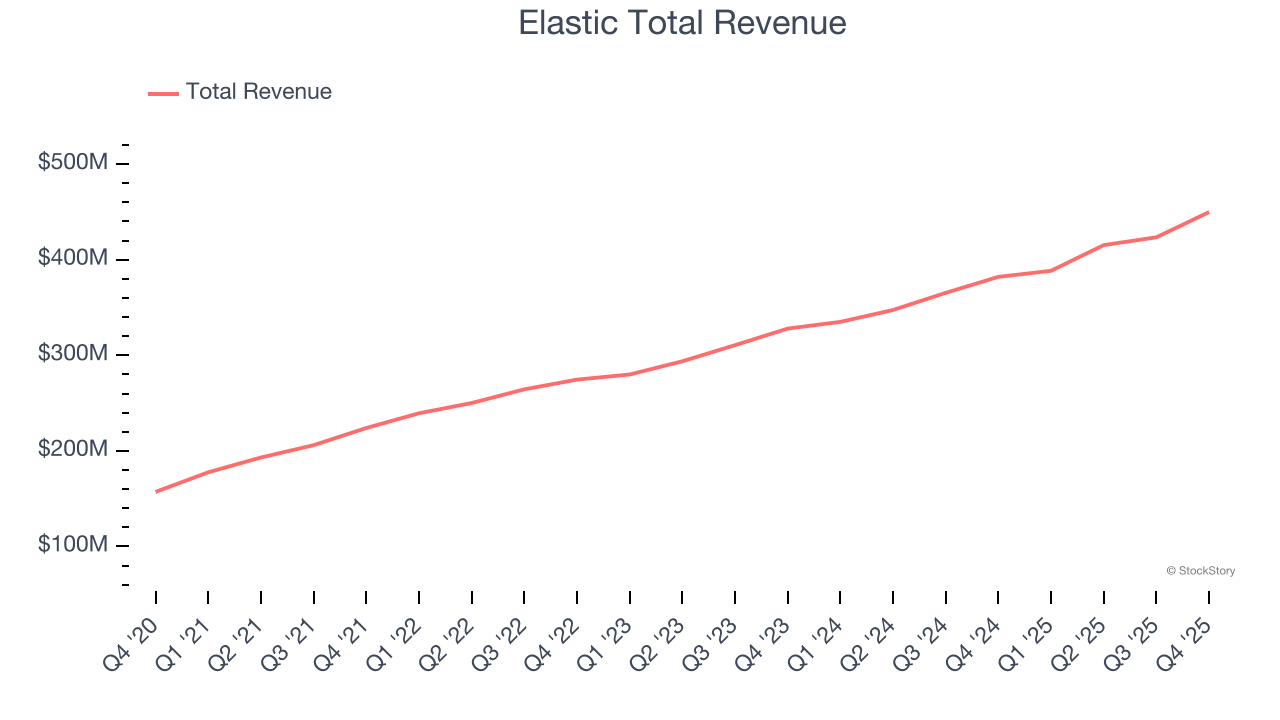
Elastic scored the highest full-year guidance raise of the whole group. Investor expectations, however, were likely higher than Wall Street’s published projections, leaving some wishing for even better results (analysts’ consensus estimates are those published by big banks and advisory firms, not the investors who make buy and sell decisions). The stock is down 15.7% since reporting and currently trades at $51.94.
Is now the time to buy Elastic? Access our full analysis of the earnings results here, it’s free.
Best Q4: Teradata (NYSE:TDC)
Pioneering data warehousing technology in the 1980s before "big data" was a common term, Teradata (NYSE:TDC) provides cloud-based data analytics and AI platforms that help large enterprises integrate, analyze, and leverage their data across multiple environments.
Teradata reported revenues of $421 million, up 2.9% year on year, outperforming analysts’ expectations by 5.4%. The business had an exceptional quarter with EPS guidance for next quarter exceeding analysts’ expectations and a solid beat of analysts’ EBITDA estimates.
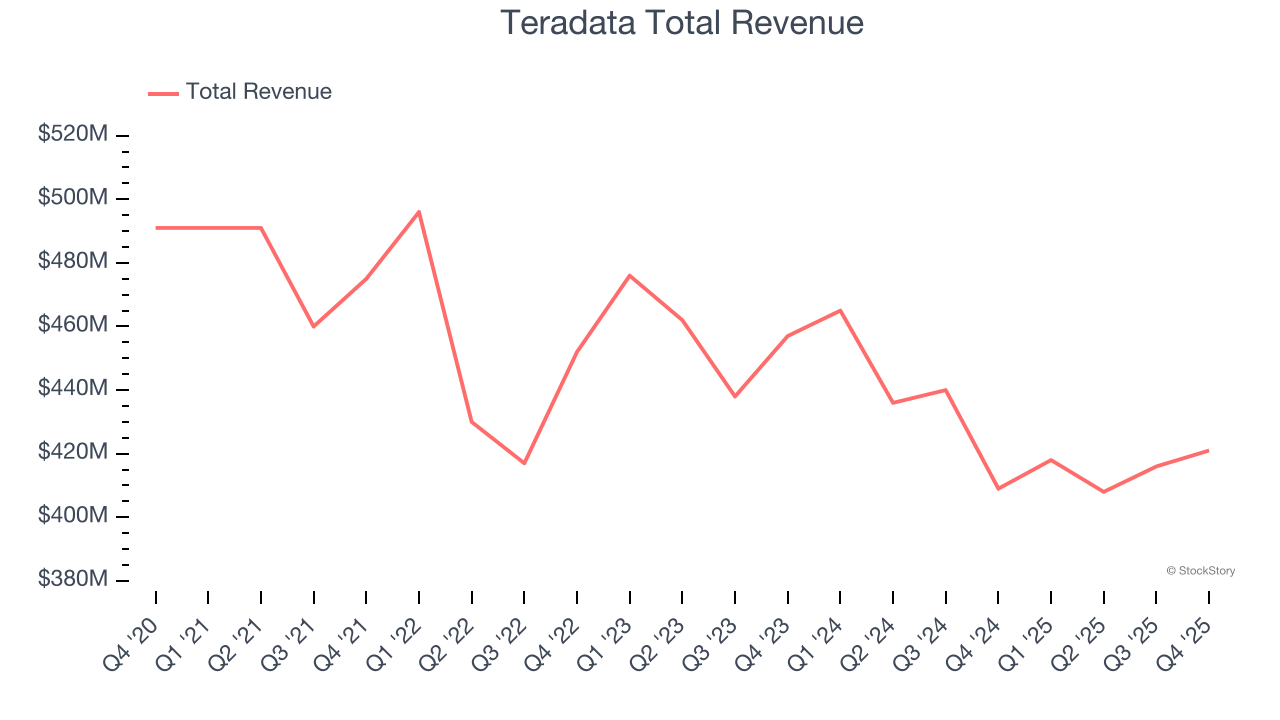
Teradata pulled off the biggest analyst estimates beat among its peers. Although it had a fine quarter compared its peers, the market seems unhappy with the results as the stock is down 1.5% since reporting. It currently trades at $28.78.
Is now the time to buy Teradata? Access our full analysis of the earnings results here, it’s free.
Weakest Q4: C3.ai (NYSE:AI)
Named after the three Cs of its original focus—carbon, cloud computing, and customer relationship management—C3.ai (NYSE:AI) provides enterprise AI software that helps organizations develop, deploy, and operate large-scale artificial intelligence applications across various industries.
C3.ai reported revenues of $53.26 million, down 46.1% year on year, falling short of analysts’ expectations by 29.6%. It was a disappointing quarter as it posted full-year revenue guidance missing analysts’ expectations significantly and revenue guidance for next quarter missing analysts’ expectations significantly.
C3.ai delivered the weakest performance against analyst estimates, slowest revenue growth, and weakest full-year guidance update in the group. As expected, the stock is down 9.7% since the results and currently trades at $9.31.
Read our full analysis of C3.ai’s results here.
Confluent (NASDAQ:CFLT)
Built by the original creators of Apache Kafka, the popular open-source messaging system, Confluent (NASDAQ:CFLT) provides a data infrastructure platform that enables organizations to connect their applications, systems, and data layers around real-time data streams.
Confluent reported revenues of $314.8 million, up 20.5% year on year. This result beat analysts’ expectations by 2.2%. It was a strong quarter as it also produced a solid beat of analysts’ EBITDA estimates and a decent beat of analysts’ revenue estimates.
Confluent pulled off the fastest revenue growth among its peers. The company added 34 enterprise customers paying more than $100,000 annually to reach a total of 1,521. The stock is flat since reporting and currently trades at $30.76.
Read our full, actionable report on Confluent here, it’s free.
Oracle (NYSE:ORCL)
Starting as a database company in 1977 and now powering mission-critical systems across the globe, Oracle (NYSE:ORCL) provides enterprise software and hardware products and services that help businesses manage their information technology needs.
Oracle reported revenues of $16.06 billion, up 14.2% year on year. This number lagged analysts' expectations by 0.8%. Overall, it was a softer quarter as it also recorded a slight miss of analysts’ revenue estimates and a miss of analysts’ billings estimates.
The stock is down 31.1% since reporting and currently trades at $153.68.
Read our full, actionable report on Oracle here, it’s free.
Market Update
In response to the Fed’s rate hikes in 2022 and 2023, inflation has been gradually trending down from its post-pandemic peak, trending closer to the Fed’s 2% target. Despite higher borrowing costs, the economy has avoided flashing recessionary signals. This is the much-desired soft landing that many investors hoped for. The recent rate cuts (0.5% in September and 0.25% in November 2024) have bolstered the stock market, making 2024 a strong year for equities. Donald Trump’s presidential win in November sparked additional market gains, sending indices to record highs in the days following his victory. However, debates continue over possible tariffs and corporate tax adjustments, raising questions about economic stability in 2025.
Want to invest in winners with rock-solid fundamentals? Check out our Top 5 Quality Compounder Stocks and add them to your watchlist. These companies are poised for growth regardless of the political or macroeconomic climate.
StockStory’s analyst team — all seasoned professional investors — uses quantitative analysis and automation to deliver market-beating insights faster and with higher quality.
Mentioned In This Article
Latest News
| Oct-07 | |
| Sep-21 | |
| Sep-17 | |
| Sep-15 | |
| Sep-11 | |
| Sep-11 | |
| Sep-03 | |
| Sep-03 | |
| Aug-30 | |
| Aug-28 | |
| Aug-28 | |
| Aug-28 | |
| Aug-28 | |
| Aug-28 | |
| Aug-27 |
