Wall Street's Greatest Dividend Stock -- Which 99% of Investors Have No Clue Exists -- Makes for a Screaming Buy in 2026
Key Points
Dividend stocks have more than doubled the average annual return of non-payers over the previous 51 years.
Only around two dozen public companies (out of more than 5,500 listings) have been paying a continuous dividend for at least 100 years.
Wall Street's greatest dividend stock has been paying a continuous dividend since 1816 -- and its shares are historically cheap at the moment.
For over a century, Wall Street has been a wealth-creating machine, with the average annual return of stocks handily outpacing that of bonds, commodities, and real estate. But this doesn't mean all stock investment strategies are equal.
While there is no shortage of ways to make money on Wall Street, buying and holding high-quality dividend stocks is among the most surefire strategies.
Where to invest $1,000 right now? Our analyst team just revealed what they believe are the 10 best stocks to buy right now. Continue »
In "The Power of Dividends: Past, Present, and Future," the analysts at Hartford Funds, in collaboration with Ned Davis Research, compared the annualized returns of dividend stocks to non-payers over 51 years (1973-2024). This analysis found that dividend stocks more than doubled the average annual return of non-payers (9.2% for income stocks vs. 4.31% for non-payers), and did so while being notably less volatile than the benchmark S&P 500 (SNPINDEX: ^GSPC).
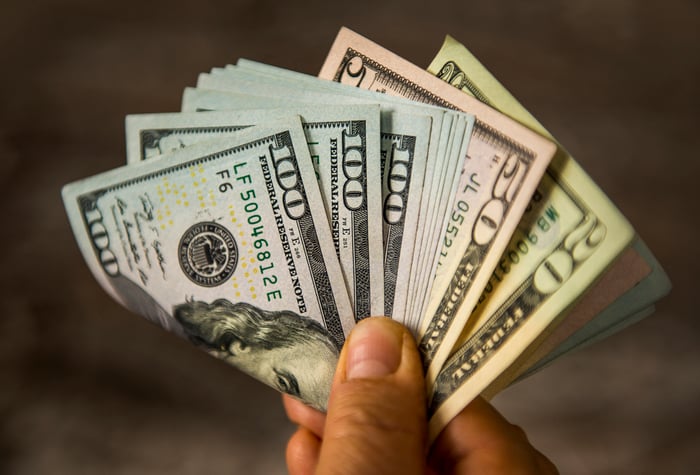
Image source: Getty Images.
This outperformance shouldn't come as a huge surprise. Companies that pay a regular dividend to their shareholders tend to be profitable on a recurring basis and have demonstrated their ability to navigate recessions and uncertain economic climates. They're the type of businesses we'd expect to increase in value over long periods.
However, finding quality dividend stocks takes effort. Since yield is a function of payout relative to share price, a company with a rising yield (and declining share price) needs to be vetted to ensure there's nothing wrong with its underlying operating model.
Once in a while, an amazing deal comes to pass.
Right now, a company I've previously dubbed as "Wall Street's Greatest Dividend Stock," -- and a business that very few investors are aware exists -- is historically inexpensive and ripe for the picking in 2026 for opportunistic investors.
Elite dividend stocks are a rarity on Wall Street
Based on a quick stock screener from Finviz, approximately 2,000 U.S.-listed companies currently pay dividends to their shareholders. For added context, there are more than 5,500 stocks listed on U.S. exchanges, excluding exchange-traded funds.
Among these 2,000 publicly traded businesses are select groups of truly elite income stocks.
For example, as of mid-November, 56 U.S.-listed companies have raised their base annual payout for at least 50 consecutive years. This group, known as Dividend Kings, is primarily represented by stocks in the industrial, consumer goods, and utility sectors. In other words, businesses where demand for products and services tends to be highly predictable.
Dividend Kings are among the most visible businesses on the planet, with examples including beverage behemoth Coca-Cola (NYSE: KO) and healthcare conglomerate Johnson & Johnson, which have both raised their dividends in each of the last 63 years. Beverages and brand-name therapies/medical devices are defensive products, with demand remaining relatively stable in any economic environment.
But there's an even rarer class of dividend stocks than Dividend Kings.
Out of the more than 5,500 publicly traded stocks, only around two dozen have been paying a continuous dividend for at least 100 years. Note that a continuous dividend doesn't mean the payout to shareholders was increased on an annual basis.
Coca-Cola finds itself among this exceptionally rare group of publicly traded companies. It's been doling out a dividend to its shareholders, without interruption, since 1920. Only companies with incredibly stable operating models can traverse a century without missing a dividend payment.
However, Wall Street's greatest dividend stock has navigated its way through more than two centuries without missing a payment to its shareholders.

Image source: Getty Images.
Wall Street's greatest dividend stock is historically cheap and ripe for the picking
Whereas the 100-year dividend payer list is packed with brand-name businesses, such as Coca-Cola, ExxonMobil, Colgate-Palmolive, and General Mills, Wall Street's greatest continuous dividend stock is a company I'd wager 99% of investors have no clue exists.
In South-Central Pennsylvania, you'll find the headquarters for York Water (NASDAQ: YORW), a water and wastewater utility that has a shade over 125 full-time employees and services 57 municipalities within four counties. York is a $471 million company, as of the closing bell on Nov. 28, that sees an average of just 96,000 shares trade hands on a daily basis.
Amid the artificial intelligence revolution, the rise of quantum computing, the emergence of Bitcoin treasury companies, and an all-around focus on growth stocks with Wall Street's major indexes recently hitting new highs, it's not surprising that few investors are aware of York Water's existence.
But York Water has every dividend stock beat in one aspect: payment continuity. According to the company, it's been paying a continuous dividend since 1816. To put how rare a feat this is into context, York Water has paid a dividend under all but three U.S. presidents, and its 209-year streak of continuous payouts is 60 years longer than the next-closest continuous dividend streak of 149 years from power tools company Stanley Black & Decker.
What makes this payout so safe is the predictability of York Water's operating model. Demand for water and wastewater services remains relatively stable from one year to the next. Furthermore, there's a high barrier to entry in the utility space, which ensures that utilities act as monopolies or duopolies in the areas they serve. In short, York doesn't have to worry about other utilities stealing its customers or undercutting its pricing. The cash flow it generates from its operations is predictable and transparent.
Another reason for York Water's ongoing success is that it's a regulated utility. This means it needs permission from the Pennsylvania Public Utility Commission (PPUC) before it can raise rates on its customers. Although this might sound like a constraint, it's actually good news. The PPUC overseeing rates ensures that York Water doesn't have to deal with unpredictable wholesale pricing.
For what it's worth, the PPUC has been generous in granting rate hike requests every few years for York. In late May, York filed an application with the PPUC that requests an additional $24.2 million in annual revenue. This follows $145 million in capital investments made by York since its last rate increase was approved in 2022. York's request would increase its annual revenue by 31% from the roughly $78 million it's projected to take in this year.
The company has also made bolt-on acquisitions part of its strategy. Adding water and wastewater customers via acquisition tends to be instantly accretive to York's bottom line.
The final piece of the puzzle that makes York Water a screaming buy in 2026 for opportunistic investors is its valuation. York is currently valued at less than 21 times forward-year earnings, representing a 29% discount to its average forward price-to-earnings (P/E) multiple over the trailing-five-year period.
And for those of you who scoff at York's seemingly modest yield of 2.8%, keep in mind that the only reason its yield is below 3% is that its shares have rallied 476% (not including dividends) since this century began, which is 109 percentage points better than the return of the benchmark S&P 500.
Should you invest $1,000 in York Water right now?
Before you buy stock in York Water, consider this:
The Motley Fool Stock Advisor analyst team just identified what they believe are the 10 best stocks for investors to buy now… and York Water wasn’t one of them. The 10 stocks that made the cut could produce monster returns in the coming years.
Consider when Netflix made this list on December 17, 2004... if you invested $1,000 at the time of our recommendation, you’d have $588,530!* Or when Nvidia made this list on April 15, 2005... if you invested $1,000 at the time of our recommendation, you’d have $1,102,885!*
Now, it’s worth noting Stock Advisor’s total average return is 1,012% — a market-crushing outperformance compared to 193% for the S&P 500. Don’t miss out on the latest top 10 list, available when you join Stock Advisor.
*Stock Advisor returns as of December 1, 2025
Sean Williams has no position in any of the stocks mentioned. The Motley Fool has positions in and recommends Bitcoin and Colgate-Palmolive. The Motley Fool recommends Johnson & Johnson. The Motley Fool has a disclosure policy.
Mentioned In This Article
Latest News
| Oct-09 | |
| Oct-09 | |
| Oct-08 | |
| Oct-08 | |
| Oct-08 | |
| Oct-08 | |
| Oct-07 | |
| Oct-06 | |
| Oct-06 | |
| Oct-06 | |
| Oct-05 | |
| Oct-05 | |
| Oct-04 | |
| Oct-04 | |
| Oct-01 |
