|
|
|

|
|||||
|
|
|

Over the last six months, Uber’s shares have sunk to $81.60, producing a disappointing 11.4% loss - a stark contrast to the S&P 500’s 9.9% gain. This may have investors wondering how to approach the situation.
Following the pullback, is now the time to buy UBER? Find out in our full research report, it’s free for active Edge members.
Notoriously funded with $7.7 billion from the Softbank Vision Fund, Uber (NYSE:UBER) operates a platform of on-demand services such as ride-hailing, food delivery, and freight.
As a gig economy marketplace, Uber generates revenue growth by expanding the number of services on its platform (e.g. rides, deliveries, freelance jobs) and raising the commission fee from each service provided.
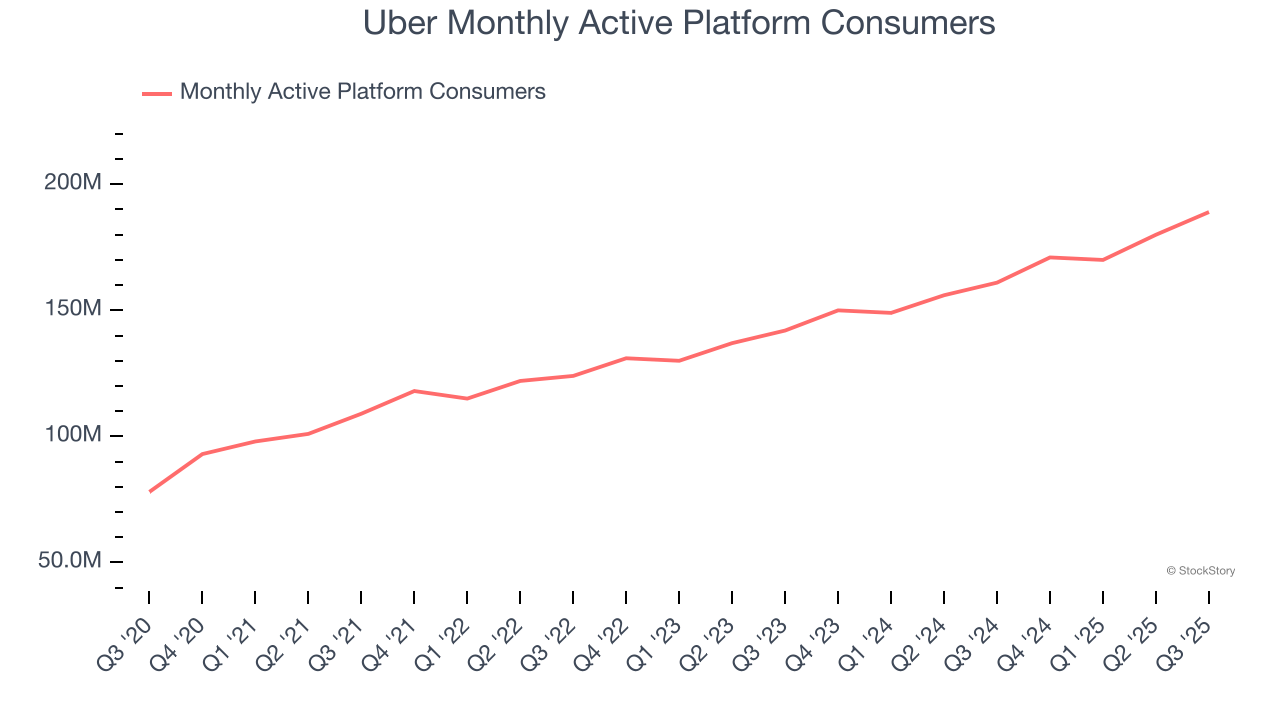
Over the last two years, Uber’s monthly active platform consumers, a key performance metric for the company, increased by 14.7% annually to 189 million in the latest quarter. This growth rate is among the fastest of any consumer internet business and indicates its offerings have significant traction.
If you’ve followed StockStory for a while, you know we emphasize free cash flow. Why, you ask? We believe that in the end, cash is king, and you can’t use accounting profits to pay the bills.
As you can see below, Uber’s margin expanded by 15.7 percentage points over the last few years. This is encouraging, and we can see it became a less capital-intensive business because its free cash flow profitability rose more than its operating profitability. Uber’s free cash flow margin for the trailing 12 months was 17.5%.

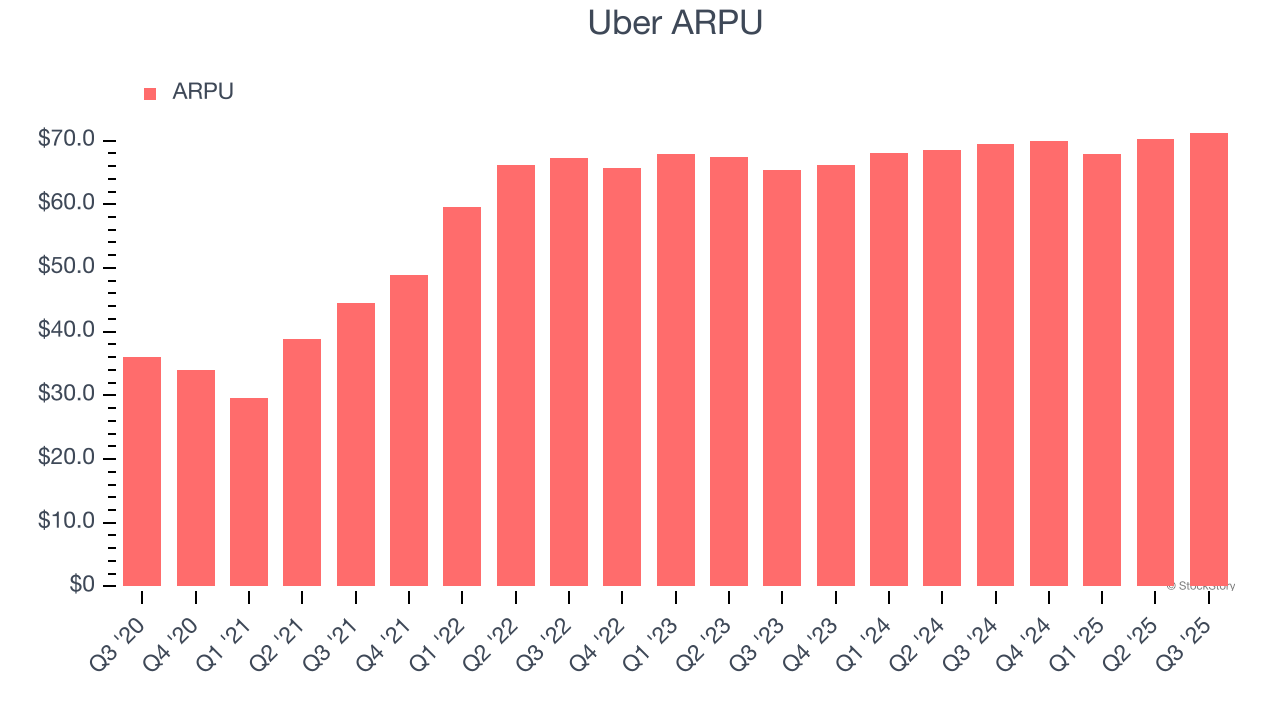
Average revenue per user (ARPU) is a critical metric to track because it measures how much the company earns in transaction fees from each user. This number also informs us about Uber’s take rate, which represents its pricing leverage over the ecosystem, or "cut" from each transaction.
Uber’s ARPU growth has been subpar over the last two years, averaging 2.4%. This isn’t great, but the increase in monthly active platform consumers is more relevant for assessing long-term business potential. We’ll monitor the situation closely; if Uber tries boosting ARPU by taking a more aggressive approach to monetization, it’s unclear whether users can continue growing at the current pace.
Uber has huge potential even though it has some open questions. With the recent decline, the stock trades at 17× forward EV/EBITDA (or $81.60 per share). Is now the right time to buy? See for yourself in our full research report, it’s free for active Edge members.
Check out the high-quality names we’ve flagged in our Top 6 Stocks for this week. This is a curated list of our High Quality stocks that have generated a market-beating return of 244% over the last five years (as of June 30, 2025).
Stocks that have made our list include now familiar names such as Nvidia (+1,326% between June 2020 and June 2025) as well as under-the-radar businesses like the once-micro-cap company Tecnoglass (+1,754% five-year return). Find your next big winner with StockStory today.
| Apr-01 | |
| Apr-01 | |
| Apr-01 | |
| Apr-01 | |
| Apr-01 | |
| Mar-31 | |
| Mar-31 | |
| Mar-31 | |
| Mar-30 | |
| Mar-30 | |
| Mar-30 | |
| Mar-30 | |
| Mar-30 | |
| Mar-30 | |
| Mar-30 |

Join thousands of traders who make more informed decisions with our premium features. Real-time quotes, advanced visualizations, alerts, and much more.
Learn more about Finviz Elite