|
|
|

|
|||||
|
|
|
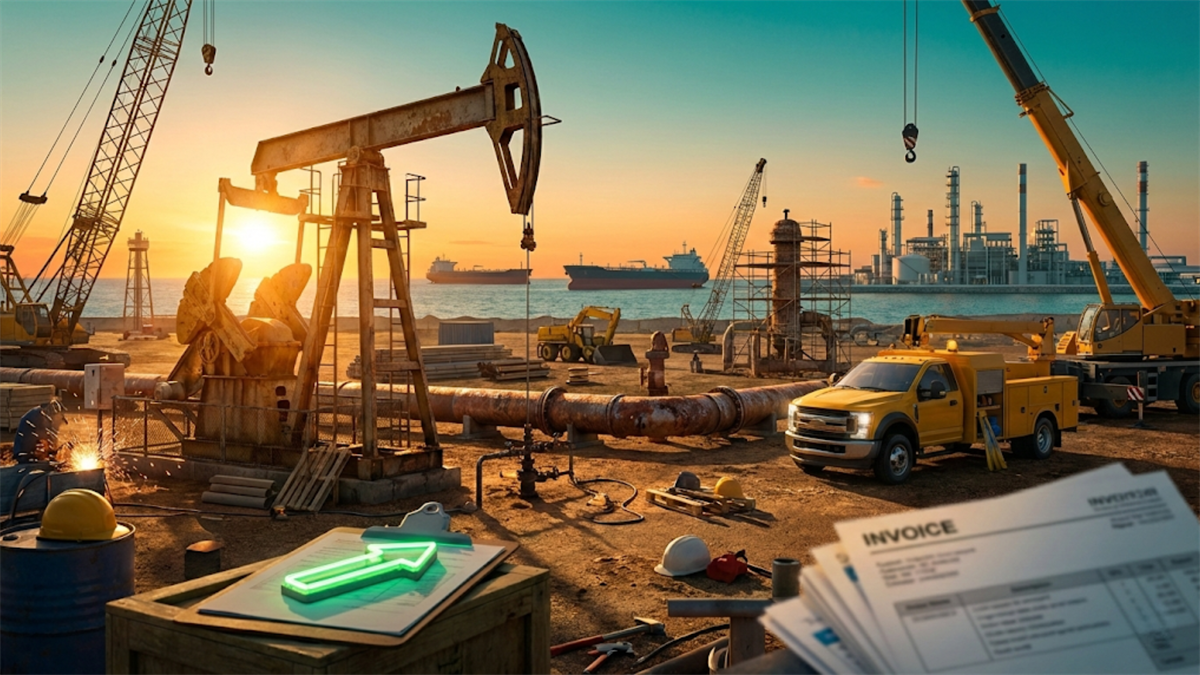
While the world was glued to television screens watching the political shift in Venezuela over the weekend, Wall Street traders were preparing for a different kind of event.
On Monday, Jan. 5, the financial markets issued a loud and clear verdict on the U.S.-led transition of power. Investors looked past the geopolitical headlines and focused entirely on the financial implications. The result was a massive influx of capital into the energy sector. The Venezuela Reopening Trade has officially begun, and the market's response has been euphoric.
By the closing bell on Monday, the key players in this saga posted healthy gains:
This rally is not driven by emotion; it is driven by math. The U.S. administration has signaled a priority to restore Venezuela's oil capacity. For investors, this signals the start of a massive spending cycle. Billions of dollars are expected to flow from government contracts and international aid directly into the revenue streams of American energy service companies.
To understand why these stocks are moving, you have to understand the physical state of Venezuela's oil industry. The country sits on the planet's largest proven oil reserves, over 300 billion barrels. For context, that is more than Saudi Arabia.
But having oil and being able to sell it are two different things.
Decades of underinvestment and mismanagement have left the infrastructure in ruins. Industry reports describe a rotted network of pipelines, refineries that have not processed oil in years, and pumping stations stripped of parts.
This devastation is actually the bullish case for service companies. You cannot simply turn the valves and start exporting. The entire system needs to be rebuilt from scratch.
Analysts estimate that returning Venezuela to a production level of 3 million barrels per day will require more than $100 billion in capital expenditure (CapEx) over the next 10 years to drill new wells, repair rusted pipelines, and upgrade electrical grids to power the fields.
For companies like Halliburton and SLB, Venezuela is no longer a geopolitical risk; it is the world’s largest construction project.
Chevron Corporation is unique in this trade: it is the anchor.
Unlike its competitors, Chevron never fully left. Through a series of specific licenses, they maintained a footprint in the region even during the height of sanctions.
This gives Chevron a massive logistical head start. They have personnel on the ground, equipment in place, and active shipping lanes. As of late 2025, Chevron was already exporting oil to the U.S. Gulf Coast. With the regime change, they can immediately scale up operations without the delays of negotiating new entry permits.
For investors, Chevron’s appeal is straightforward:
For the conservative investor, Chevron offers the best of both worlds: exposure to the Venezuela growth story, backed by the safety of a U.S. Supermajor balance sheet.
While Chevron sells the oil, Halliburton and SLB make extraction possible. These oilfield service giants are the primary beneficiaries of the reconstruction budget.
The regime change is a game-changer for their legal status. Previously, they operated under General License 8O, which strictly limited them to asset preservation. They were essentially paid to sit still and make sure their equipment didn't get stolen. The new administration will likely issue unrestricted licenses, allowing them to deploy their full fleets.
Halliburton is the logistics king. It specializes in cementing, well construction, and the physical heavy lifting required onshore.
When a well has been sitting idle for five years, you call Halliburton to fix it.
Haliburton’s stock price rose because it is the first responder in the oil patch.
SLB (formerly Schlumberger) brings the brains.
Much of Venezuela's oil is heavy crude, located in the Orinoco Belt.
This oil is thick like molasses and requires advanced technology to extract.
SLB is the global leader in the subsurface mapping and reservoir tech needed to make these fields profitable.
There is a secondary factor driving these two stocks higher that many retail investors miss: receivables.
Both companies are owed hundreds of millions of dollars for work done years ago. Halliburton alone has approximately $756 million in receivables that were previously written off as bad debt. With a U.S.-backed government in charge, the likelihood of getting paid has skyrocketed.
If this debt is repaid, it flows directly to the bottom line as pure profit. This potential cash injection explains why these stocks are outperforming Chevron in percentage gains.
It is important to remain realistic. Rebuilding a country’s energy sector is a marathon, not a sprint. The infrastructure is in bad shape, and logistics will be a nightmare for the first few quarters. Profits from the new contracts will take time to materialize on earnings reports.
However, the Venezuela Discount, the risk penalty that kept share prices low, is vanishing. The backing of the U.S. government significantly reduces the risk to the operation. The sheer size of the oil reserves ensures that the long-term reward justifies the initial capital investment.
The rally on Jan. 5 was the market waking up to a new reality. The reconstruction of Venezuela is likely to be the defining energy story of 2026. For investors in Chevron, Halliburton, and SLB, the race to rebuild is on.
Before you make your next trade, you'll want to hear this.
MarketBeat keeps track of Wall Street's top-rated and best performing research analysts and the stocks they recommend to their clients on a daily basis.
Our team has identified the five stocks that top analysts are quietly whispering to their clients to buy now before the broader market catches on... and none of the big name stocks were on the list.
They believe these five stocks are the five best companies for investors to buy now...
The article "The Caracas Catalyst: Big Oil’s $100 Billion Opportunity" first appeared on MarketBeat.
| 3 hours | |
| Apr-02 | |
| Apr-02 | |
| Apr-02 | |
| Apr-02 | |
| Apr-02 | |
| Apr-02 | |
| Apr-02 | |
| Apr-02 | |
| Apr-02 | |
| Apr-02 | |
| Apr-01 | |
| Apr-01 | |
| Apr-01 | |
| Apr-01 |

Join thousands of traders who make more informed decisions with our premium features. Real-time quotes, advanced visualizations, alerts, and much more.
Learn more about Finviz Elite