|
|
|

|
|||||
|
|
|
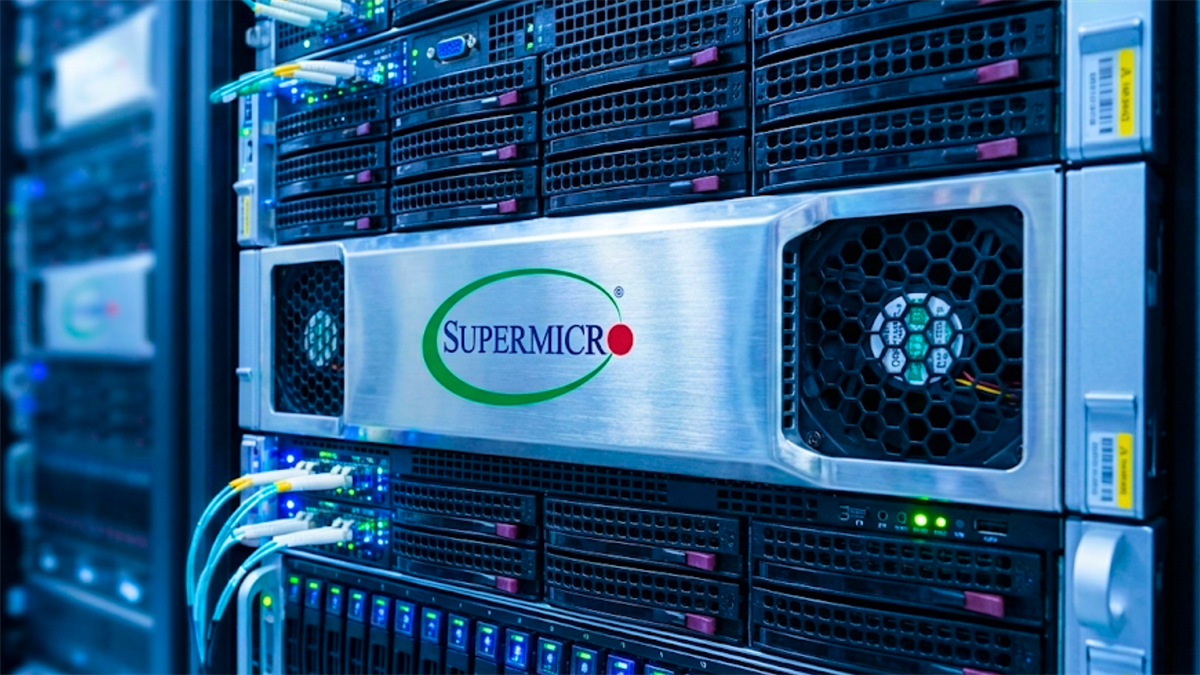
The stock market loves a comeback story, but it demands proof before paying for it. For investors in Super Micro Computer (NASDAQ: SMCI), the last year has been a grueling test of patience, defined by regulatory fears and extreme volatility. However, the narrative is finally beginning to shift. On Jan. 5, shares of the server manufacturer rallied approximately 5%, stabilizing in the $30 to $31 range. This move was a response to a critical business update that suggests the company is back to business as usual.
For most of 2024 and 2025, the headlines surrounding Super Micro were dominated by questions about survival. Could the company file its financial reports on time? Would it be delisted from the Nasdaq? Today, those existential threats are largely in the rearview mirror. The conversation on Wall Street has shifted from "Will they survive?" to "Can they execute?"
The primary spark for this renewed optimism is the official confirmation that Super Micro has expanded its manufacturing capacity to support NVIDIA’s (NASDAQ: NVDA) Vera Rubin and Rubin AI platforms. This is the signal investors have been waiting for. It confirms that the company’s relationship with NVIDIA, the kingpin of the AI chip market, remains healthy and active. With the accounting cloud lifting, investors are now looking at the fundamentals, and the data suggests the company is preparing for a massive operational ramp-up in 2026.
Before an investor can look at potential profits, they must be comfortable with the risks. Over the last 12 months, the downside risk for Super Micro has decreased significantly. The elephant in the room, the fear of the stock being kicked off the Nasdaq exchange, is no longer present.
Super Micro successfully regained full compliance with listing requirements in February 2025. This milestone, combined with the appointment of BDO USA as its independent auditor and the conclusion of a Special Committee investigation that found no evidence of management fraud, has stabilized the corporate governance picture.
However, in the hardware business, compliance isn't enough; you need cash. In late December 2025, Super Micro finalized a new $2 billion revolving credit facility. To understand why this is so important, you have to understand the business model.
With the safety net in place, the focus turns to the technology. The January 2026 announcement regarding NVIDIA’s current Blackwell (NVL72) chips and the future Vera Rubin and HGX Rubin systems is a validation of Super Micro’s competitive advantage, often referred to as its moat.
As artificial intelligence (AI) chips become more powerful, they generate immense amounts of heat. The new Rubin chips are performance beasts, but they run hot. Traditional air-conditioning in data centers is no longer sufficient to keep these next-generation processors from overheating. This is where Super Micro holds a distinct edge.
The company has aggressively invested in Direct Liquid Cooling (DLC) technology. While other competitors are still figuring out how to mass-produce liquid cooling solutions, Super Micro is already executing.
This Time-to-Market advantage is critical. Super Micro uses a Building Block architecture, allowing them to swap out components and integrate new liquid cooling plates faster than competitors who sell standardized black boxes. This agility is why the partnership with NVIDIA remains strong, ensuring that Super Micro continues to receive allocations of the industry's most coveted chips.
The most compelling argument for Super Micro’s bull case lies in the company's financial forecast. If we look at the first quarter of fiscal year 2026 (ended Sept. 30, 2025), revenue came in at approximately $5 billion. While this was a massive number, it fell short of Wall Street's estimates of closer to $6.5 billion.
However, the stock market looks forward, not backward. Management’s projection for the current quarter (Q2 FY2026) forecasts a dramatic acceleration. The company expects revenue to jump to between $10 billion and $11 billion.
This indicates a potential doubling of revenue in a single quarter. Such a massive increase suggests that supply chain bottlenecks are easing and that the backlog of orders for NVIDIA systems is finally converting into cash.
There is, however, a catch. Investors must be aware that while revenue is skyrocketing, profit percentages are shrinking. Gross margins recently dipped to approximately 9.3%, a significant drop from the historical 15-17% range.
This decline is primarily due to a fierce price war with Dell Technologies (NYSE: DELL). Dell, which commands about 20% of the AI server market, has used its deep pockets to undercut prices. In response, Super Micro has chosen to match these lower prices to protect its market share.
Think of this as a land grab. Super Micro is intentionally sacrificing short-term profit margins to secure long-term contracts with major clients. They are betting that once they install their liquid-cooled racks in these data centers, it will be difficult for those customers to switch to a competitor later. It is a volume strategy, not a margin strategy.
Super Micro Computer is currently trading significantly below its all-time highs, reflecting the scars of the past year. However, for investors willing to look past the volatility, the current valuation may offer an attractive entry point.
The Battleground phase appears to be ending. The governance crisis has been resolved with the appointment of new auditors and the implementation of compliance measures. The liquidity issues are fixed via the new $2 billion credit facility. Most importantly, the NVIDIA partnership is expanding with the launch of the Rubin platform, positioning the company to generate over $10 billion in quarterly revenue.
The primary risk remains the compressed profit margins. Investors will need to watch closely to see if the company can eventually raise prices once it solidifies its customer base against Dell. But for now, the hardware roadmap suggests that Super Micro is fully operational. The dead company is very much alive and is aggressively fighting for its place in the AI supercycle.
Before you make your next trade, you'll want to hear this.
MarketBeat keeps track of Wall Street's top-rated and best performing research analysts and the stocks they recommend to their clients on a daily basis.
Our team has identified the five stocks that top analysts are quietly whispering to their clients to buy now before the broader market catches on... and none of the big name stocks were on the list.
They believe these five stocks are the five best companies for investors to buy now...
The article "Super Micro’s Rubin Rally: Is the AI Server Comeback Real?" first appeared on MarketBeat.
| 3 hours | |
| 3 hours | |
| 3 hours | |
| 4 hours | |
| 5 hours | |
| 6 hours | |
| 6 hours | |
| 7 hours | |
| 8 hours | |
| 9 hours | |
| 9 hours | |
| 9 hours | |
| 10 hours | |
| 10 hours | |
| 11 hours |

Join thousands of traders who make more informed decisions with our premium features. Real-time quotes, advanced visualizations, alerts, and much more.
Learn more about Finviz Elite