Can This Unstoppable Stock Join the $1 Trillion Club in 5 Years?
Key Points
Thanks to a combination of new warehouse openings and growing same-store sales, Costco’s revenue will keep marching higher.
The company won’t be the first retailer in the trillion-dollar family.
While Costco’s fundamentals will remain robust, the stock’s valuation can present a headwind.
Costco Wholesale (NASDAQ: COST) might not operate in an industry that's at the forefront of technological disruption, but that doesn't mean it hasn't taken care of its investors. The share price is up a stellar 170% in the past five years (as of Jan. 26). Thanks to the company's dominant position in the retail sector, it sports a market cap of $434 billion today.
Costco bulls have their eyes on a bigger prize. Can this unstoppable stock join the $1 trillion club in five years?
Where to invest $1,000 right now? Our analyst team just revealed what they believe are the 10 best stocks to buy right now, when you join Stock Advisor. See the stocks »
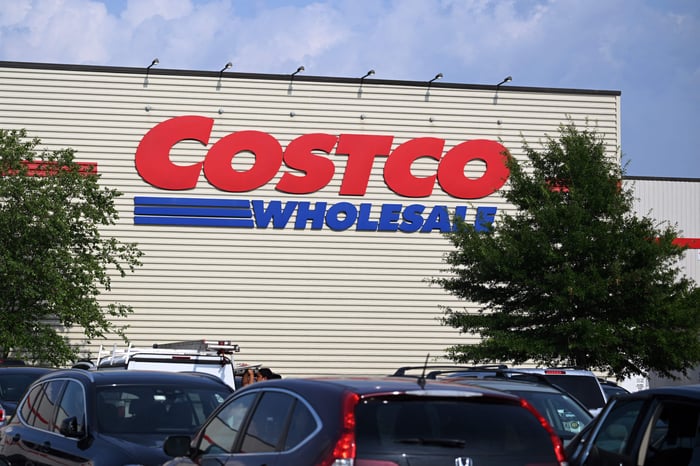
Image source: Getty Images.
The fundamentals are in great shape
Five years from now, there's no doubt in my mind that Costco will be a bigger business. It will have a much larger physical footprint, both here in the U.S. and in various foreign markets. Management's annual net store openings fall within the range of 25 to 30 warehouses. This leads to more revenue being generated.
It also helps the top line that Costco consistently posts same-store sales (SSS) growth, regardless of what the macroeconomic backdrop might suggest. At a time when consumer confidence has taken a hit, the business continues to hum along. During the fiscal 2026 first quarter (ended Nov. 23), SSS increased by 6.4%. And they were up another 7% in December.
Costco's net income climbed 102% between fiscal 2020 and fiscal 2025. It's likely that the gains over the next five years will be strong. In addition to its already loyal customer base, the company keeps adding new membership accounts each quarter. This supports more spending activity at its stores.
Run the numbers
There are currently only 11 companies in the trillion-dollar club. Except for two, they all have heavy exposure to the technology sector. Costco's entry into this exclusive group would add some diversity to the mix. However, it's almost a certainty that Walmart, whose market cap is $938 billion, will be a part of the 13-figure family before Costco.
Costco's market cap would need to rise by 129% between now and late January 2031. In the past five years, its market cap expanded by 172%. Based on historical trends, this looks like a realistic outcome.
But there's one problem: Costco's valuation remains sky-high, with shares trading at a price-to-earnings ratio of 52.7. That's about double the S&P 500's multiple. I think there's a very good chance that the stock's valuation ratio comes down over the next five years, which will pressure the tailwind that ongoing earnings growth will provide.
A more probable scenario is Costco joining the $1 trillion club in 10 years.
Should you buy stock in Costco Wholesale right now?
Before you buy stock in Costco Wholesale, consider this:
The Motley Fool Stock Advisor analyst team just identified what they believe are the 10 best stocks for investors to buy now… and Costco Wholesale wasn’t one of them. The 10 stocks that made the cut could produce monster returns in the coming years.
Consider when Netflix made this list on December 17, 2004... if you invested $1,000 at the time of our recommendation, you’d have $462,174!* Or when Nvidia made this list on April 15, 2005... if you invested $1,000 at the time of our recommendation, you’d have $1,143,099!*
Now, it’s worth noting Stock Advisor’s total average return is 946% — a market-crushing outperformance compared to 196% for the S&P 500. Don't miss the latest top 10 list, available with Stock Advisor, and join an investing community built by individual investors for individual investors.
*Stock Advisor returns as of January 28, 2026.
Neil Patel has no position in any of the stocks mentioned. The Motley Fool has positions in and recommends Costco Wholesale and Walmart. The Motley Fool has a disclosure policy.
Mentioned In This Article
Latest News
| Oct-09 | |
| Oct-09 | |
| Oct-08 | |
| Oct-08 | |
| Oct-08 | |
| Oct-08 | |
| Oct-08 | |
| Oct-08 | |
| Oct-08 | |
| Oct-08 | |
| Oct-07 | |
| Oct-06 | |
| Oct-06 | |
| Oct-05 | |
| Oct-05 |
