|
|
|

|
|||||
|
|
|
On Wednesday, Alphabet Inc.'s (NASDAQ:GOOG) (NASDAQ:GOOGL) Google said it has disrupted a massive residential proxy operation used to hide cybercrime activity, cutting off millions of compromised consumer devices worldwide.
Google said it has taken action against IPIDEA, one of the world's largest residential proxy networks, in an effort to protect consumers from cybercriminals and state-sponsored hackers.
Residential proxy networks allow attackers to route internet traffic through real consumer IP addresses, making malicious activity appear legitimate and harder to detect.
In many cases, the affected users are unaware that their devices are being exploited.
The operation was led by the Google Threat Intelligence Group and involved legal steps to seize internet domains used to manage compromised devices, according to a blog post.
The company also rolled out automatic protections for Android users through Google Play Protect.
"We believe our actions have caused significant degradation of IPIDEA's proxy network and business operations, reducing the available pool of devices for the proxy operators by millions," Google said.
Google said IPIDEA operated at least 13 residential proxy brands, all of which were taken offline as part of the effort.
The company also identified more than 600 Android applications and 3,075 unique Windows files linked to the network's command-and-control infrastructure.
Price Action: Alphabet Class A shares gained 1.54% in after-hours trading while Class C shares increased by 1.62%, according to Benzinga Pro.
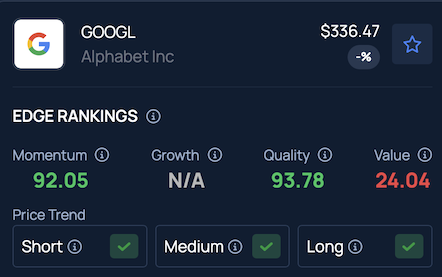
GOOGL stock ranks highly for Quality in Benzinga's Edge Stock Rankings, showing positive price trends across short, medium and long-term horizons.
Disclaimer: This content was partially produced with the help of AI tools and was reviewed and published by Benzinga editors.
Photo courtesy: Markus Mainka via Shutterstock
| 45 min | |
| 1 hour | |
| 1 hour | |
| 2 hours | |
| 5 hours | |
| 6 hours | |
| Apr-02 | |
| Apr-02 | |
| Apr-02 | |
| Apr-02 | |
| Apr-02 | |
| Apr-02 | |
| Apr-02 | |
| Apr-02 | |
| Apr-02 |

Join thousands of traders who make more informed decisions with our premium features. Real-time quotes, advanced visualizations, alerts, and much more.
Learn more about Finviz Elite