The AI in a Box Trade: Hardware Is the Next Boom
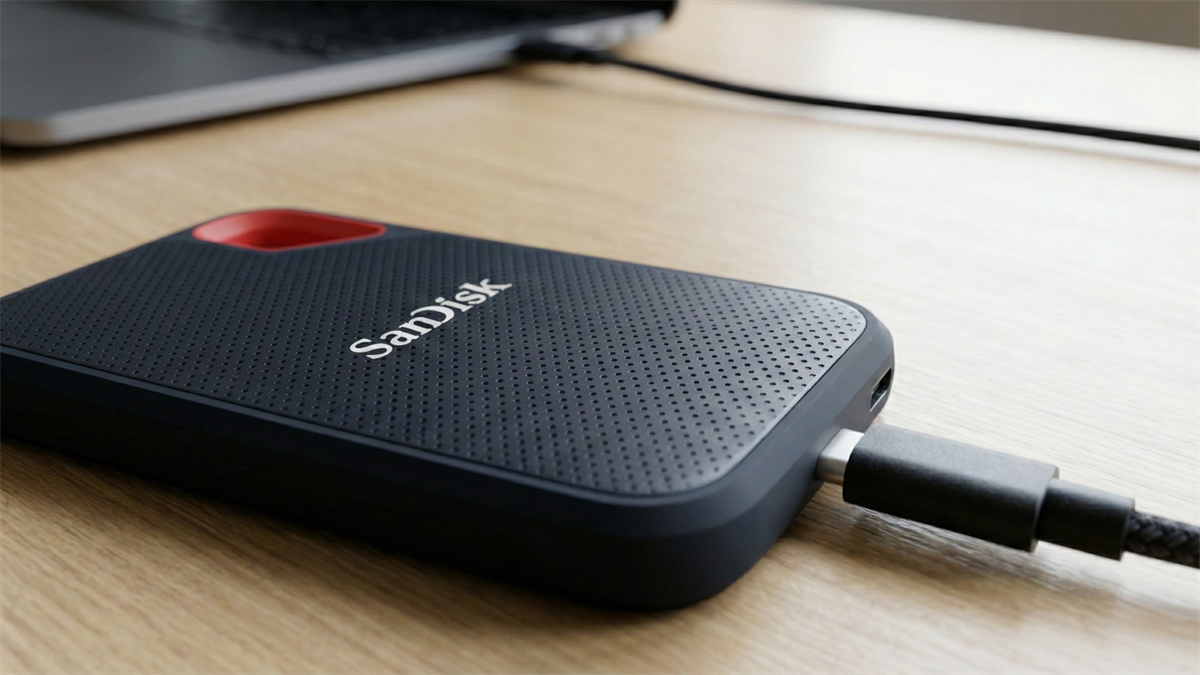
Investors have spent the last year captivated by the explosive rally in the semiconductor sector. SanDisk (NASDAQ: SNDK), the flash memory giant recently spun off from Western Digital (NASDAQ: WDC), has become the latest market obsession. The stock has risen by over 700% in the last year. Following a massive earnings beat in early February, the stock surged another 15%, driven by apparently insatiable global demand for data storage.
Seasoned investors understand that semiconductors are merely ingredients. They do not exist in a vacuum; they are purchased for installation in devices. We are currently witnessing a significant shift in the artificial intelligence (AI) landscape. The market is moving from the AI Training phase, which takes place in massive centralized cloud data centers, to the AI Inference phase. This new phase involves running AI models locally on physical devices at the network edge, including laptops, desktops, and private AI servers.
This macroeconomic shift moves the heavy capital-spending cycle from chipmakers to the Original Equipment Manufacturers (OEMs) that build the physical infrastructure. While the broader market continues to chase the overheated semiconductor rally, the data suggests a compelling catch-up trade is forming.
The Signal: What SanDisk’s Earnings Actually Mean
SanDisk’s recent earnings report provided a reason to buy the stock, offering a roadmap for the broader technology sector.
On Jan. 29, the company reported revenue of $3.03 billion, a 61% increase year-over-year. Even more telling was the gross margin expansion, which was up to 51.1%. This indicates that SanDisk has significant pricing power, as demand for storage far outstrips supply.
This specific data point serves as a leading indicator for the hardware sector.
The demand for flash memory is not random. It is being driven by the specific requirements of Edge AI. Unlike traditional software, AI models require massive amounts of fast, local storage to run effectively without constantly connecting to the internet.
Key drivers for running AI locally include:
- Speed: Processing data on the device reduces lag time, also known as latency.
- Privacy: It's optimal for sensitive corporate data not to leave the building or be uploaded to a public cloud.
- Cost: Companies can avoid expensive monthly cloud subscription fees for every AI query.
If SanDisk is selling record amounts of memory at premium prices, it confirms that corporations are actively upgrading their hardware fleets. The components are being bought in bulk, which means the servers and PCs they go into are next in line for a sales boom.
Dell Technologies: Building the AI Factory
If SanDisk provides the signal, Dell Technologies (NYSE: DELL) provides the confirmation. Dell’s stock serves as a flight to safety for investors seeking exposure to AI without the volatility of unproven software startups.
Dell bridges the cloud and the edge. While much of the media focus has been on public cloud giants, Dell has quietly secured its position as the preferred vendor for private enterprise.
The company reported a record $18.4 billion backlog for its AI servers in the third quarter of 2026. Furthermore, year-to-date orders for AI servers have hit $30 billion.
These numbers prove that the AI Factory strategy is working. Corporations are not just talking about AI; they are signing purchase orders for the hardware needed to run it.
As businesses move to bring their AI operations in-house to protect their intellectual property, they require the high-performance PowerEdge servers that Dell manufactures.
For investors, a backlog of this magnitude offers high visibility. It means Dell has secured revenue for future quarters, insulating it somewhat from short-term economic fluctuations. While software companies struggle to monetize AI features, Dell is successfully selling the picks and shovels required to build the infrastructure. Dell represents a stable growth play with confirmed order flow and a dominant position in the commercial market.
HP Inc.: A High-Yield Opportunity in Disguise
While Dell represents growth, HP Inc. (NYSE: HPQ) represents deep value. The stock is currently trading lower, down around 30% over the past three months. This decline is primarily attributed to news that CEO Enrique Lores is resigning to join PayPal. However, market overreactions to executive changes often create buying opportunities for patient investors who focus on fundamentals rather than headlines.
The real story for HP is not who is leaving, but the strategic plan being left behind. Coinciding with the leadership transition, HP launched its Fiscal 2026 Plan.
This aggressive restructuring initiative aims to reduce the global workforce by 4,000 to 6,000 employees. The goal is to generate $1 billion in gross run-rate savings by the end of fiscal year 2028.
This efficiency drive is critical. As noted in the SanDisk analysis, the cost of memory components is rising. High component costs can squeeze profit margins for device makers.
By cutting operational overhead by $1 billion, HP is positioning itself to protect its profit margins despite these higher input costs.
Furthermore, HP offers a significant incentive for investors to wait for the turnaround. The company has raised its quarterly dividend to 30 cents per share. With the stock price suppressed near $19, this translates to a dividend yield of approximately 6.5%.
HP is the purest bet on the coming AI PC refresh cycle. As Microsoft (NASDAQ: MSFT) releases updates requiring advanced neural processing units (NPUs), the global fleet of aging office computers will need to be replaced. HP’s cost-cutting measures and high yield offer a safety net, while the inevitable hardware refresh provides asymmetric upside potential.
The Hardware Supercycle Begins
The AI in a Box trade offers a logical path for capital rotation. SanDisk provided the initial signal: the world is short on storage because the hardware upgrade cycle has begun. Dell Technologies confirms this signal with a record-breaking backlog of server orders, offering investors a solid growth vehicle backed by tangible demand. Meanwhile, HP Inc. offers a compelling value proposition, paying investors a handsome dividend to wait for the PC refresh cycle to accelerate.
By looking beyond chipmakers to the companies building the final devices, investors can participate in the next phase of the AI revolution, Edge Computing, at valuations far more reasonable than those in the overheated semiconductor sector.
Where Should You Invest $1,000 Right Now?
Before you make your next trade, you'll want to hear this.
MarketBeat keeps track of Wall Street's top-rated and best performing research analysts and the stocks they recommend to their clients on a daily basis.
Our team has identified the five stocks that top analysts are quietly whispering to their clients to buy now before the broader market catches on... and none of the big name stocks were on the list.
They believe these five stocks are the five best companies for investors to buy now...
The article "The AI in a Box Trade: Hardware Is the Next Boom" first appeared on MarketBeat.
Mentioned In This Article
Latest News
| 1 hour | |
| 5 hours | |
| 6 hours | |
| 6 hours | |
| 6 hours | |
| 6 hours | |
| 6 hours | |
| 7 hours | |
| 7 hours | |
| 7 hours | |
| 8 hours | |
| 8 hours | |
| 11 hours | |
| 13 hours | |
| 13 hours |
