T-Mobile: The Buyback King's Safe Haven Strategy
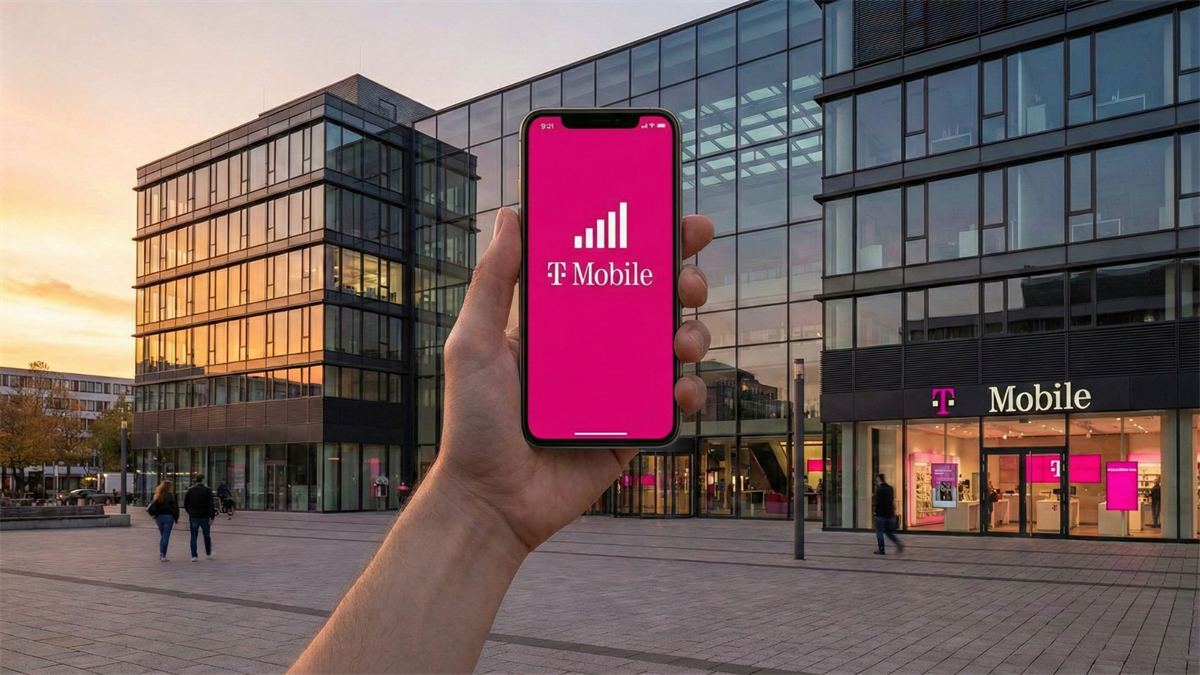
Investors are currently navigating a market field filled with landmines. Headlines are dominated by speculation about the Federal Reserve, Treasury yields that refuse to settle, and gold prices swinging wildly. The growth-at-all-costs mentality that powered the tech sector for the last decade has evaporated. In 2026, capital is fleeing speculative assets and hunting for safety.
Finding a safe harbor that still offers returns is difficult. Government bonds, traditionally considered the safest asset, have become volatile due to inflation fears. This environment has created a perfect opening for a specific type of equity: the cash-rich, shareholder-friendly corporation. T-Mobile US (NASDAQ: TMUS) has transformed to fit this mold perfectly. No longer just a scrappy wireless carrier, it is now a capital return engine built to weather volatility. With a Beta of just 0.44, meaning it is statistically far less volatile than the S&P 500, T-Mobile offers investors a way to stay in the market without losing sleep.
From Building to Harvesting: The Cash Strategy
For the past decade, T-Mobile has been in a massive construction phase. The company spent billions of dollars purchasing spectrum licenses and physically building towers to create a nationwide 5G network.
In financial terms, this is known as being Capex Heavy (Capital Expenditure Heavy). It requires massive upfront cash outlays to secure future growth.
That era is effectively over. The towers are standing, the spectrum is deployed, and the network is live. T-Mobile has pivoted into what analysts call harvest mode. The company can now reap the financial rewards of its past investments without needing to spend aggressively on new infrastructure.
The numbers tell the story. In the third quarter of 2025, T-Mobile reported a 6% increase in Core Adjusted EBITDA (a key measure of operating profitability).
More importantly, management raised its full-year 2025 Adjusted Free Cash Flow guidance to $17.8 billion to $18 billion. With infrastructure spending stabilizing around $10 billion annually, every dollar of revenue growth flows more efficiently to the bottom line. While artificial intelligence (AI) companies are currently burning cash to build data centers, T-Mobile is generating excess cash from a finished product.
Engineering Value: The $14 Billion Return Plan
Generating cash is only the first step. The real value for investors lies in how T-Mobile uses that cash. Unlike many tech peers hoarding money for acquisitions, T-Mobile is returning it directly to its owners. The company has authorized a $14 billion shareholder return program that runs through the end of 2026. Since late 2022, the company has returned a cumulative $41.8 billion to stockholders.
The primary engine of this return is the share buyback. In the third quarter of 2025 alone, T-Mobile repurchased approximately 10.2 million of its own shares. This is a powerful mechanism for engineering value. By reducing the number of shares outstanding, the company increases its earnings per share (EPS) even if net income remains flat. Furthermore, a consistent buyer in the market creates a natural floor for the stock price, dampening volatility during market sell-offs.
In addition to buybacks, T-Mobile pays a quarterly cash dividend of $1.02 per share, with the next payout scheduled for March 12, 2026. While a 2.06% yield might look modest next to a Treasury bond, T-Mobile offers something bonds cannot: growth. The company recently increased its dividend by 16%. In an inflationary environment, a fixed bond payment loses purchasing power over time. T-Mobile’s growing dividend acts as an inflation hedge, making it a bond proxy with an upgrade.
Capital Markets Day: The Next Trigger
Savvy investors appear to be positioning themselves for a move higher. Market data from late January and early February 2026 indicates an unusual surge in T-Mobile call option volume. Call options are financial bets that a stock price will rise. When volume spikes without a clear headline, it often suggests that smart money expects a positive catalyst.
That catalyst is likely the upcoming Capital Markets Day on Feb. 11, 2026. This event is scheduled to occur alongside the company's fourth-quarter earnings report. While earnings look backward, a Capital Markets Day is entirely about the future.
The market expectation is that CEO Srini Gopalan will unveil updated, potentially aggressive financial targets for 2026 and 2027. Investors are betting that the Buyback King will announce an even larger capital return authorization. If the company outlines a clear path to sustained free cash flow growth, it could trigger a stock repricing, validating the bullish activity seen in the options market.
Low Churn, High Value: The Loyalty Factor
Safety rarely comes cheap. T-Mobile currently trades at a price-to-earnings ratio (P/E) of approximately 19x. This is a premium valuation compared to T-Mobile’s legacy competitors, which often trade at single-digit multiples. Skeptics might view this as a risk, arguing that the stock is expensive. However, the premium is justified by superior fundamentals.
T-Mobile’s cost-cutting harvest strategy has not degraded its product. On Jan. 15, 2026, J.D. Power awarded T-Mobile the highest network quality ranking in five of six U.S. regions. This third-party validation proves that the company’s network advantage is durable.
Furthermore, the customer base is incredibly sticky. T-Mobile reported an industry-leading postpaid phone churn rate of just 0.89%. Churn measures the percentage of subscribers who cancel service; a sub-1% number is elite. This stability makes T-Mobile’s future revenue streams highly predictable. In a volatile, uncertain market, investors are willing to pay a premium for certainty and quality.
Four Bars Building A Perfect Storm Shelter
In a market defined by jitters, T-Mobile provides a rare sanctuary. It offers the defensive stability of a utility stock, evidenced by its remarkably low volatility, combined with the shareholder-friendly actions of a mature cash cow.
While other sectors face headwinds from high interest rates and unproven AI spending, T-Mobile is executing a disciplined strategy. It has completed its build-out and is now returning substantial cash to shareholders. With a growing dividend, a relentless buyback bid, and a major strategic update arriving next week, T-Mobile allows investors to stay invested in equities while enjoying the safety characteristics of a bond. For those seeking shelter from the storm, "boring" is looking like one of the most profitable trades on the board.
Where Should You Invest $1,000 Right Now?
Before you make your next trade, you'll want to hear this.
MarketBeat keeps track of Wall Street's top-rated and best performing research analysts and the stocks they recommend to their clients on a daily basis.
Our team has identified the five stocks that top analysts are quietly whispering to their clients to buy now before the broader market catches on... and none of the big name stocks were on the list.
They believe these five stocks are the five best companies for investors to buy now...
The article "T-Mobile: The Buyback King’s Safe Haven Strategy" first appeared on MarketBeat.
Mentioned In This Article
Latest News
| 6 hours | |
| 6 hours | |
| 11 hours | |
| Oct-13 | |
| Oct-13 | |
| Oct-13 | |
| Oct-13 | |
| Oct-13 | |
| Oct-13 | |
| Oct-13 | |
| Oct-13 | |
| Oct-12 | |
| Oct-12 | |
| Oct-12 | |
| Oct-12 |
