|
|
|

|
|||||
|
|
|

Healthcare distributor and services company Cardinal Health (NYSE:CAH) reported Q4 CY2025 results topping the market’s revenue expectations, with sales up 18.8% year on year to $65.63 billion. Its non-GAAP profit of $2.63 per share was 11.2% above analysts’ consensus estimates.
Is now the time to buy Cardinal Health? Find out by accessing our full research report, it’s free.
"Our strong second-quarter performance reflects at least double-digit segment profit growth across all five of our operating segments," said Jason Hollar, CEO of Cardinal Health.
Operating as a critical link in the healthcare supply chain since 1979, Cardinal Health (NYSE:CAH) distributes pharmaceuticals and manufactures medical products for hospitals, pharmacies, and healthcare providers across the global healthcare supply chain.
A company’s long-term sales performance is one signal of its overall quality. Any business can put up a good quarter or two, but the best consistently grow over the long haul. Over the last five years, Cardinal Health grew its sales at a decent 9.4% compounded annual growth rate. Its growth was slightly above the average healthcare company and shows its offerings resonate with customers.
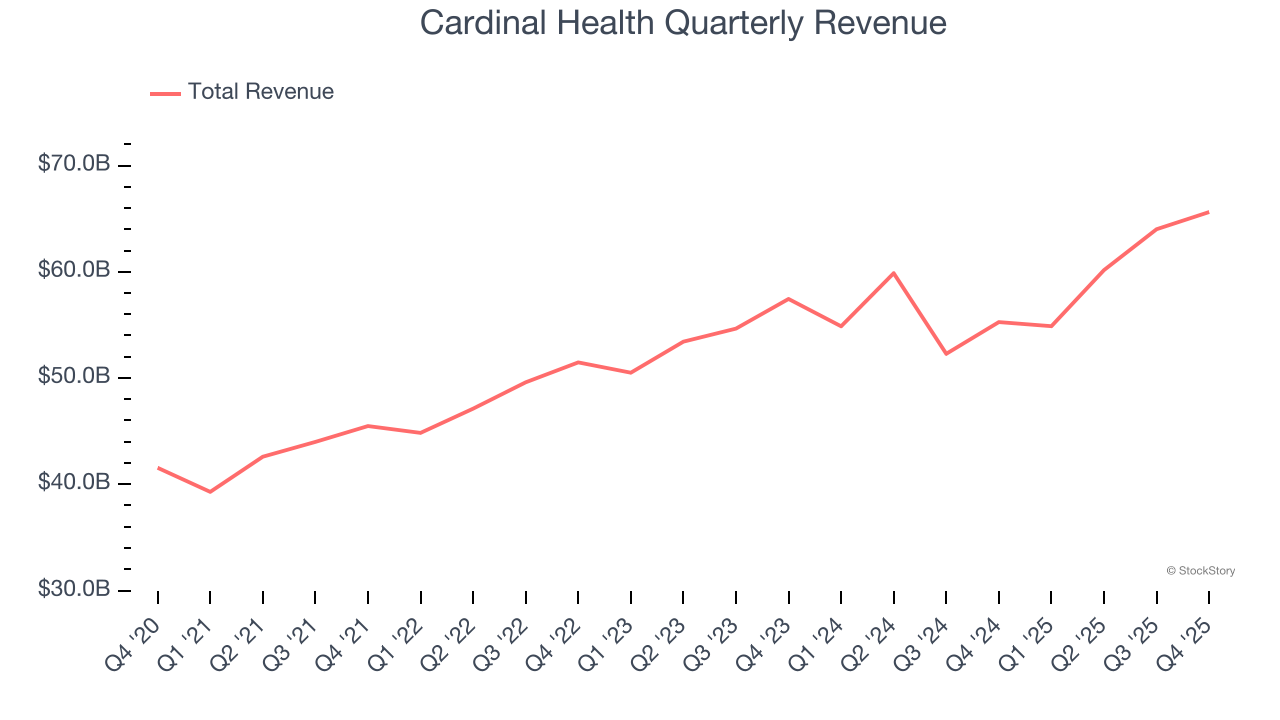
We at StockStory place the most emphasis on long-term growth, but within healthcare, a half-decade historical view may miss recent innovations or disruptive industry trends. Cardinal Health’s recent performance shows its demand has slowed as its annualized revenue growth of 6.4% over the last two years was below its five-year trend.
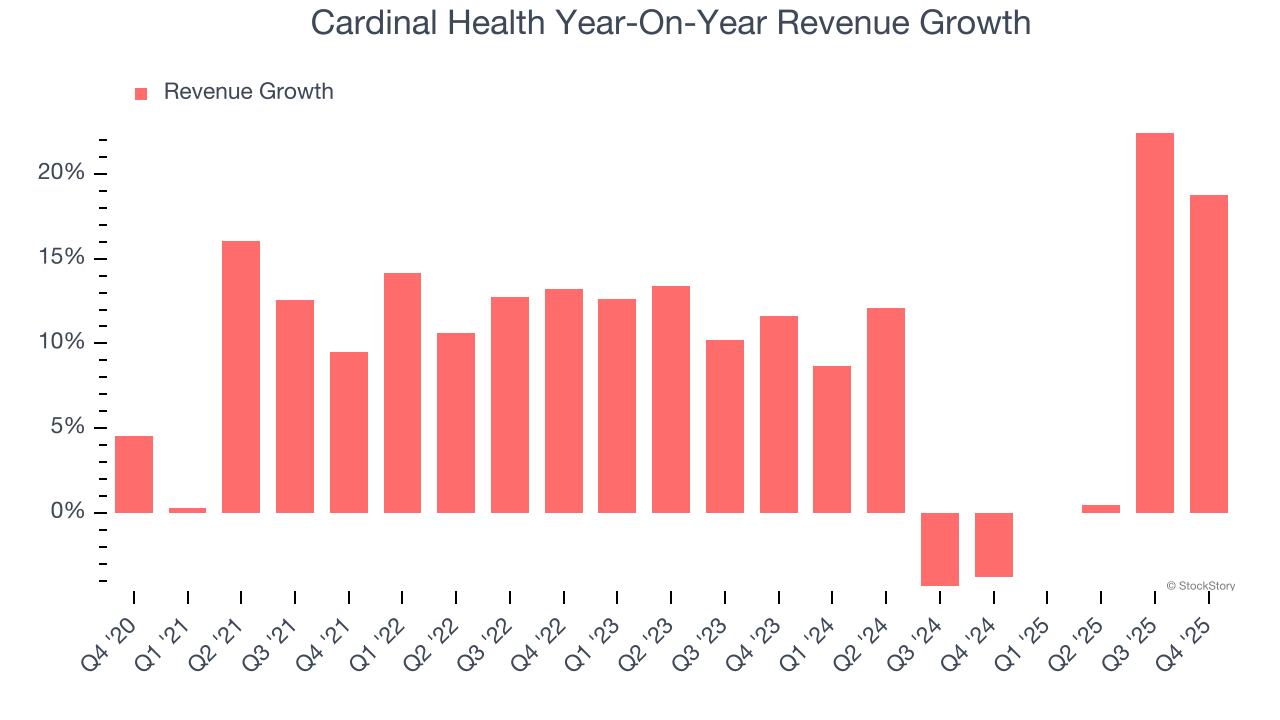
This quarter, Cardinal Health reported year-on-year revenue growth of 18.8%, and its $65.63 billion of revenue exceeded Wall Street’s estimates by 1.2%.
Looking ahead, sell-side analysts expect revenue to grow 10.6% over the next 12 months, an improvement versus the last two years. This projection is particularly noteworthy for a company of its scale and indicates its newer products and services will catalyze better top-line performance.
While Wall Street chases Nvidia at all-time highs, an under-the-radar semiconductor supplier is dominating a critical AI component these giants can’t build without. Click here to access our free report one of our favorites growth stories.
Cardinal Health’s operating margin might fluctuated slightly over the last 12 months but has generally stayed the same. The company broke even over the last five years, lousy for a healthcare business. Its large expense base and inefficient cost structure were the main culprits behind this performance.
Analyzing the trend in its profitability, Cardinal Health’s operating margin might fluctuated slightly but has generally stayed the same over the last five years. This raises questions about the company’s expense base because its revenue growth should have given it leverage on its fixed costs, resulting in better economies of scale and profitability.
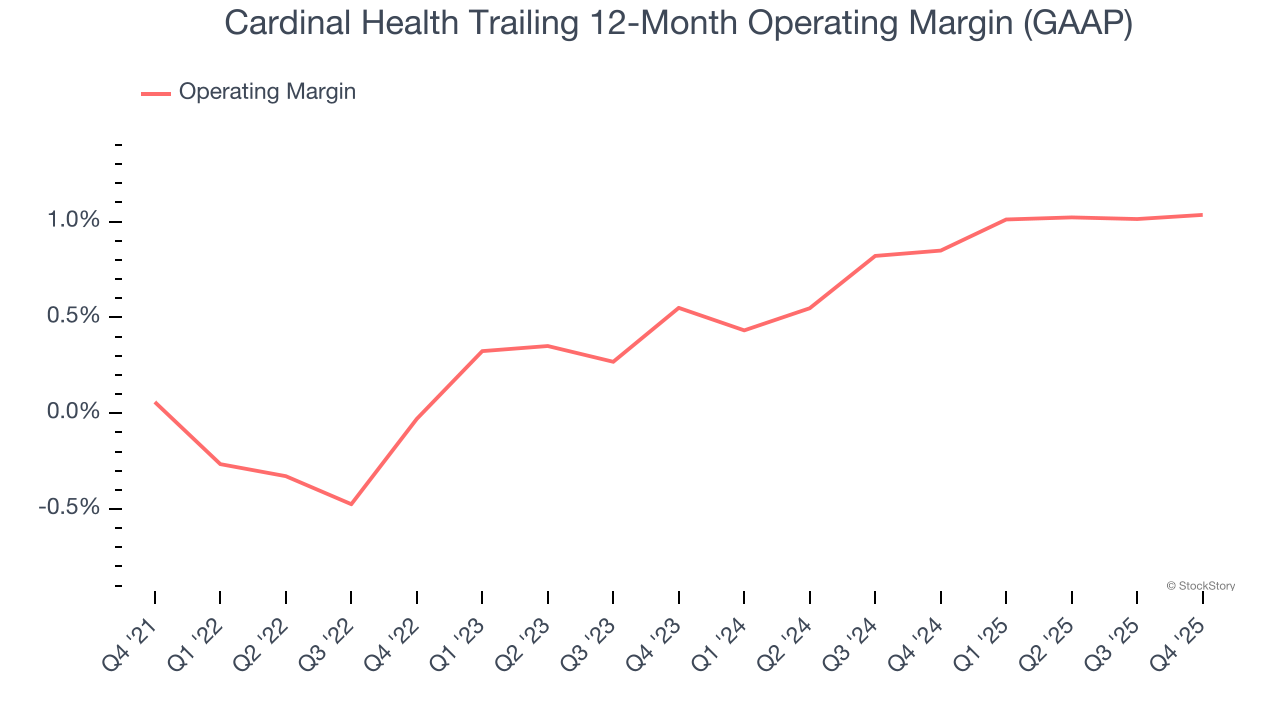
In Q4, Cardinal Health generated an operating margin profit margin of 1.1%, in line with the same quarter last year. This indicates the company’s overall cost structure has been relatively stable.
Revenue trends explain a company’s historical growth, but the long-term change in earnings per share (EPS) points to the profitability of that growth – for example, a company could inflate its sales through excessive spending on advertising and promotions.
Cardinal Health’s remarkable 10.2% annual EPS growth over the last five years aligns with its revenue performance. This tells us it maintained its per-share profitability as it expanded.
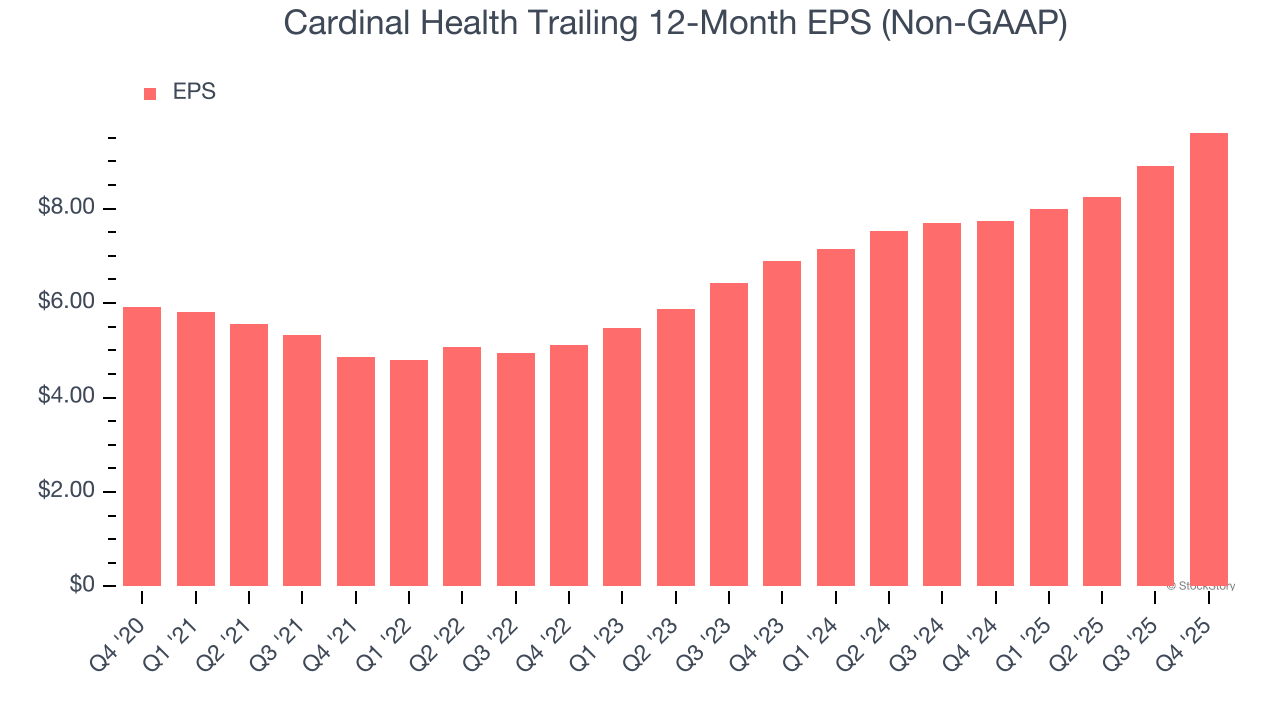
In Q4, Cardinal Health reported adjusted EPS of $2.63, up from $1.93 in the same quarter last year. This print easily cleared analysts’ estimates, and shareholders should be content with the results. Over the next 12 months, Wall Street expects Cardinal Health’s full-year EPS of $9.61 to grow 10.9%.
It was encouraging to see Cardinal Health beat analysts’ full-year EPS guidance expectations this quarter. We were also glad its revenue and EPS outperformed Wall Street’s estimates. Overall, we think this was a solid quarter with some key areas of upside. The stock traded up 1.3% to $209.44 immediately after reporting.
Cardinal Health may have had a good quarter, but does that mean you should invest right now? The latest quarter does matter, but not nearly as much as longer-term fundamentals and valuation, when deciding if the stock is a buy. We cover that in our actionable full research report which you can read here (it’s free).
| Mar-13 |
How Cardinal Health, The IBD Stock Of The Day, Is Navigating The Tricky Macro
CAH
Investor's Business Daily
|
| Mar-13 | |
| Mar-10 | |
| Mar-10 | |
| Mar-09 | |
| Mar-09 | |
| Mar-06 | |
| Mar-06 | |
| Mar-06 | |
| Mar-06 | |
| Mar-05 | |
| Mar-05 | |
| Mar-05 | |
| Mar-05 | |
| Mar-04 |

Join thousands of traders who make more informed decisions with our premium features. Real-time quotes, advanced visualizations, backtesting, and much more.
Learn more about Finviz Elite