|
|
|

|
|||||
|
|
|
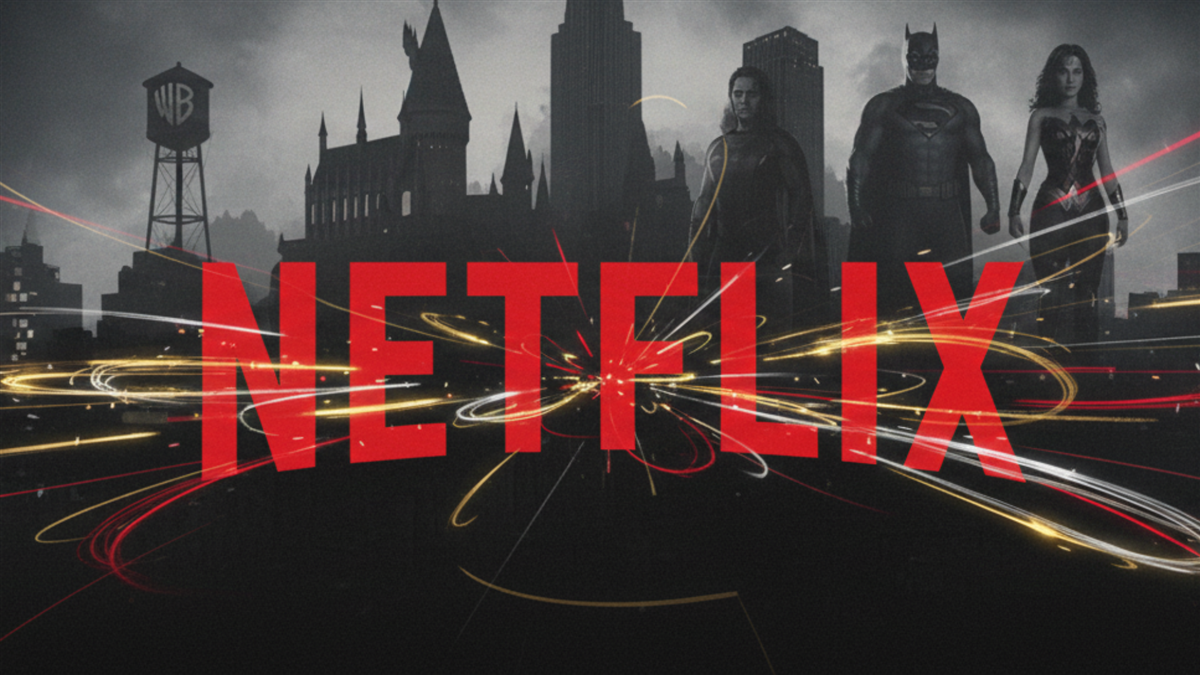
In a move that could fundamentally redraw the map of the global entertainment industry, Netflix (NASDAQ: NFLX) has reportedly submitted a binding, predominantly cash offer to acquire Warner Bros. Discovery (NASDAQ: WBD). The bid, submitted ahead of the Dec. 1 deadline for second-round offers, marks a significant departure from the company’s historical strategy.
For over 15 years, Netflix has operated as a builder, creating its own intellectual property (IP) from scratch to disrupt the industry.
Now, management is signaling that the fastest way to secure the next decade of dominance is to buy the industry's most established franchise moats.
The market reaction highlights the magnitude of this shift. Following reports of the bid, Warner Bros. Discovery stock rallied to hit 52-week highs, reflecting investor relief at a potential exit strategy for the beleaguered media giant.
Conversely, Netflix’s stock price held firm around the $109 mark. This stability suggests that Wall Street views this not as a reckless spending spree, but as a serious, viable path to long-term value creation.
To understand why Netflix is pivoting, investors must look at exactly what is for sale. The target is not just content; it is cultural infrastructure. The acquisition would grant Netflix control over the Warner Bros. Studio lot, the DC Universe (home to Batman, Superman, and Wonder Woman), the Harry Potter Wizarding World, and the prestigious HBO library. These are assets that cannot be replicated, regardless of the amount spent on original production.
Data from Warner Bros. Discovery’s third-quarter 2025 earnings report validates the immediate value of these assets.
For Netflix, acquiring Warner Bros. means diversifying its revenue beyond subscriptions and advertising by unlocking theatrical and merchandising streams at scale.
Analysts suggest this strategic deal could solve three problems at once:
The structure of the bid reveals Netflix's greatest competitive advantage: its balance sheet. Reports indicate that the company is arranging tens of billions of dollars in bridge loans to finance the cash portion of the deal. While this introduces significant leverage to a company that recently achieved investment-grade status, it is a calculated risk made possible by financial maturity.
Netflix faces competition from a consortium led by Paramount Global and Skydance Media (Paramount Skydance (NASDAQ: PSKY)). However, in a high-interest-rate environment, the structure of the offer matters as much as the price.
Netflix can afford this aggressive posture because of its underlying profitability. The company is projected to generate approximately $9 billion in free cash flow (FCF) for the full year 2025. Furthermore, prior to this bid, Netflix carried gross debt of only $14.5 billion against a market capitalization of roughly $460 billion.
This fortress balance sheet allows Netflix to service new debt without jeopardizing operations. With operating margins hovering around 28% in the third quarter, the company has a clear path to quickly pay down the bridge loans post-acquisition.
Critically, Netflix is not pursuing this acquisition out of weakness. While the M&A headlines dominate the news cycle, the company's core organic business remains robust. The recent release of Stranger Things Season 5, Volume 1 on Nov. 26, served as a reminder of Netflix's internal creative power.
The premiere generated such massive concurrent traffic that it briefly destabilized the platform, causing outages for thousands of users. While technically a glitch, Wall Street interpreted this crash as a bullish signal of immense consumer demand.
Furthermore, Episode 4, titled Sorcerer, has achieved a historic 9.7/10 rating on IMDb, the highest in the show's history.
This proves that Netflix can still capture the global cultural zeitgeist without buying external assets.
This strength gives management leverage in negotiations; they are buying Warner Bros. because they can, not because they must to survive.
The biggest threat to the deal may not be financial, but political. Reports suggest that high-ranking White House officials have flagged concerns that a Netflix-WBD merger would give one company too much power over Hollywood. The Department of Justice (DOJ) has been aggressive in challenging media consolidation.
However, Netflix has a strong counter-argument. The entertainment landscape has shifted. Netflix isn't just competing with other studios; it is fighting for attention against tech giants like Apple and Amazon. By framing the acquisition as necessary to compete with these trillion-dollar ecosystems, Netflix may find a path through the regulatory maze.
If successful, this deal could transform Netflix from a tech platform into a diversified media empire and cement the company's status as a blue-chip staple, likely attracting a new class of conservative, long-term investors. Whether through the cultural phenomenon of a Stranger Things finale or the box office receipts of a new Superman film, Netflix is positioning itself to own the entire entertainment ecosystem for the next generation.
Before you make your next trade, you'll want to hear this.
MarketBeat keeps track of Wall Street's top-rated and best performing research analysts and the stocks they recommend to their clients on a daily basis.
Our team has identified the five stocks that top analysts are quietly whispering to their clients to buy now before the broader market catches on... and none of the big name stocks were on the list.
They believe these five stocks are the five best companies for investors to buy now...
The article "Netflix Goes All In: The $70B Play to End the Streaming Wars" first appeared on MarketBeat.
| 53 min | |
| 1 hour | |
| 5 hours | |
| 6 hours | |
| 8 hours | |
| 9 hours | |
| 9 hours | |
| 9 hours | |
| 10 hours | |
| 10 hours | |
| 10 hours | |
| 10 hours | |
| 10 hours | |
| 11 hours | |
| 11 hours |

Join thousands of traders who make more informed decisions with our premium features. Real-time quotes, advanced visualizations, alerts, and much more.
Learn more about Finviz Elite