|
|
|

|
|||||
|
|
|
For decades, the concept of a flying car belonged firmly to the realm of science fiction. However, as the markets open in 2026, the electric Vertical Take-off and Landing (eVTOL) sector has shifted from experimental concepts to regulatory implementation. Analysts widely view this year as the year of execution, a critical window where prototypes must transition into certifiable commercial products.
In this high-stakes environment, investors are moving away from speculative hype. Capital is rotating into companies that possess two specific assets: a viable technology stack and the financial capital to survive the rigorous certification process.
Archer Aviation (NYSE: ACHR) has positioned itself at the forefront of this transition, recently solidifying its status through high-profile technology integrations and strategic infrastructure acquisitions. With Archer Aviation’s stock price recently showing technical strength, investor focus has now shifted to the fundamentals driving the price.
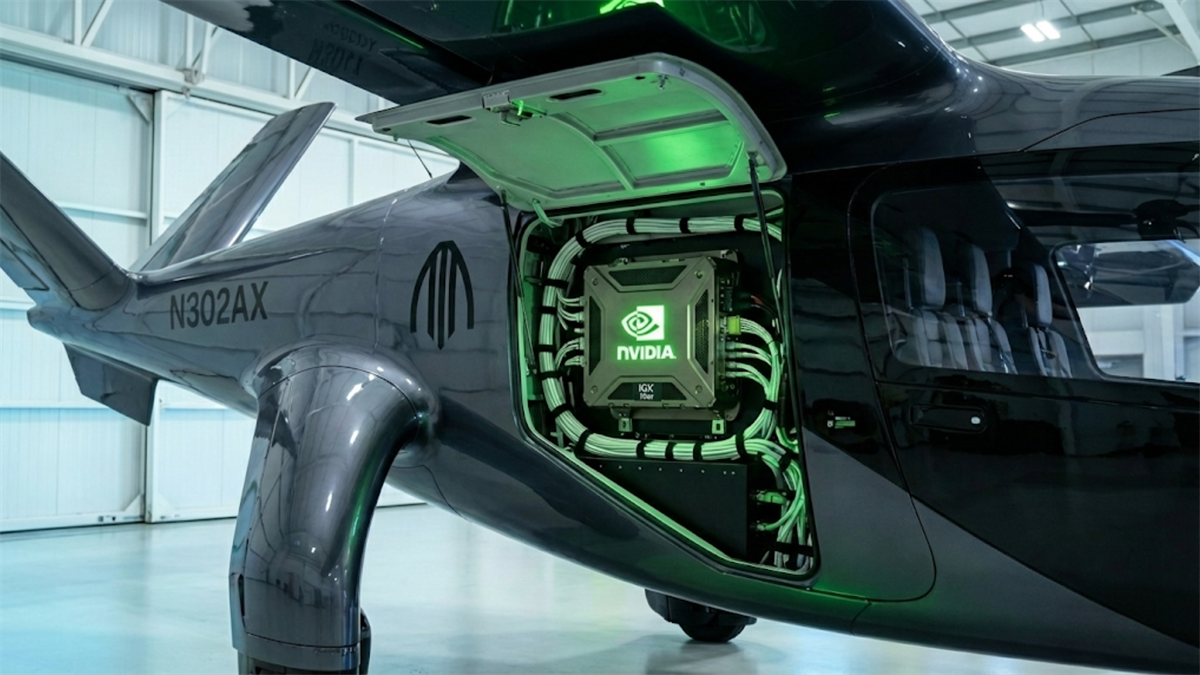
At the Consumer Electronics Show (CES) 2026, Archer Aviation announced a critical partnership with NVIDIA (NASDAQ: NVDA) to integrate the IGX Thor platform into its aircraft. For investors, it is important to understand that this is not simply a software update or a marketing collaboration. The IGX Thor platform serves as the central nervous system of the Midnight aircraft, providing the onboard computing power necessary for next-generation aviation.
This integration addresses the two most significant cost and risk centers in the aviation and aerospace industry: safety and autonomy. By leveraging NVIDIA’s physical AI capabilities, Archer’s aircraft can process vast amounts of flight data in real-time. This allows for enhanced pilot awareness and, perhaps more importantly, for the bottom line, predictive maintenance. Predictive maintenance uses AI to identify mechanical issues before they cause failures. For an airline operator, this translates to less downtime and significantly lower long-term operating costs.
Furthermore, this move differentiates Archer’s intellectual property from competitors who may rely on standard, off-the-shelf avionics. By building a proprietary tech stack with NVIDIA, Archer is laying the groundwork for future autonomous flights. While the initial flights will be piloted, the long-term margin expansion in this sector relies on eventually removing the pilot from the operational equation. This deal suggests Archer is building for that autonomous future today.
While technology captures headlines, liquidity captures investor confidence. In the pre-revenue aerospace sector, cash is oxygen. Companies without it often face bankruptcy before their aircraft ever carry a paying passenger. Archer Aviation’s balance sheet sets it apart from many peers in the sector.
The company’s most striking metric is its current ratio of 18.19. For those new to financial metrics, the Current Ratio measures a company's ability to pay short-term obligations, such as bills due within one year. A ratio of 1.0 is considered passable; a ratio of 18.19 is exceptional. It means that for every $1 of short-term debt, Archer holds nearly $19 in liquid assets. This indicates a massive buffer against financial distress and suggests the company can weather economic volatility without an immediate need for emergency funding.
Supporting this ratio is a total liquidity position hovering around $2 billion. A significant portion of this financial stability stems from Archer’s manufacturing partnership with Stellantis (NYSE: STLA). As a major automotive giant, Stellantis provides the factory expertise and the capital required to build production lines. This arrangement prevents Archer from burning its own cash on expensive factory build-outs, effectively preserving shareholder equity and extending the company’s runway through the certification phase.
Archer is actively converting its capital into tangible infrastructure. A prime example is the recent acquisition of a controlling interest in the Hawthorne Municipal Airport. This is so much more than a real estate transaction; it is a strategic foothold. Hawthorne will serve as the operational hub for Archer’s Los Angeles network, which is being designed to support heavy traffic during the 2028 Olympics. By securing this location now, Archer locks in a competitive advantage in one of the world's most congested traffic corridors.
On the regulatory front, the company continues to advance through Phase 4 of the Federal Aviation Administration (FAA) certification process. This phase involves flight testing for credit, which is essentially the aircraft's final exam. During this stage, FAA pilots and engineers validate that the aircraft performs exactly as the design claims. Progress here is the primary driver of the stock's long-term value, as completion of Phase 4 unlocks the ability to carry commercial passengers.
Globally, the demand for these aircraft is materializing. The Soracle joint venture in Japan demonstrates that the market for electric air taxis is not limited to the United States. By securing international partners early, Archer is ensuring that it has customers ready to accept delivery as soon as production scales up at its Covington, Georgia, facility.
The stock market has reacted favorably to Archer’s recent moves. As of Jan. 8, 2026, shares are trading up around $8.82 with healthy trading volume.
From a technical perspective, the stock recently entered the TradeSmith Health Indicator Green Zone. This is a technical signal often used by traders to identify stocks that have stabilized and are moving in a positive, healthy momentum trend after periods of volatility.
Archer Aviation’s analyst community shares this optimistic outlook. The consensus rating for Archer is Moderate Buy, with six of nine analysts issuing a Buy rating. The average price target sits at $12.14, suggesting a potential upside of approximately 37% from current trading levels.
This spread between the current price and the analyst target indicates that the street believes the stock is currently undervalued relative to its future potential.
Archer Aviation enters 2026 with a clear advantage in resources and strategy. By partnering with NVIDIA, the company has de-risked its technology stack and prepared for an autonomous future.
With a fortress balance sheet and exceptional financial metrics, Archer seems to have the fuel to reach the finish line. As the company transitions from a developer to a commercial operator, the stock offers a compelling narrative for investors seeking exposure to the future of transportation.
Before you make your next trade, you'll want to hear this.
MarketBeat keeps track of Wall Street's top-rated and best performing research analysts and the stocks they recommend to their clients on a daily basis.
Our team has identified the five stocks that top analysts are quietly whispering to their clients to buy now before the broader market catches on... and none of the big name stocks were on the list.
They believe these five stocks are the five best companies for investors to buy now...
The article "NVIDIA’s Move Turns Archer Into More Than an eVTOL Bet" first appeared on MarketBeat.
| 3 hours | |
| 3 hours | |
| 4 hours | |
| 5 hours | |
| 6 hours | |
| 6 hours | |
| 6 hours | |
| 7 hours | |
| 8 hours | |
| 9 hours | |
| 9 hours | |
| 9 hours | |
| 10 hours | |
| 11 hours | |
| 11 hours |

Join thousands of traders who make more informed decisions with our premium features. Real-time quotes, advanced visualizations, alerts, and much more.
Learn more about Finviz Elite