|
|
|

|
|||||
|
|
|
Costco's impressive track record of growing same-store sales indicates just how much its customers value what it offers.
Home Depot operates in a massive industry, but its financial results are sensitive to macro forces.
Investors will choose based on whether they prioritize quality or valuation.
Costco (NASDAQ: COST) and Home Depot (NYSE: HD) are two companies that shoppers are recognize. Costco dominates the market for general merchandise, while Home Depot is the clear leader in the home improvement industry. Both companies have been incredibly successful investments since their initial public offerings more than four decades ago.
Between these top retail stocks, which is the best to buy right now?
Where to invest $1,000 right now? Our analyst team just revealed what they believe are the 10 best stocks to buy right now. Continue »
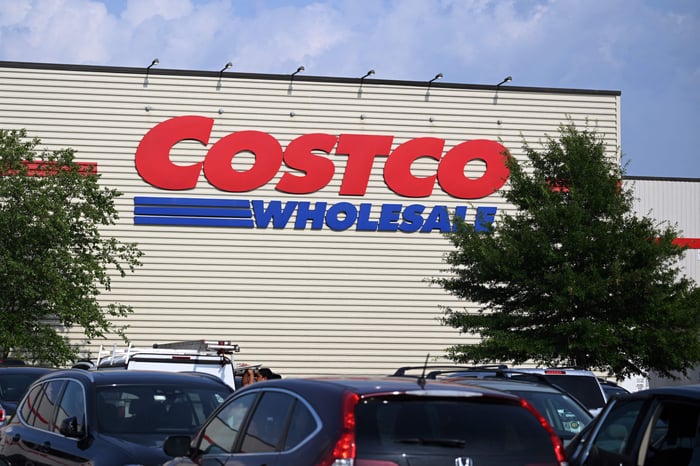
Image source: Getty Images.
Over the five-year stretch between fiscal 2020 and fiscal 2025, Costco posted positive same-store sales growth in each period. This impressive streak occurred at a time when there were many disruptive events, like the COVID-19 pandemic, supply chain bottlenecks, soaring inflation, rising interest rates, and the current uncertain macro climate.
Despite these headwinds, Costco keeps flexing its muscles. Its net sales increased by 65% during that five-year time frame. Net income climbed by 103% in the same period.
The company's main draw for customers is that it sells a wide selection of goods in various categories, ranging from groceries to appliances, at some of the lowest prices around. But it's able to do this because of its successful membership model, which requires shoppers to pay annual fees. This brings in a recurring and predictable revenue stream, which totaled $1.3 billion in the company's first quarter of fiscal year 2026 (ended Nov. 23). And it keeps customers loyal to the Costco brand.
This is already a retail behemoth. The expansion story isn't over, though. Costco is planning to open 28 net new stores in fiscal 2026.
"We continue to plan for 30 plus net openings per year in future years," CEO Ron Vachris said on the Q1 2026 earnings call.
There is a lot of potential to penetrate international markets. Costco's leadership team highlighted Europe and Asia as focus regions.
Whereas Costco is the steady grower, Home Depot has shown just how economically sensitive its business is. When households were flush with cash and interest rates were low, sales surged. Revenue increased 19.9% and 14.4% in fiscal 2020 and 2021, respectively. However, demand has been under pressure more recently.
In fiscal 2023 and 2024, same-store sales declined 3.2% and 1.8%, respectively. The management team believes same-store sales will be "slightly positive" this fiscal year. With interest rates at elevated levels and consumers being more discerning with how they spend their money, it makes sense that big-ticket purchases like upgrades and renovations would feel the impact.
"We believe the consumer uncertainty and continued pressure in housing are disproportionately impacting home improvement demand," CEO Ted Decker said on the company's Q3 2025 earnings call.
But it's not all bad news. Home Depot dominates its industry, as it makes about twice as much revenue as smaller rival Lowe's. The industry is also massive and fragmented. This presents a long-term opportunity for Home Depot to take market share. Home Depot has stronger brand recognition, greater scale, broad inventory availability, and omnichannel capabilities that competitors don't have, giving it a leg up.
Investors can't complain about management's capital return practices. Home Depot paid $6.9 billion in dividends in the last nine months. And it has repurchased shares previously. Being consistently profitable facilitates this sort of activity.
The best stock to choose, in my view, comes down to the preferences of individual investors. Do you care more about paying a lower starting valuation as part of your decision-making process? If so, then the choice is Home Depot. Its price-to-earnings ratio of 25.4 is about half of Costco's 49.6. This isn't to say that Home Depot is necessarily cheap in an absolute sense.
On the other hand, if you want to own the highest-quality company, then Costco is the pick. It continues to prove the robustness of its business model regardless of economic conditions.
Before you buy stock in Costco Wholesale, consider this:
The Motley Fool Stock Advisor analyst team just identified what they believe are the 10 best stocks for investors to buy now… and Costco Wholesale wasn’t one of them. The 10 stocks that made the cut could produce monster returns in the coming years.
Consider when Netflix made this list on December 17, 2004... if you invested $1,000 at the time of our recommendation, you’d have $482,451!* Or when Nvidia made this list on April 15, 2005... if you invested $1,000 at the time of our recommendation, you’d have $1,133,229!*
Now, it’s worth noting Stock Advisor’s total average return is 968% — a market-crushing outperformance compared to 197% for the S&P 500. Don't miss the latest top 10 list, available with Stock Advisor, and join an investing community built by individual investors for individual investors.
*Stock Advisor returns as of January 12, 2026.
Neil Patel has no position in any of the stocks mentioned. The Motley Fool has positions in and recommends Costco Wholesale and Home Depot. The Motley Fool recommends Lowe's Companies. The Motley Fool has a disclosure policy.
| 25 min | |
| Mar-17 | |
| Mar-17 | |
| Mar-17 | |
| Mar-16 | |
| Mar-16 | |
| Mar-16 | |
| Mar-13 | |
| Mar-13 | |
| Mar-13 | |
| Mar-13 | |
| Mar-13 | |
| Mar-13 | |
| Mar-13 | |
| Mar-13 |

Join thousands of traders who make more informed decisions with our premium features. Real-time quotes, advanced visualizations, backtesting, and much more.
Learn more about Finviz Elite