The $56 Billion Draft: Follow TSMC's CapEx Stream
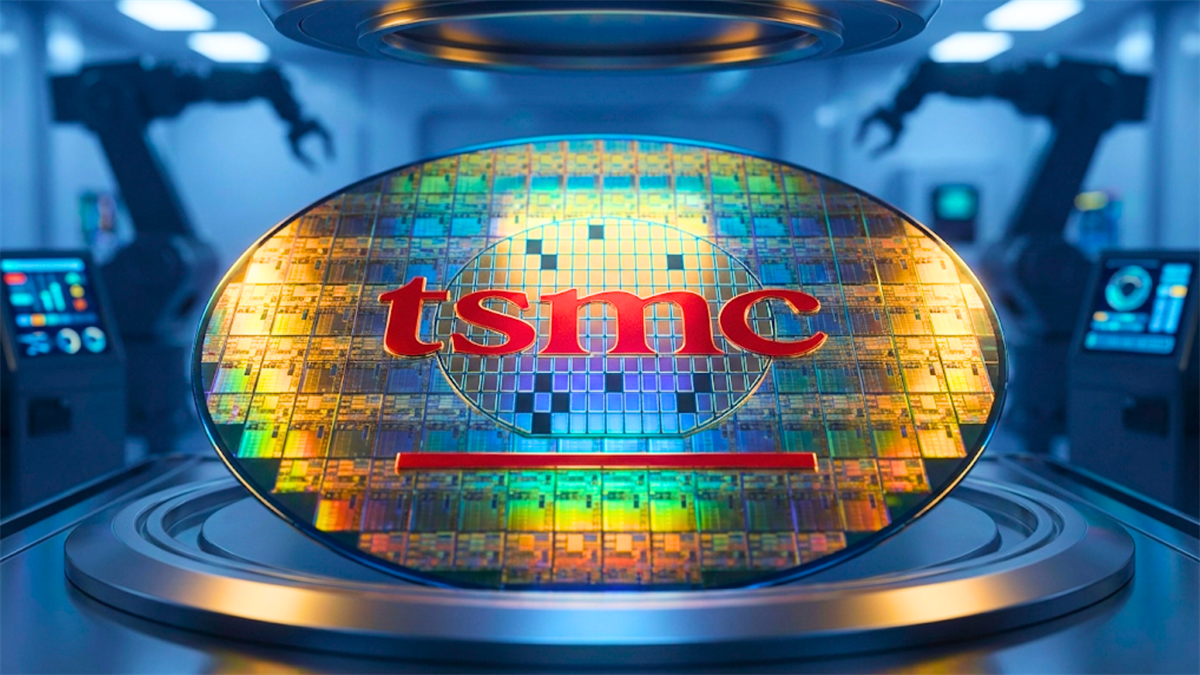
When Taiwan Semiconductor Manufacturing Company (NYSE: TSM) (TSMC) released its fourth-quarter earnings in mid-January 2026, most mainstream financial news outlets focused entirely on the bottom line. While a net profit of $16 billion is an impressive figure, it is not the data point that sophisticated investors should be watching. Buried deep in the forward-looking guidance was the single most important number for the semiconductor supply chain: a projected 2026 capital expenditure (CapEx) budget of $52 billion to $56 billion.
This figure represents a staggering amount of liquidity that is about to flood the market. It signifies the cash TSMC is obligated to spend on new factories, advanced machinery, and materials over the next twelve months. For the watchful fundamental investor, this spending plan triggers a specific investment strategy known as Drafting the Titan.
In competitive cycling, a rider will draft behind a leader to minimize wind resistance and maximize speed with less effort. In the stock market, the semiconductor equipment industry is currently drafting behind TSMC. As the foundry giant accelerates its spending to meet the insatiable demand for artificial intelligence (AI) chips, its suppliers are pulled forward by the resulting financial vacuum. TSMC literally cannot grow without transferring this capital to its partners.
Profiting From the War, Not the Winner
The primary argument for the titan drafting strategy is risk mitigation. Trying to pick the ultimate winner of the AI chip war is a volatile endeavor. The battle for market dominance between major chip manufacturers and custom chip designers is fierce and unpredictable. Market share shifts rapidly; a technical delay from one company can crash its stock price overnight.
However, almost every high-performance AI chip designed by these rivals shares one common denominator: they must be manufactured by TSMC. Whether NVIDIA (NASDAQ: NVDA) retains its crown or Advanced Micro Devices (NASDAQ: AMD) captures more market share in 2026 is irrelevant to the equipment supplier. The manufacturing process remains the same, and the machines required to build the chips are identical.
In this context, equipment manufacturers act as the arms dealers of the AI revolution. They sell the necessary infrastructure to all combatants, ensuring they get paid regardless of who wins the specific battles. This dynamic has prompted major financial institutions to adjust their outlooks. Following the earnings call, analysts at Wells Fargo and Morgan Stanley issued bullish upgrades for the equipment sector. They view these companies as beneficiaries of derivative demand. Essentially, these stocks operate like a toll booth on the AI superhighway. If the volume of AI chips increases, the toll, paid in the form of equipment purchases, must be collected.
Hardware Refresh: The Mandatory Upgrades for 2nm Chips
To understand which stocks will benefit from this $56 billion capital injection, investors must examine the specific technology TSMC is deploying. The focus for 2026 is the mass production of 2-nanometer (2 nm) chips. This transition, referred to in the industry as the Angstrom Era, is more than a simple software update. It requires a complete physical overhaul of the manufacturing line.
The shift to a new transistor architecture, known as Gate-All-Around (GAAFET), creates physical problems that legacy equipment cannot address.
- Applied Materials (NASDAQ: AMAT) and the Wiring Problem: As chips shrink, the microscopic copper wiring that powers them becomes too crowded. If the wires are too close, they overheat or short-circuit. To solve this, TSMC is adopting a radical technique called Backside Power Delivery. This involves moving the power lines to the back of the silicon wafer, separating them from the data transistors. This process requires highly specialized material-deposition tools supplied by Applied Materials. TSMC cannot reuse its old tools for this step; it must buy new ones.
- Lam Research (NASDAQ: LRCX) and the Vertical Challenge: Modern AI chips are not just shrinking horizontally; they are growing vertically. To boost speed, TSMC stacks memory and logic components on top of each other. This 3D structure requires drilling deep, perfectly straight holes through the silicon to connect the layers. Lam Research dominates the market for cryogenic etching, a technology that freezes the wafer to drill these holes without damaging the delicate structures.
For TSMC, these purchases are not optional. The laws of physics dictate that without these specific machines from Applied Materials and Lam Research, the 2nm chip cannot exist.
No Substitutes: The High Cost of Switching Vendors
A common fear for investors is that a large buyer like TSMC will force suppliers to lower prices or switch to cheaper competitors. However, the titan drafting strategy is protected by high switching costs. In semiconductor manufacturing, the tools are chemically and physically baked into the recipe.
Changing a vendor for a critical step, such as inspection or lithography, would require TSMC to halt production and restart years of research and development.
- KLA Corp (NASDAQ: KLAC): As manufacturing becomes more complex, the cost of a single raw silicon wafer has skyrocketed to over $25,000. If a wafer has a defect at the end of the line, that money is incinerated. This dynamic makes KLA Corp essential. They provide the optical inspection tools that find defects early in the process. As TSMC moves to 2nm, the Process Control Intensity, the amount of inspection needed per wafer, increases. TSMC is effectively buying yield insurance from KLA to protect its own margins.
- ASML Holding (NASDAQ: ASML): While TSMC is cost-conscious about the latest High-NA machines, the demand for standard Extreme Ultraviolet (EUV) machines remains the bedrock of the 2nm expansion. ASML remains the monopoly provider of this technology. There is no alternative option, giving ASML immense pricing power.
The Geographic Multiplier: Double the Fabs, Double the Tools
Finally, a massive catalyst often overlooked by casual observers is TSMC’s geographic diversification. In response to global supply chain anxieties, TSMC is aggressively building new fabrication plants (fabs) in Arizona and Japan, alongside its primary hubs in Taiwan.
For equipment investors, this creates a geographic multiplier. A factory in Taiwan cannot share its heavy machinery with a factory in Arizona. TSMC is forced to purchase duplicate sets of equipment for each location to ensure the same standards are met globally. This redundancy drives order books higher than they would be if production were centralized in one location.
The investment narrative for AI is evolving. The initial hype focused purely on software and chip designers. Now, the market is shifting toward the heavy infrastructure required to sustain that growth. TSMC has signed a check for up to $56 billion to fuel this expansion. For investors, the most logical move is to position themselves where that capital is guaranteed to land: with the equipment manufacturers building the foundation of the digital economy.
Where Should You Invest $1,000 Right Now?
Before you make your next trade, you'll want to hear this.
MarketBeat keeps track of Wall Street's top-rated and best performing research analysts and the stocks they recommend to their clients on a daily basis.
Our team has identified the five stocks that top analysts are quietly whispering to their clients to buy now before the broader market catches on... and none of the big name stocks were on the list.
They believe these five stocks are the five best companies for investors to buy now...
The article "The $56 Billion Draft: Follow TSMC’s CapEx Stream" first appeared on MarketBeat.
Mentioned In This Article
Latest News
| 17 min | |
| 1 hour | |
| 1 hour | |
| 1 hour | |
| 2 hours | |
| 2 hours | |
| 2 hours | |
| 2 hours | |
| 3 hours | |
| 4 hours | |
| 4 hours | |
| 5 hours |
ASML Says AI Chip Demand Is Stretching Into 2030. It Already Expects Supply Shortages Through 2028.
ASML
International Business Times
|
| 5 hours | |
| 6 hours | |
| 6 hours |
