Did BlackRock Build A New Floor for Archer's Stock Price?
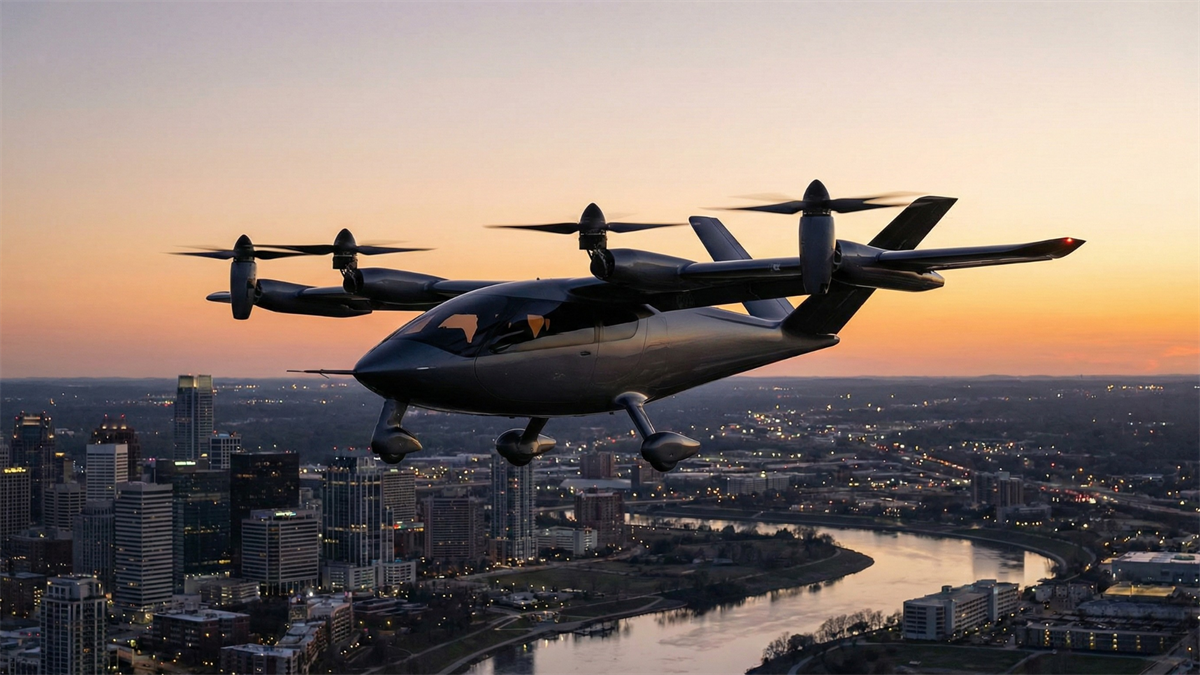
For the electric aviation sector, 2026 has ushered in a defining market theme: the flight to quality. In the early years of the industry, investors spread capital across dozens of startups, treating the sector like a venture-capital lottery ticket. Today, that speculative phase has largely ended. The market is now ruthlessly separating winners from losers based on a single criterion: who has the resources to survive the valley of death.
For eVTOL organizations, the valley of death will be the perilous period between building a functional prototype and receiving final government certification to carry passengers. It is a phase of high cash burn and zero revenue. As this separation occurs, retail investors are looking to the smart money for clues. Institutional investors (think pension funds, sovereign wealth funds, and massive asset managers) do not typically gamble on hype. They rely on rigorous auditing, risk analysis, and deep-dive due diligence. When these giants take a significant position in a pre-revenue company, it signals that the company has passed the most stringent financial and technical tests that Wall Street offers.
The 8.1% Stake: BlackRock’s Vote of Confidence
At the end of January, this institutional signal of acceptance flashed for Archer Aviation (NYSE: ACHR). According to a recently amended Schedule 13G filing with the Securities and Exchange Commission (SEC), BlackRock Inc. (NYSE: BLK) has increased its position in the company. The world's largest asset manager now holds an 8.1% passive stake in Archer, equating to approximately 53 million shares.
For the eVTOL investor, the specific type of filing matters. Passive investors, those who believe the company is being run well and simply want to own a piece of its future growth, file a Schedule 13G. This is distinct from activist investors, who buy shares to pressure management to make changes. BlackRock’s purchase is a tacit endorsement of Archer’s current leadership and roadmap.
Owning nearly 10% of a company creates a level of stability that Archer’s press releases cannot manufacture. But why is BlackRock buying now? The answer likely lies in Archer’s resilience. In the aerospace industry, companies don't usually fail because their technology doesn't work; they fail because they run out of money before they can prove it works.
The Financial Fortress: $2 Billion in Protection
Archer Aviation enters 2026 with a financial profile that is arguably best-in-class for the sector. The company boasts a total liquidity position hovering near $2 billion. However, the most telling metric for risk-averse investors like BlackRock is the current ratio.
Archer reports a current ratio of 18.19. For context, a ratio of 1.0 is considered safe, meaning a company has one dollar in assets for every dollar of bills due within a year. A ratio of 18.19 is exceptional. It implies that for every dollar of short-term debt, Archer holds over $18 in liquid assets. This effectively removes the near-term risk of emergency fundraising, which often destroys shareholder value.
This financial fortress is heavily fortified by Archer’s strategic partnership with automotive giant Stellantis (NYSE: STLA).
In a typical aerospace startup, the company must burn hundreds of millions of dollars building a factory. In Archer’s case, Stellantis is absorbing the bulk of the capital costs and providing the manufacturing expertise for the high-volume facility in Covington, Georgia. This allows Archer to direct its cash almost exclusively toward research, flight testing, and certification, resulting in highly efficient capital allocation that appeals to institutional analysts.
Archer And Joby: Why Money Is Moving
The significance of the BlackRock purchase is amplified when viewed against the broader sector. A clear divergence has formed between Archer and its primary competitor, Joby Aviation (NYSE: JOBY). For years, these two companies have traded in lockstep, but 2026 has brought a decoupling.
While Archer is attracting institutional inflows, Joby has faced headwinds regarding its stock valuation. In December 2025, analysts at Goldman Sachs initiated coverage on Joby Aviation with a Sell rating. This was followed in late January 2026 by a reiteration of a sell rating from Weiss Ratings. The analysts cited concerns that Joby’s valuation was too high relative to its near-term growth prospects.
This contrast has created a classic pair trade scenario. In financial markets, a pair trade involves selling a stock that appears overvalued while buying a direct competitor that appears undervalued. The recent market data suggests a rotation of capital is underway, moving out of the premium-priced Joby and into Archer, which is increasingly viewed as a value play in the eVTOL sector. BlackRock’s timing aligns perfectly with this broader rotation, suggesting they see Archer as an undervalued asset in the space.
Friction in the Float: Bears vs. Bulls
The heavy institutional accumulation by BlackRock and Stellantis creates an interesting friction in the stock’s market mechanics, specifically regarding short sellers. Currently, short interest in Archer Aviation is high, with approximately 15% of the available shares (the float) sold short. This equates to roughly 90.4 million shares that must eventually be repurchased.
This setup creates the potential for short squeeze mechanics to play out. Here is how the mechanism would work:
- Locked Supply: When long-term giants like BlackRock and Stellantis buy shares, they typically hold them for years. This removes those shares from the daily trading supply.
- The Trap: If positive news drives Archer’s stock price up, short sellers start losing money. To stop the losses, they must buy shares to close their positions.
- The Squeeze: Because institutions are not selling, fewer shares are available to buy. This scarcity forces short sellers to bid the price higher and higher to exit their trades, creating a feedback loop of buying pressure.
With 15% of the float shorted and supply tightening due to the BlackRock purchase, the stock is coiled like a spring.
A Convergence of Catalysts
Market reaction to these developments has already begun. Archer’s stock has shown upward mobility over the past 30 days, gaining approximately 8% before a late January sector-wide slump. Despite the sector's downward trend in the last days of January, Archer has demonstrated resilience. This sustained strength suggests a firm price floor is being established through institutional buying.
From a technical perspective, the momentum is confirmed. The TradeSmith Health Indicator recently placed Archer in the Green Zone, a technical signal indicating that the stock has stabilized and entered a healthy, positive trend.
The investment thesis for Archer Aviation in 2026 is becoming clear. The company has secured the technology through NVIDIA (NASDAQ: NVDA), the manufacturing capacity through Stellantis, and the financial runway through a massive liquidity pile.
Now, with BlackRock’s 8.1% stake providing the ultimate institutional seal of approval, the risks associated with the valley of death appear significantly lower.
For investors, the combination of smart money validation, comparative value against competitors, and potential short-squeeze mechanics makes Archer a standout candidate in the race for the skies.
Where Should You Invest $1,000 Right Now?
Before you make your next trade, you'll want to hear this.
MarketBeat keeps track of Wall Street's top-rated and best performing research analysts and the stocks they recommend to their clients on a daily basis.
Our team has identified the five stocks that top analysts are quietly whispering to their clients to buy now before the broader market catches on... and none of the big name stocks were on the list.
They believe these five stocks are the five best companies for investors to buy now...
The article "Did BlackRock Build A New Floor for Archer's Stock Price?" first appeared on MarketBeat.
Mentioned In This Article
Latest News
| 20 min | |
| 39 min | |
| 1 hour | |
| 1 hour | |
| 1 hour | |
| 2 hours | |
| 3 hours | |
| 4 hours | |
| 5 hours | |
| 6 hours | |
| 6 hours | |
| 6 hours | |
| 6 hours | |
| 6 hours | |
| 6 hours |
