Can SpaceX Rival AST SpaceMobile Meet Its 2026 Launch Targets?
After gaining more than 240% over 2025, AST SpaceMobile (NASDAQ: ASTS) has continued its strong—albeit volatile—run into 2026.
Shares of ASTS have climbed 24% year-to-date despite some trademark ups and downs, including more than five double-digit pullbacks ranging from 10% to more than 14%.
But the stock continues to bounce back on bullish news, including last month’s announcement that the space-based cellular communication services firm was awarded a government contract for the Missile Defense Agency Scalable Homeland Innovative Enterprise Layered Defense (SHIELD) indefinite-delivery/indefinite-quantity (IDIQ) contract.
More recently, Jeff Bezos-founded Blue Origin announced on Jan. 22 that it will be using its New Glenn-3 (NG-3) heavy lift rocket to transport AST SpaceMobile’s next-generation Block 2 BlueBird satellite into low Earth orbit (LEO) “no earlier than late February.”
Blue Origin’s New Glenn-3 will be capable of transporting up to eight of AST SpaceMobile’s BlueBird satellites at a time.
The mission will mark the first occasion since Sept. 12, 2024, that one of the company’s satellites launches from the United States.
But in late January, global communications industry publication Light Reading reported that at its current pace, AST SpaceMobile is at risk of missing its launch target of 45 to 60 satellites in orbit by the end of 2026.
Here’s what prospective investors and current shareholders need to know about the near-term future of the company, which aims to provide what it refers to as “the world’s first space-based mobile broadband network.”
All Eyes Are on Tentative BlueBird 7 Launch in Late February
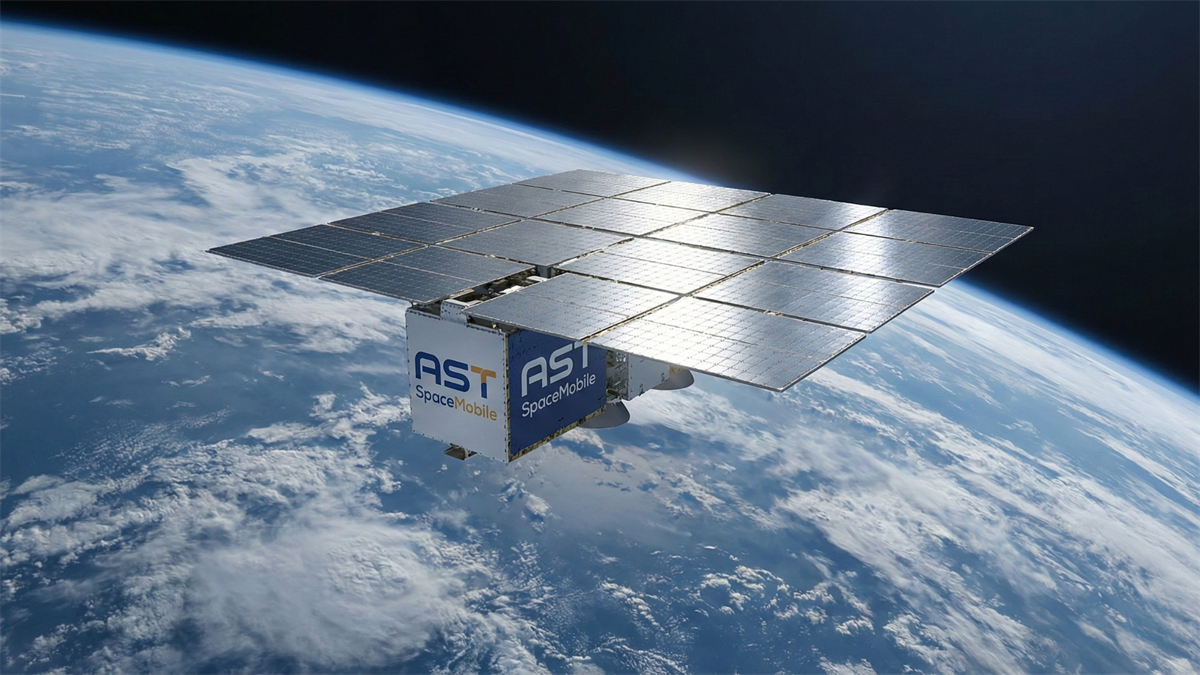
AST SpaceMobile's BlueBird 7 satellite is currently in preparation at the Launch Complex 36 installation at Cape Canaveral Space Force Station.
The 2,400-square foot array is one of dozens the company intends to put into LEO by the end of the year, with a launch cadence of every one to two months, on average.
But as Michelle Donegan, senior editor at Light Reading, points out, that may prove to be a tall order for the Midland, Texas-based aerospace company.
“AST has fallen behind schedule from its original plans outlined last year and adjusted expectations in the last few quarters, sparking questions about whether it can still achieve its ambitious target in a compressed timeframe and provide sufficient coverage for a continuous service by year-end for its mobile operator partners,” Doengan wrote.
Doengan added that AST SpaceMobile’s Q1 goal of five orbital launches now appears to be out of reach, and that “the company would need three more launches before the end of March to meet this interim goal.”
However, the firm will not report earnings again until March 2, so public information about its progress toward the quarterly launch goal is increasingly unlikely. Additionally, no details have been provided on AST SpaceMobile’s website since the Blue Origin launch vehicle news was announced.
AST SpaceMobile’s Clients Are Lined Up and Awaiting Broader Services
Doengan quoted multiple satellite analysts whose sentiment about whether AST SpaceMobile can meet its goals boils down to “that’s not happening.”
But the good news is that even if the company is not able to meet its self-imposed launch targets in 2026, longer term, AST SpaceMobile is on track to continue disrupting and cutting into SpaceX’s Starlink dominance in the 4G and 5G satellite-to-phone market.
In addition to its federal government contracts, the company—which is 95% vertically integrated, providing it with pricing power and supply chain control—has already secured partnerships with Verizon Communications (NYSE: VZ), AT&T (NYSE: T), and Vodafone Group (NASDAQ: VOD).
Additionally, it has signed commercial pacts with Japanese tech conglomerate Rakuten (OTCMKTS: RKUNY), real estate investment trust American Tower (NYSE: AMT), and BCE (NYSE: BCE), formerly Bell Canada Enterprises and one of Canada’s largest telecommunications and media companies.
But the biggest prize boost may come from Alphabet (NASDAQ: GOOGL), which holds more than 8.9 million shares of ASTS—a position it opened in early 2024 and expanded in 2025. That amounts to more than 23% of Alphabet’s investment portfolio, making it the Magnificent Seven company’s largest holding.
Wall Street’s Long-Term View
In the short term, analysts are skeptical about ASTS’ performance, with a consensus Reduce rating and an average 12-month price target that implies potential downside of nearly 56%.
Fundamentally, the company is sound. AST SpaceMobile’s financial health falls into the Green Zone according to TradeSmith, where it has been for more than nine months.
While not yet profitable due to heavy investment in the build-out of its space-based cellular network, revenue growth increased by more than 1,239% in Q3 2025.
Meanwhile, institutional ownership has been decidedly bullish, with 341 buyers over the past 12 months injecting $2.04 billion into ASTS, compared to 113 sellers liquidating just $325.61 million.
Where Should You Invest $1,000 Right Now?
Before you make your next trade, you'll want to hear this.
MarketBeat keeps track of Wall Street's top-rated and best performing research analysts and the stocks they recommend to their clients on a daily basis.
Our team has identified the five stocks that top analysts are quietly whispering to their clients to buy now before the broader market catches on... and none of the big name stocks were on the list.
They believe these five stocks are the five best companies for investors to buy now...
The article "Can SpaceX Rival AST SpaceMobile Meet Its 2026 Launch Targets?" first appeared on MarketBeat.
Mentioned In This Article
Latest News
| 42 min | |
| 2 hours | |
| 3 hours | |
| 3 hours | |
| 3 hours | |
| 4 hours | |
| 4 hours | |
| Oct-14 | |
| Oct-14 | |
| Oct-14 | |
| Oct-14 | |
| Oct-14 | |
| Oct-14 | |
| Oct-14 | |
| Oct-14 |
