Lemonade's Tesla Deal Could Rewrite How Auto Insurance Is Priced
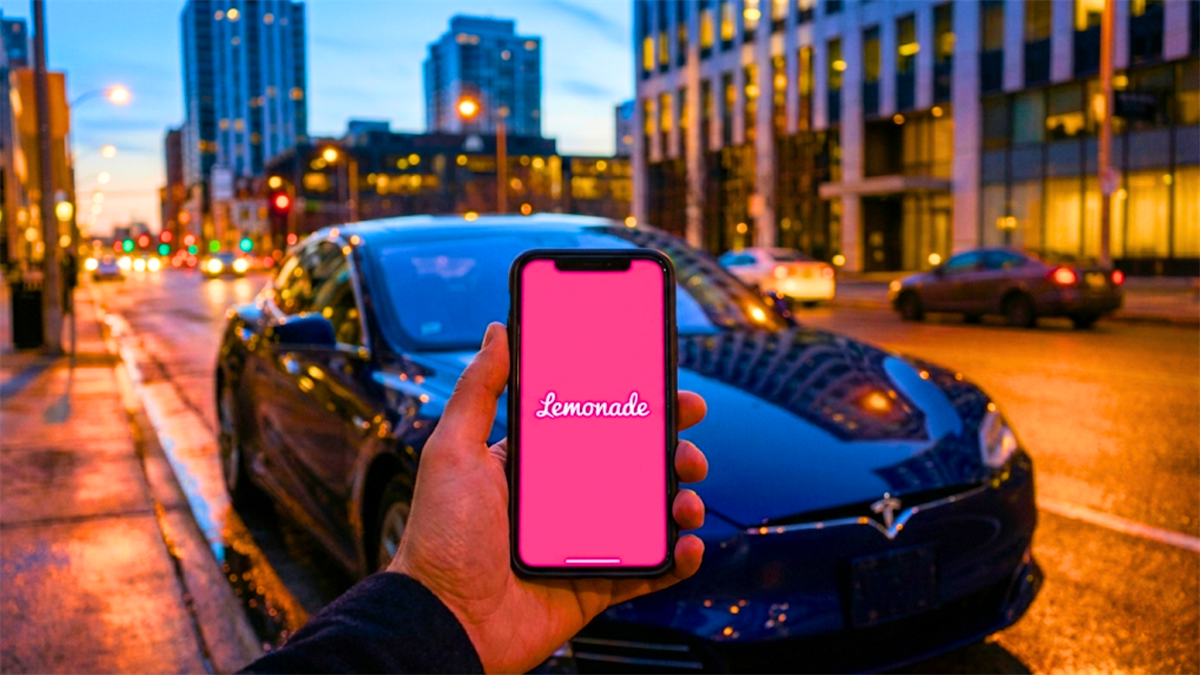
Lemonade Inc. (NYSE: LMND) shares hit a new 52-week high of $85.29 on Jan. 21, 2026, closing the session up over 9%. The rally was driven by volume of 2.64 million shares, higher than the average, indicating strong investor interest. This upward movement follows the company's announcement of a technical collaboration with Tesla (NASDAQ: TSLA) to launch Lemonade Autonomous Car Insurance.
The new product introduces a pricing model that offers a 50% discount per mile driven while Tesla’s Full Self-Driving (FSD) capability is engaged. This marks a pivotal moment for the insurtech company, which has seen its stock price climb nearly 20% since the start of the year.
The market has reacted to this news as more than just a product launch; it is being viewed as a significant validation of Lemonade’s technology-first business model. By directly linking insurance premiums to the use of autonomous driving software, Lemonade is positioning itself at the forefront of a shift in the auto industry. Investors are currently betting that this data-driven approach will allow the company to capture market share from traditional insurers while maintaining healthy profit margins.
How Real-Time Data Changes the Profit Equation
The core of this new collaboration is an API integration, a software connection that allows Lemonade’s systems to talk directly to a customer's Tesla. This technology enables the insurer to distinguish between miles driven by a human and miles driven by the vehicle's autonomous software.
This distinction allows for real-time risk pricing. Traditional insurers like Allstate (NYSE: ALL) or Progressive (NYSE: PGR) rely heavily on proxies to guess how safe a driver might be. They use data points such as credit scores, age, zip codes, and marital status. In contrast, Lemonade is pricing risk based on actual behavior and technology usage. If the data proves that FSD is safer than a human driver, Lemonade can offer lower rates without sacrificing its own profit margins.
The Economic Advantage: Why This Matters
Beyond the technology, this deal offers a significant financial advantage: Negative Customer Acquisition Cost (CAC). In the insurance world, acquiring a new customer is incredibly expensive.
- Ending the Ad War: Legacy carriers spend billions annually on television commercials (think geckos and emus) to fight for market share. By integrating directly into the Tesla ecosystem, Lemonade can access a large pool of drivers without paying for expensive mass-media advertising.
- High-Value Demographics: Tesla owners historically represent a desirable demographic for insurers. They often have higher credit scores and drive newer vehicles equipped with advanced safety features. These drivers tend to file fewer claims.
- The Bundle Effect: Once a driver signs up for auto insurance, Lemonade can cross-sell its Home, Pet, and Life insurance products. This increases each customer's lifetime value (LTV) while keeping acquisition costs low.
By targeting a specific, tech-savvy niche, Lemonade aims to bypass the costly customer-acquisition battles that plague the rest of the industry.
How Improved Margins Enabled the Tesla Pivot
Two years ago, launching a risky new product with deep discounts might have unsettled investors. However, Lemonade is approaching this expansion from a position of improved financial stability. The company’s third-quarter 2025 earnings report provided the data necessary to support this aggressive strategy.
Revenue for the quarter grew 42% year-over-year to $194.5 million, showing that demand for Lemonade’s products remains strong. More importantly, the company has made significant progress in its underwriting discipline.
The most critical improvement is in the company's efficiency metrics:
- Gross Loss Ratio (GLR): This metric measures the percentage of premium dollars paid out in claims. A lower number is better because it means the company keeps more money. Lemonade reported a GLR of 62% in Q3 2025, a historic low for the company. This is a massive improvement from previous years, when ratios hovered in the 70s or 80s, proving that their algorithms effectively identify and price risk.
- Cash Flow Positive: Perhaps the most bullish signal is the cash flow. Lemonade achieved a positive Adjusted Free Cash Flow of $18 million in the third quarter. This was the second consecutive quarter of positive cash generation.
These numbers indicate that the business is becoming self-sustaining. Lemonade is no longer burning cash just to keep the lights on. This financial health gives management the freedom to invest in growth initiatives, such as the Tesla partnership, without taking on new debt or diluting shareholders by selling more stock.
The Tug-of-War: Bulls, Bears, and Execution Risks
The stock's recent performance reflects a fierce battle between institutional confidence and short-seller skepticism. This dynamic creates a volatile but potentially lucrative environment for investors.
On the bullish side, smart money is increasing its exposure. JPMorgan Chase recently disclosed a 5.9% passive stake in Lemonade, purchasing approximately 4.5 million shares. When a banking giant like JPMorgan (NYSE: JPM) acquires a significant stake in a company, it often signals to the broader market that the stock has long-term potential. Additionally, Lemonade’s founders, Daniel Schreiber and Shai Wininger, have previously purchased shares on the open market, aligning their personal financial interests with those of the shareholders.
The Short Squeeze Potential
Despite the positive momentum, skepticism remains high. Approximately 20% of Lemonade’s floating shares are currently sold short.
- What is Short Selling? Short sellers are traders who borrow stock and sell it, betting that the price will go down so they can repurchase it at a lower price later.
- The Squeeze: When a stock with high short interest receives good news (like the Tesla partnership), the price jumps. Short sellers begin losing money rapidly. To stop the bleeding, they must buy shares to close their positions. This buying pressure forces the price even higher, creating a feedback loop known as a short squeeze.
Execution Risks Remain
Investors must remain balanced. While the stock is rallying, the rollout is currently limited to Arizona and Oregon. Scaling this product across all 50 states requires navigating a complex web of regulatory approvals, which could slow down growth. Furthermore, the entire premise of the 50% discount relies on Tesla’s FSD being safer than human drivers. If accident rates for FSD users rise, Lemonade could face higher-than-expected claims costs, which would hurt the profit margins they have worked hard to improve.
Can AI Finally Disrupt Auto Insurance?
Lemonade has successfully transitioned from a concept stock into a fundamental disruptor with improving margins and steady growth. The partnership with Tesla places significant pressure on legacy carriers to modernize their own pricing models or risk losing their safest and most profitable drivers to tech-forward competitors.
While risks regarding regulatory expansion and autonomous safety performance remain, the market’s reaction suggests that investors are waking up to the viability of AI-driven insurance. The stock’s performance in 2026 will likely depend on Lemonade’s ability to execute this rollout smoothly while maintaining the financial discipline shown in recent quarters.
Where Should You Invest $1,000 Right Now?
Before you make your next trade, you'll want to hear this.
MarketBeat keeps track of Wall Street's top-rated and best performing research analysts and the stocks they recommend to their clients on a daily basis.
Our team has identified the five stocks that top analysts are quietly whispering to their clients to buy now before the broader market catches on... and none of the big name stocks were on the list.
They believe these five stocks are the five best companies for investors to buy now...
The article "Lemonade’s Tesla Deal Could Rewrite How Auto Insurance Is Priced" first appeared on MarketBeat.
Mentioned In This Article
Latest News
| 12 min | |
| 3 hours | |
| 4 hours | |
| 4 hours | |
| 4 hours | |
| 5 hours | |
| 6 hours | |
| 6 hours | |
| 6 hours | |
| 7 hours | |
| 7 hours | |
| 7 hours | |
| 10 hours | |
| 11 hours | |
| 12 hours |
